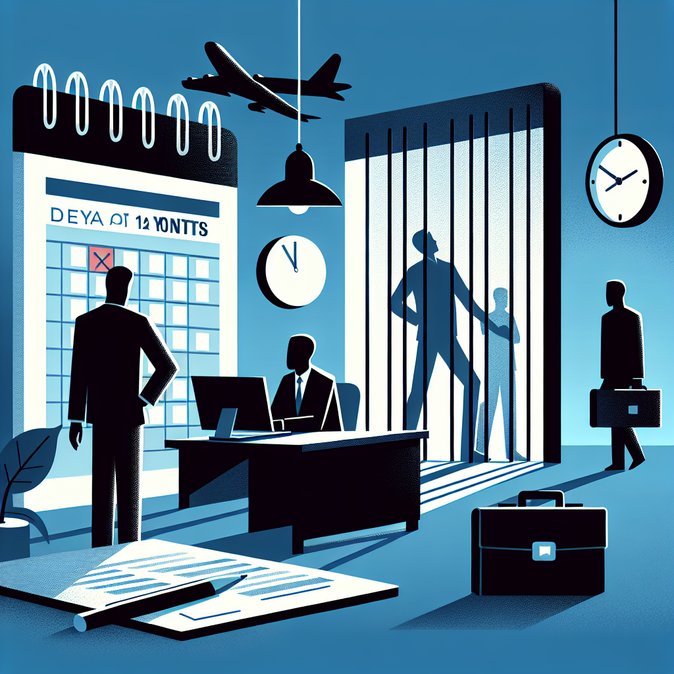
Google’s global mobility and immigration team sent an urgent e-mail to hundreds of workers on December 19 after outside counsel BAL Immigration Law flagged a sharp deterioration in visa-stamping wait-times at U.S. embassies and consulates. The message, first reported by Business Insider and confirmed by Reuters, tells staff who hold H-1B, L-1 or other U.S. work visas that any international trip now carries “a material risk of an extended stay outside the United States—potentially up to 12 months.” Because most visas issued inside the U.S. must be physically “stamped” in the worker’s passport before the individual can re-enter, the bottleneck could leave travelers stranded abroad.
Processing delays have ballooned since President Trump’s December 6 proclamation that instituted social-media screening for all H-1B applicants and raised the H-1B petition fee to $100,000. Consular sections are spending more time on each case and have re-assigned staff to handle waivers and security advisory opinions, shrinking stamping appointment capacity. In many posts—including New Delhi, Beijing and London—the first available appointments are in late 2026.
For those still contemplating travel, VisaHQ can offer an additional layer of support. Its real-time tracking tools and embassy-specific dashboards help users monitor appointment availability, while the U.S. visa resource hub (https://www.visahq.com/united-states/) outlines alternative consulate options and courier services that can shave days off processing. Companies and individual travelers alike can leverage these insights to make more informed—and safer—decisions.
![Google warns U.S-visa-holding employees to stay put amid year-long embassy stamping delays]()
Google is not alone: immigration counsel across Silicon Valley say tech firms are quietly circulating similar “do-not-travel” advisories. More than 70 percent of the 85,000 new H-1B visas issued each year go to IT and engineering companies, and foreign workers account for an estimated 30 percent of Google’s U.S. technical workforce. Extended overseas absences could delay product timelines, trigger project re-assignments and complicate payroll-tax residency rules.
For employers, the memo underscores the need for rigorous pre-travel screening. BAL recommends that companies create a travel-approval checkpoint for all foreign employees, consider in-country “drop-box” renewals where still available, and explore alternatives such as “commuter” L-1 status for Canada-based staff. Workers already outside the United States are being urged to file for emergency appointments, but success rates are low and unpredictable.
Longer term, immigration lawyers expect corporate pressure on the State Department and Congress to restore domestic visa revalidation—a program that until 2004 allowed certain H-1B and L-1 holders to renew inside the United States without leaving. Until then, global mobility managers are advising caution: the cheapest ticket this holiday season may be the one that is never booked.
Processing delays have ballooned since President Trump’s December 6 proclamation that instituted social-media screening for all H-1B applicants and raised the H-1B petition fee to $100,000. Consular sections are spending more time on each case and have re-assigned staff to handle waivers and security advisory opinions, shrinking stamping appointment capacity. In many posts—including New Delhi, Beijing and London—the first available appointments are in late 2026.
For those still contemplating travel, VisaHQ can offer an additional layer of support. Its real-time tracking tools and embassy-specific dashboards help users monitor appointment availability, while the U.S. visa resource hub (https://www.visahq.com/united-states/) outlines alternative consulate options and courier services that can shave days off processing. Companies and individual travelers alike can leverage these insights to make more informed—and safer—decisions.

Google is not alone: immigration counsel across Silicon Valley say tech firms are quietly circulating similar “do-not-travel” advisories. More than 70 percent of the 85,000 new H-1B visas issued each year go to IT and engineering companies, and foreign workers account for an estimated 30 percent of Google’s U.S. technical workforce. Extended overseas absences could delay product timelines, trigger project re-assignments and complicate payroll-tax residency rules.
For employers, the memo underscores the need for rigorous pre-travel screening. BAL recommends that companies create a travel-approval checkpoint for all foreign employees, consider in-country “drop-box” renewals where still available, and explore alternatives such as “commuter” L-1 status for Canada-based staff. Workers already outside the United States are being urged to file for emergency appointments, but success rates are low and unpredictable.
Longer term, immigration lawyers expect corporate pressure on the State Department and Congress to restore domestic visa revalidation—a program that until 2004 allowed certain H-1B and L-1 holders to renew inside the United States without leaving. Until then, global mobility managers are advising caution: the cheapest ticket this holiday season may be the one that is never booked.