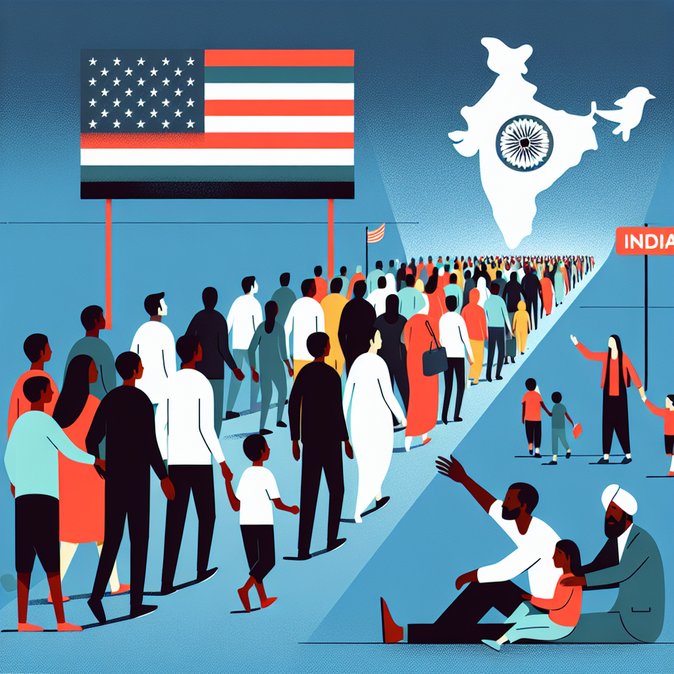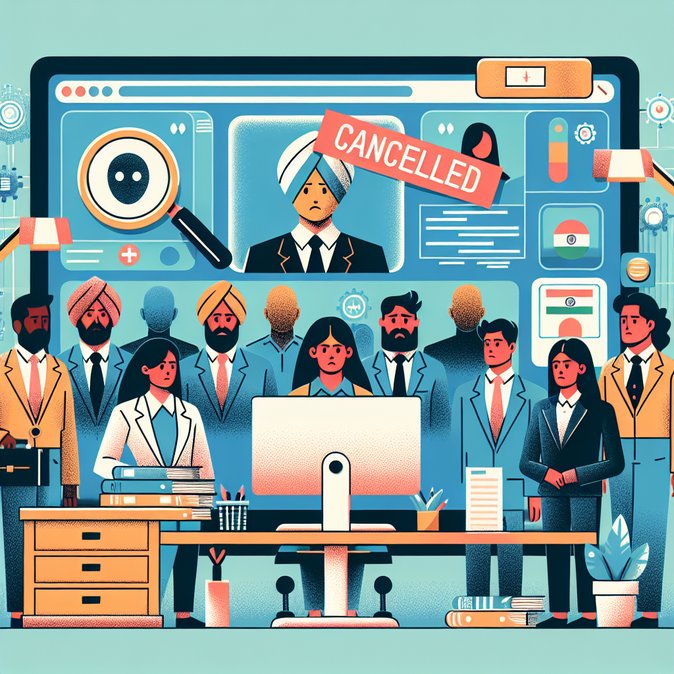
Just days before year-end, hundreds—possibly thousands—of Indian H-1B holders who flew home to renew their visas found their consular interviews cancelled and rescheduled for dates as late as 2027. The sudden move follows the Trump administration’s 15 December rollout of mandatory social-media screening, which has slowed throughput at U.S. posts in Delhi, Mumbai, Chennai and Hyderabad.
Law firms Reddy Neumann Brown and Kuck Baxter report clients marooned in India on unpaid leave; some face job loss if they cannot return to the United States within 60 days. Tech companies are scrambling to file emergency work-from-India arrangements and seek expedited appointments, which remain rare.
![Hundreds of Indian H-1B Workers Stranded After U.S. Consular Appointments Abruptly Cancelled]()
Amid the uncertainty, many travelers are turning to specialist facilitators for guidance. VisaHQ, for example, offers Indian nationals a consolidated portal (https://www.visahq.com/india/) that tracks consular changes in real time, prepares document checklists, and helps secure alternative appointments or travel documents—an invaluable service when embassy slots vanish overnight.
The cancellations coincide with other restrictive measures: termination of third-country renewals, a US$100k H-1B application fee, and an end to in-country domestic-renewal pilots. Immigration advocates argue that the cumulative effect disproportionately targets Indian professionals, who constitute 71 % of the H-1B cohort.
For Indian families, the human cost is severe—separations from children in U.S. schools, mortgage liabilities, and medical-insurance gaps. Corporates with India-based employee populations should update risk registers, build redundancy into U.S. staffing, and consider Canada or Ireland as alternative talent hubs.
Law firms Reddy Neumann Brown and Kuck Baxter report clients marooned in India on unpaid leave; some face job loss if they cannot return to the United States within 60 days. Tech companies are scrambling to file emergency work-from-India arrangements and seek expedited appointments, which remain rare.
Amid the uncertainty, many travelers are turning to specialist facilitators for guidance. VisaHQ, for example, offers Indian nationals a consolidated portal (https://www.visahq.com/india/) that tracks consular changes in real time, prepares document checklists, and helps secure alternative appointments or travel documents—an invaluable service when embassy slots vanish overnight.
The cancellations coincide with other restrictive measures: termination of third-country renewals, a US$100k H-1B application fee, and an end to in-country domestic-renewal pilots. Immigration advocates argue that the cumulative effect disproportionately targets Indian professionals, who constitute 71 % of the H-1B cohort.
For Indian families, the human cost is severe—separations from children in U.S. schools, mortgage liabilities, and medical-insurance gaps. Corporates with India-based employee populations should update risk registers, build redundancy into U.S. staffing, and consider Canada or Ireland as alternative talent hubs.