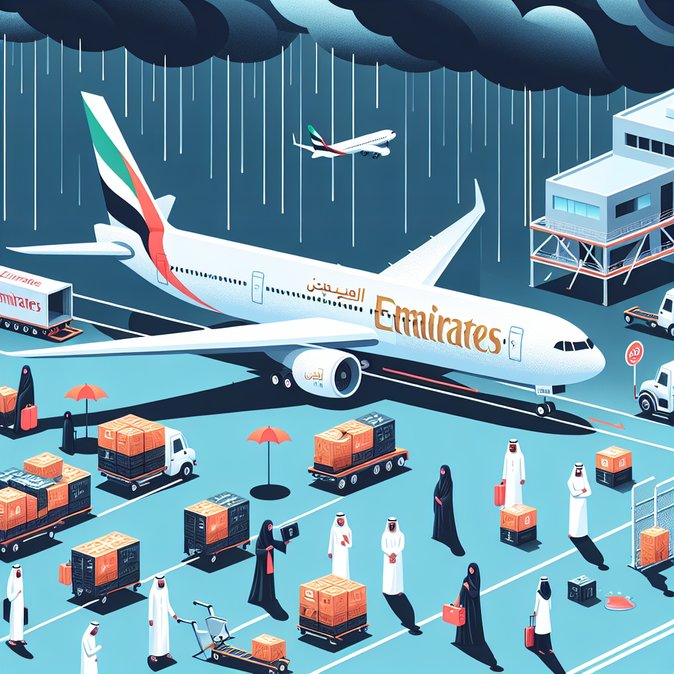
Emirates Airline published an urgent travel update at 07:00 Dubai time on 20 December advising customers that all services linking Dubai (DXB) and Sialkot (SKT) have either been cancelled or pushed to 21 December because of severe fog and thunderstorms over eastern Pakistan. Flight EK618/619 for 19 December was cancelled outright; EK620 and EK621 were retimed by more than 24 hours and renumbered EK8620/8621.
Passengers transiting through Dubai with Sialkot as a final destination are “not being accepted for travel at their point of origin,” the carrier said, urging them to re-book via their travel agents or Emirates contact centres. The airline also asked affected customers to ensure contact details are updated in “Manage Your Booking” so SMS notifications can be delivered in real time.
Although the weather event is outside UAE airspace, the disruption has immediate consequences for corporate mobility managers. Sialkot serves as an important manufacturing and sourcing hub for UAE-based retail and construction companies; delayed staff rotations could postpone factory audits, engineering inspections and end-of-year procurement sign-offs. Import-export specialists warn that perishable cargo—including fresh meat shipped under tri-partite Gulf standards—may need re-routing through Lahore or Islamabad, increasing cost and customs-clearance complexity.
![Emirates issues special advisory as Dubai-Sialkot flights cancelled and delayed]()
From a compliance perspective, travellers on single-entry visit visas risk overstaying if their permitted days in the UAE lapse while waiting for the next available flight. HR teams should track visa validity and, where needed, file online extensions through the Federal Authority for Identity, Citizenship, Customs and Port Security (ICP) to avoid fines.
For organisations scrambling to extend UAE visas or arrange new travel documents on short notice, VisaHQ offers a streamlined solution via its dedicated portal (https://www.visahq.com/united-arab-emirates/). The service can fast-track online applications, provide real-time status updates, and advise on alternative permit options when itineraries shift suddenly—helping corporates keep employees compliant and mobile even when flights do not go as planned.
The advisory underscores the importance of building slack into regional trip schedules and of registering mobile-phone numbers in airline PNRs so disruption alerts reach travellers instantly. Emirates reiterated that weather-related changes qualify for free date or destination changes within the ticket-validity window, offering some flexibility for stranded passengers.
Passengers transiting through Dubai with Sialkot as a final destination are “not being accepted for travel at their point of origin,” the carrier said, urging them to re-book via their travel agents or Emirates contact centres. The airline also asked affected customers to ensure contact details are updated in “Manage Your Booking” so SMS notifications can be delivered in real time.
Although the weather event is outside UAE airspace, the disruption has immediate consequences for corporate mobility managers. Sialkot serves as an important manufacturing and sourcing hub for UAE-based retail and construction companies; delayed staff rotations could postpone factory audits, engineering inspections and end-of-year procurement sign-offs. Import-export specialists warn that perishable cargo—including fresh meat shipped under tri-partite Gulf standards—may need re-routing through Lahore or Islamabad, increasing cost and customs-clearance complexity.

From a compliance perspective, travellers on single-entry visit visas risk overstaying if their permitted days in the UAE lapse while waiting for the next available flight. HR teams should track visa validity and, where needed, file online extensions through the Federal Authority for Identity, Citizenship, Customs and Port Security (ICP) to avoid fines.
For organisations scrambling to extend UAE visas or arrange new travel documents on short notice, VisaHQ offers a streamlined solution via its dedicated portal (https://www.visahq.com/united-arab-emirates/). The service can fast-track online applications, provide real-time status updates, and advise on alternative permit options when itineraries shift suddenly—helping corporates keep employees compliant and mobile even when flights do not go as planned.
The advisory underscores the importance of building slack into regional trip schedules and of registering mobile-phone numbers in airline PNRs so disruption alerts reach travellers instantly. Emirates reiterated that weather-related changes qualify for free date or destination changes within the ticket-validity window, offering some flexibility for stranded passengers.