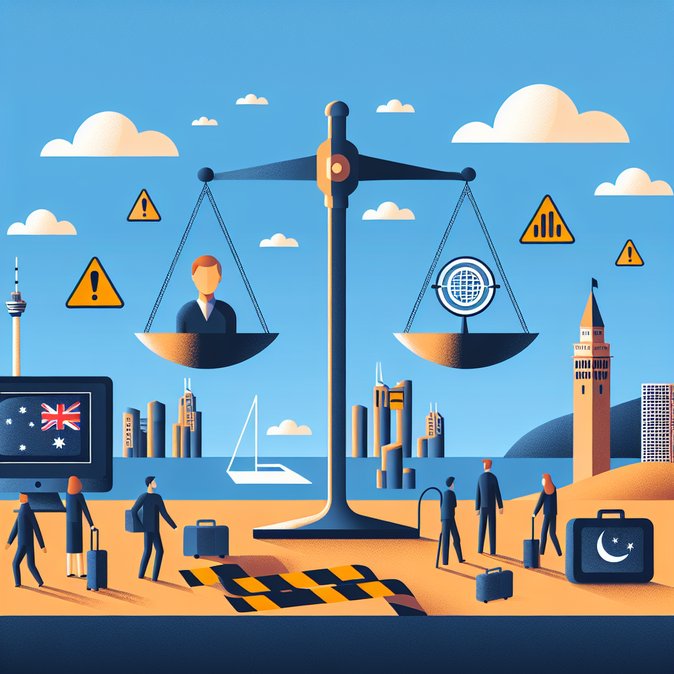
Less than a week after the Bondi Beach terrorist shooting, the Albanese Government has unveiled a five-point package to combat extremism and antisemitism—placing global mobility squarely in the cross-hairs. Under the plan, tabled on 18 December, the Minister for Home Affairs will gain explicit authority to cancel or refuse visas of foreign nationals who “spread hate, division or radicalisation”, while the Attorney-General drafts a new aggravated hate-speech offence that carries heavier penalties for religious or ideological leaders who promote violence.
The move follows criticism that existing hate-speech provisions—though updated in 2024—set the prosecution bar too high. Officials say only four cases have been brought under the tougher laws, none leading to conviction. By lowering thresholds and adding visa leverage, Canberra hopes to keep extremist preachers and online agitators out or eject them quickly if they cross the line.
For multinationals rotating staff into Australia, the message is clear: vet external speakers, contractors and mobile employees for online activity that could be construed as vilification. Immigration advisers expect border authorities to begin asking more probing questions at visa stage and arrival about public statements, social-media posts and organisational affiliations. Corporate mobility teams should update compliance checklists and brief travelling executives—especially those with a public profile—on Australia’s evolving hate-speech landscape.
![Canberra Fast-Tracks Tougher Hate-Speech Laws and New Visa-Cancellation Powers After Bondi Attack]()
Organisations looking for practical assistance navigating these tightening entry rules can turn to VisaHQ. The platform’s Australia desk (https://www.visahq.com/australia/) monitors policy shifts in real time and offers pre-screening services that flag online content or affiliations likely to trigger visa refusals. By consolidating documentation, advising on supporting evidence and liaising with government portals, VisaHQ helps companies and individual travellers minimise compliance risk and avoid last-minute disruptions.
Community groups have welcomed the intent but warn that vague definitions could chill legitimate political expression. Business councils are likewise seeking clarity on evidentiary standards, fearing inconsistent decision-making could disrupt conference invitations and specialist deployments at short notice. The Prime Minister has left open the option of recalling parliament in January to pass the laws, signalling an accelerated timetable unusual for complex criminal-code reforms.
Ultimately, the package underscores a global trend: immigration controls are increasingly being used as frontline tools in counter-extremism policy. Companies operating across borders should expect similar linkage of visa status to online speech in other jurisdictions—and prepare crisis plans for sudden visa revocations that strand key personnel overseas.
The move follows criticism that existing hate-speech provisions—though updated in 2024—set the prosecution bar too high. Officials say only four cases have been brought under the tougher laws, none leading to conviction. By lowering thresholds and adding visa leverage, Canberra hopes to keep extremist preachers and online agitators out or eject them quickly if they cross the line.
For multinationals rotating staff into Australia, the message is clear: vet external speakers, contractors and mobile employees for online activity that could be construed as vilification. Immigration advisers expect border authorities to begin asking more probing questions at visa stage and arrival about public statements, social-media posts and organisational affiliations. Corporate mobility teams should update compliance checklists and brief travelling executives—especially those with a public profile—on Australia’s evolving hate-speech landscape.

Organisations looking for practical assistance navigating these tightening entry rules can turn to VisaHQ. The platform’s Australia desk (https://www.visahq.com/australia/) monitors policy shifts in real time and offers pre-screening services that flag online content or affiliations likely to trigger visa refusals. By consolidating documentation, advising on supporting evidence and liaising with government portals, VisaHQ helps companies and individual travellers minimise compliance risk and avoid last-minute disruptions.
Community groups have welcomed the intent but warn that vague definitions could chill legitimate political expression. Business councils are likewise seeking clarity on evidentiary standards, fearing inconsistent decision-making could disrupt conference invitations and specialist deployments at short notice. The Prime Minister has left open the option of recalling parliament in January to pass the laws, signalling an accelerated timetable unusual for complex criminal-code reforms.
Ultimately, the package underscores a global trend: immigration controls are increasingly being used as frontline tools in counter-extremism policy. Companies operating across borders should expect similar linkage of visa status to online speech in other jurisdictions—and prepare crisis plans for sudden visa revocations that strand key personnel overseas.