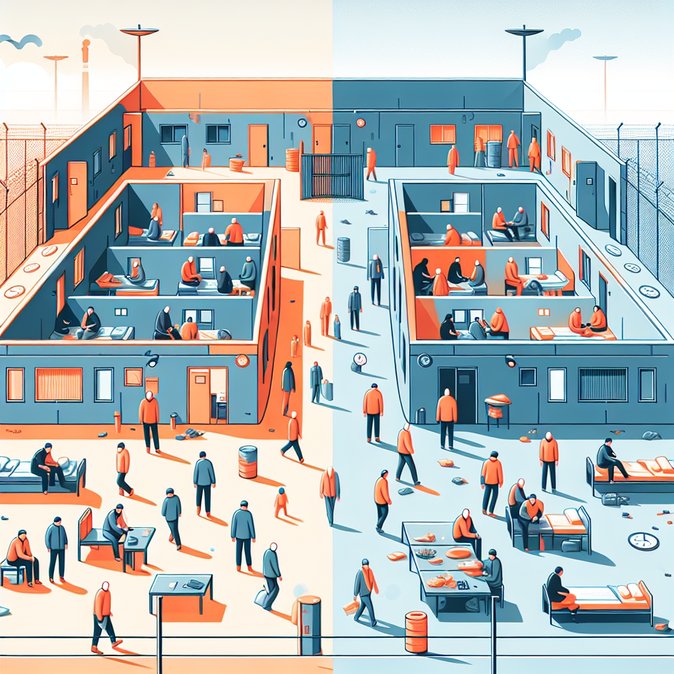
The State Secretariat for Migration (SEM) has announced a six-month pilot project that will see consistently disruptive asylum seekers housed in dedicated security-controlled wings at the federal reception centres in Chiasso (Ticino) and Grossaffoltern (Bern/Solothurn). The decision, unveiled on 17 December and confirmed in briefing notes released on 18 December, aims to ease pressure on staff and other residents ahead of another year of elevated asylum arrivals.
Under the scheme, adult men whose aggressive or violent behaviour has resulted in multiple disciplinary incidents will be transferred to the segregated units for up to 14 days. They will retain access to legal assistance, medical care and daytime exit permits, but movements inside the compound will be more tightly monitored. SEM says only a “few dozen” applicants fall into this category each year, yet their behaviour can paralyse operations and create fear among families sharing dormitories.
![Switzerland to pilot segregated housing for disruptive asylum seekers in 2026]()
For travellers whose entry to Switzerland involves the standard visa system rather than the asylum channel, VisaHQ offers an efficient way to navigate the paperwork. Its online platform details up-to-date requirements, provides application support and enables real-time tracking for a range of Swiss visas—from tourist to business and work permits. More information can be found at https://www.visahq.com/switzerland/
Human-rights NGOs welcomed the fact that the pilot is limited in scope and duration, but warned that any long-term roll-out must include external oversight to prevent de facto detention without judicial review. SEM counters that the measures are proportionate and modelled on similar “safe-zone” concepts tested in the Netherlands and Belgium.
For cantonal authorities, the pilot could reduce costly police call-outs to federal sites, while global-mobility managers note that a calmer reception environment speeds identity verification and ultimately accelerates labour-market access for compliant applicants. SEM will assess the pilot’s impact on incident rates, staff absenteeism and asylum-processing times before deciding whether to convert the units into a permanent feature in 2027.
Under the scheme, adult men whose aggressive or violent behaviour has resulted in multiple disciplinary incidents will be transferred to the segregated units for up to 14 days. They will retain access to legal assistance, medical care and daytime exit permits, but movements inside the compound will be more tightly monitored. SEM says only a “few dozen” applicants fall into this category each year, yet their behaviour can paralyse operations and create fear among families sharing dormitories.
For travellers whose entry to Switzerland involves the standard visa system rather than the asylum channel, VisaHQ offers an efficient way to navigate the paperwork. Its online platform details up-to-date requirements, provides application support and enables real-time tracking for a range of Swiss visas—from tourist to business and work permits. More information can be found at https://www.visahq.com/switzerland/
Human-rights NGOs welcomed the fact that the pilot is limited in scope and duration, but warned that any long-term roll-out must include external oversight to prevent de facto detention without judicial review. SEM counters that the measures are proportionate and modelled on similar “safe-zone” concepts tested in the Netherlands and Belgium.
For cantonal authorities, the pilot could reduce costly police call-outs to federal sites, while global-mobility managers note that a calmer reception environment speeds identity verification and ultimately accelerates labour-market access for compliant applicants. SEM will assess the pilot’s impact on incident rates, staff absenteeism and asylum-processing times before deciding whether to convert the units into a permanent feature in 2027.