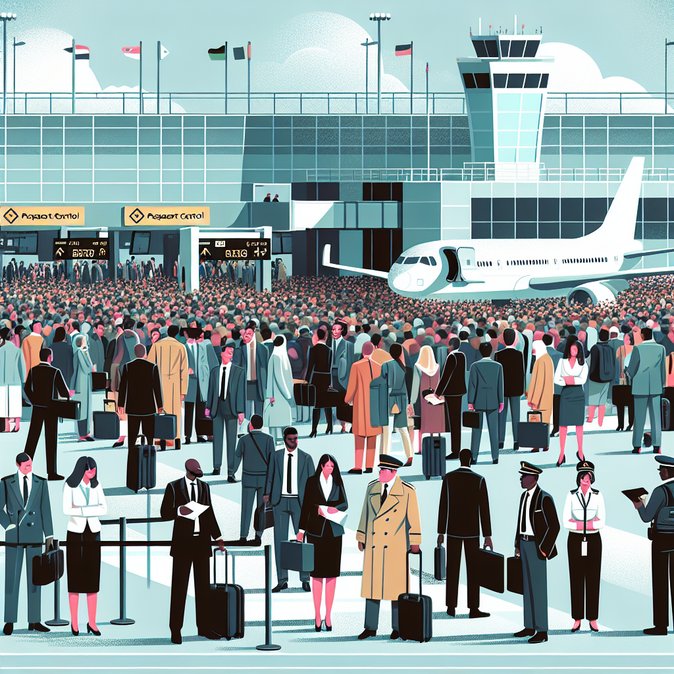
Ryanair, Ireland’s largest airline, found itself at the centre of another social-media storm on 17 December after 40 ticketed passengers were denied boarding on flight FR-7612 from Budapest to Tirana even though the aircraft was still on stand. Video clips show frustrated customers arguing with staff at gate B26 while ground personnel off-loaded luggage to avoid delaying push-back.
Budapest Airport blamed an unexpected surge in non-Schengen departures that overwhelmed passport booths, while Ryanair insisted that “137 passengers who presented at the gate on time boarded successfully.” The carrier provided rebooking options but no duty-of-care vouchers, arguing that the delay was an airport-control issue outside its remit under EU261.
For Irish corporates relying on Ryanair’s extensive Central-European network, the incident underscores a perennial holiday-season risk: third-party border queues can cause missed flights even when check-in and security are cleared. Travel managers should advise staff to allow extra buffer time at non-Schengen hubs and to use fast-track immigration services where available.
![Passport-Control Backlog Strands 40 Ryanair Passengers in Budapest]()
Irish travellers can also streamline pre-trip paperwork by using VisaHQ’s Dublin portal (https://www.visahq.com/ireland/), which consolidates visa, e-visa and passport-renewal applications for more than 200 jurisdictions and provides real-time status alerts. Outsourcing documentation to a specialist reduces last-minute surprises at immigration and gives corporate bookers a clearer view of compliance risks—an easy win when every minute at the gate counts.
The episode also reignites debate about Ryanair’s tight 30-minute cut-off policy. While the rule maximises on-time performance—Ryanair led European punctuality tables in Q3 2025—it leaves no slack for airport bottlenecks, potentially breaching the “reasonable opportunity to board” test some regulators apply. Consumer advocates in Hungary have called for a review. Any regulatory change could ripple to Irish operations, where the airline controls more than 47 percent of Dublin Airport slots.
In the short term, affected passengers can claim reimbursement for additional costs and, depending on circumstances, compensation of €250 under EU261; however, Ryanair may argue an “extraordinary circumstance” defence. Businesses should factor potential out-of-pocket costs into their risk budgets.
Budapest Airport blamed an unexpected surge in non-Schengen departures that overwhelmed passport booths, while Ryanair insisted that “137 passengers who presented at the gate on time boarded successfully.” The carrier provided rebooking options but no duty-of-care vouchers, arguing that the delay was an airport-control issue outside its remit under EU261.
For Irish corporates relying on Ryanair’s extensive Central-European network, the incident underscores a perennial holiday-season risk: third-party border queues can cause missed flights even when check-in and security are cleared. Travel managers should advise staff to allow extra buffer time at non-Schengen hubs and to use fast-track immigration services where available.
Irish travellers can also streamline pre-trip paperwork by using VisaHQ’s Dublin portal (https://www.visahq.com/ireland/), which consolidates visa, e-visa and passport-renewal applications for more than 200 jurisdictions and provides real-time status alerts. Outsourcing documentation to a specialist reduces last-minute surprises at immigration and gives corporate bookers a clearer view of compliance risks—an easy win when every minute at the gate counts.
The episode also reignites debate about Ryanair’s tight 30-minute cut-off policy. While the rule maximises on-time performance—Ryanair led European punctuality tables in Q3 2025—it leaves no slack for airport bottlenecks, potentially breaching the “reasonable opportunity to board” test some regulators apply. Consumer advocates in Hungary have called for a review. Any regulatory change could ripple to Irish operations, where the airline controls more than 47 percent of Dublin Airport slots.
In the short term, affected passengers can claim reimbursement for additional costs and, depending on circumstances, compensation of €250 under EU261; however, Ryanair may argue an “extraordinary circumstance” defence. Businesses should factor potential out-of-pocket costs into their risk budgets.