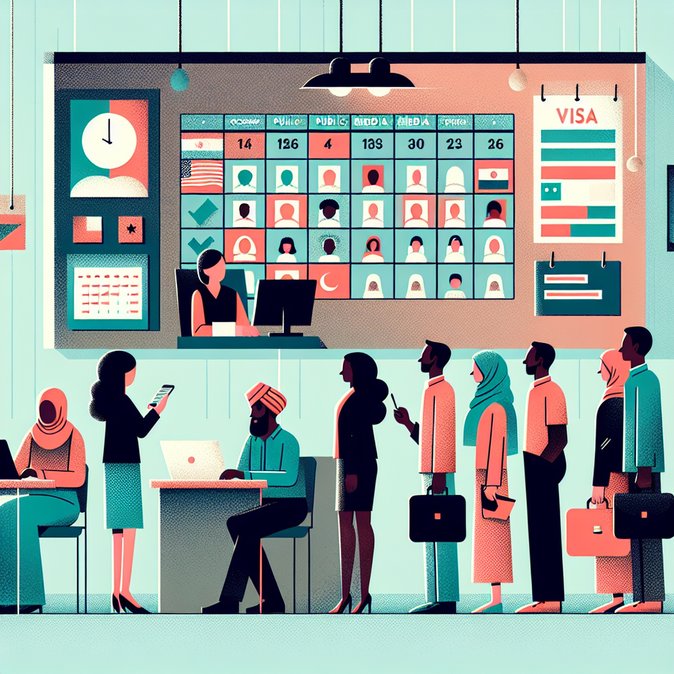
Just one day after DHS confirmed that social-media screening would extend to work-visa categories, U.S. consulates in India and other high-volume posts began cancelling and rescheduling hundreds of H-1B and H-4 interview slots. Under the policy, which became operational on December 15, applicants must make their social-media profiles publicly viewable before attending an interview so consular officers can review posts, photos and connections. The State Department has allocated additional time per case, reducing daily interview capacity by as much as 40 percent in Mumbai and Hyderabad.
Employers now face months-long gaps between a petition’s approval by U.S. Citizenship and Immigration Services (USCIS) and the visa issuance needed to onboard talent. IT services firms report that December slots have been bumped to March 2026, triggering project delays and penalty clauses with U.S. clients. Some companies are flying candidates to alternative posts—such as Singapore or Bangkok—where backlogs are shorter, though that raises cost and dual-processing-risk considerations.
For organizations scrambling to locate earlier appointments or alternative consulates, VisaHQ can help map global slot availability, assemble compliant application packets, and monitor policy shifts. Their U.S. visa portal (https://www.visahq.com/united-states/) centralizes requirements and provides real-time support, giving HR teams a single dashboard from which to steer multiple cases.
![Expanded Social-Media Vetting Delays H-1B Visa Interviews, Forcing Reschedules Into 2026]()
The operational shock illustrates how quickly policy tweaks can reverberate through the mobility ecosystem. HR teams must re-model start-date assumptions, while global travel departments should brace for elevated change-fee and accommodation costs linked to last-minute itinerary shifts. Immigration counsel recommend that applicants lock down all social-media privacy settings *except* the public option demanded by consulates, avoiding mid-interview surprises that could trigger 221(g) administrative processing.
Longer term, the business community fears the United States will lose competitiveness for STEM talent if routine visa issuance stretches beyond 12 months. Tech-industry groups are lobbying for premium-processing lanes at consulates or a return to stateside visa revalidation—ideas floated, but not adopted, in the State Department’s regulatory agenda.
Practical advice: map alternative posts that have capacity, budget for relocation contingencies, and establish an internal review protocol to vet social-media content before DS-160 submission.
Employers now face months-long gaps between a petition’s approval by U.S. Citizenship and Immigration Services (USCIS) and the visa issuance needed to onboard talent. IT services firms report that December slots have been bumped to March 2026, triggering project delays and penalty clauses with U.S. clients. Some companies are flying candidates to alternative posts—such as Singapore or Bangkok—where backlogs are shorter, though that raises cost and dual-processing-risk considerations.
For organizations scrambling to locate earlier appointments or alternative consulates, VisaHQ can help map global slot availability, assemble compliant application packets, and monitor policy shifts. Their U.S. visa portal (https://www.visahq.com/united-states/) centralizes requirements and provides real-time support, giving HR teams a single dashboard from which to steer multiple cases.
The operational shock illustrates how quickly policy tweaks can reverberate through the mobility ecosystem. HR teams must re-model start-date assumptions, while global travel departments should brace for elevated change-fee and accommodation costs linked to last-minute itinerary shifts. Immigration counsel recommend that applicants lock down all social-media privacy settings *except* the public option demanded by consulates, avoiding mid-interview surprises that could trigger 221(g) administrative processing.
Longer term, the business community fears the United States will lose competitiveness for STEM talent if routine visa issuance stretches beyond 12 months. Tech-industry groups are lobbying for premium-processing lanes at consulates or a return to stateside visa revalidation—ideas floated, but not adopted, in the State Department’s regulatory agenda.
Practical advice: map alternative posts that have capacity, budget for relocation contingencies, and establish an internal review protocol to vet social-media content before DS-160 submission.