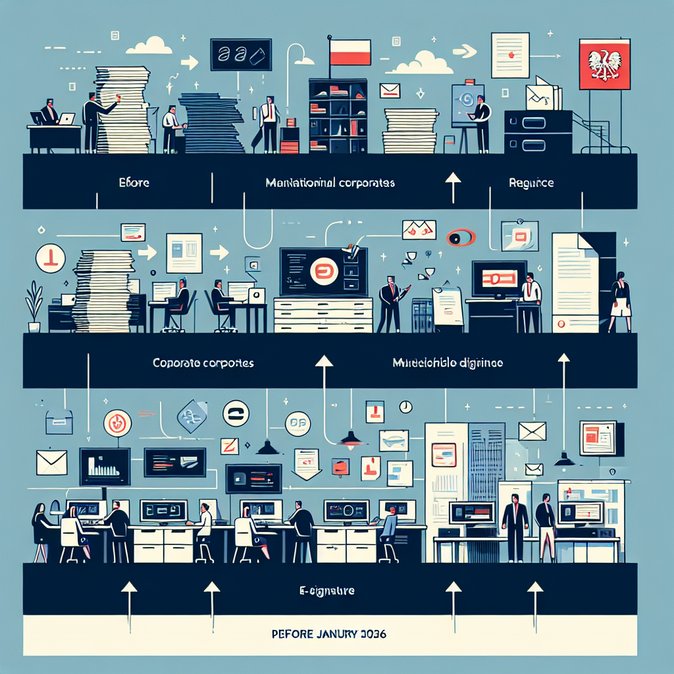
Poland has put the last legislative piece in place for its 2025 immigration overhaul. A secondary regulation published on 16 December requires every temporary-stay (residence) permit – from EU Blue Card to intra-company transfer and family-reunification cases – to be filed exclusively through the Moduł Obsługi Spraw (MOS) e-portal from 1 January 2026. Paper dossiers delivered to voivodeship offices will be rejected outright, and applicants must attach full passport scans and sign with a qualified electronic signature.
For mobility managers the bigger shock is financial. Government fees leap four-fold: the standard residence-permit charge rises from PLN 100 to PLN 400, posted-worker permits to PLN 800, while consular fees jump to €200 for national (D-type) visas and €90 for Schengen (C-type) visas. The Interior Ministry argues that digitisation will cut average processing times by 30 percent and curb fraud, but HR teams worry that the MOS platform – already prone to time-outs – may simply move queues online.
For companies still mapping out their response, VisaHQ’s Poland desk can take the legwork out of the switch. The firm handles everything from setting up Trusted-Profile log-ins and issuing qualified electronic signatures to uploading compliant documentation on the MOS portal, while giving advance visibility of the new fee structure. Details are available at https://www.visahq.com/poland/
![Poland finalises MOS e-portal mandate and quadruples immigration fees for 2026]()
The two-week window before 1 January leaves scant time to act. Companies must secure Trusted-Profile log-ins or EU eID certificates for assignees, obtain qualified e-signatures, and train staff on MOS navigation. Budget owners meanwhile need to re-cost 2026 relocation packages; a family of four on an intra-company transfer will now pay PLN 3,200 in government fees versus PLN 800 today.
Advisers recommend submitting any lingering paper applications by 31 December, backing up every e-portal step with screenshots, and building contingency time into Q1 mobility schedules. They also urge employers that rely on student workers to note a new 20-hour weekly work cap unless a separate work permit is secured. Looking further ahead, officials say MOS will integrate with tax and social-security databases, allowing real-time cross-checks of payroll and residency status. If successful, the system could become a model for other EU states modernising analogue permit regimes.
For international businesses the message is clear: Poland remains open to foreign talent but on digital – and more expensive – terms from New Year’s Day.
For mobility managers the bigger shock is financial. Government fees leap four-fold: the standard residence-permit charge rises from PLN 100 to PLN 400, posted-worker permits to PLN 800, while consular fees jump to €200 for national (D-type) visas and €90 for Schengen (C-type) visas. The Interior Ministry argues that digitisation will cut average processing times by 30 percent and curb fraud, but HR teams worry that the MOS platform – already prone to time-outs – may simply move queues online.
For companies still mapping out their response, VisaHQ’s Poland desk can take the legwork out of the switch. The firm handles everything from setting up Trusted-Profile log-ins and issuing qualified electronic signatures to uploading compliant documentation on the MOS portal, while giving advance visibility of the new fee structure. Details are available at https://www.visahq.com/poland/

The two-week window before 1 January leaves scant time to act. Companies must secure Trusted-Profile log-ins or EU eID certificates for assignees, obtain qualified e-signatures, and train staff on MOS navigation. Budget owners meanwhile need to re-cost 2026 relocation packages; a family of four on an intra-company transfer will now pay PLN 3,200 in government fees versus PLN 800 today.
Advisers recommend submitting any lingering paper applications by 31 December, backing up every e-portal step with screenshots, and building contingency time into Q1 mobility schedules. They also urge employers that rely on student workers to note a new 20-hour weekly work cap unless a separate work permit is secured. Looking further ahead, officials say MOS will integrate with tax and social-security databases, allowing real-time cross-checks of payroll and residency status. If successful, the system could become a model for other EU states modernising analogue permit regimes.
For international businesses the message is clear: Poland remains open to foreign talent but on digital – and more expensive – terms from New Year’s Day.