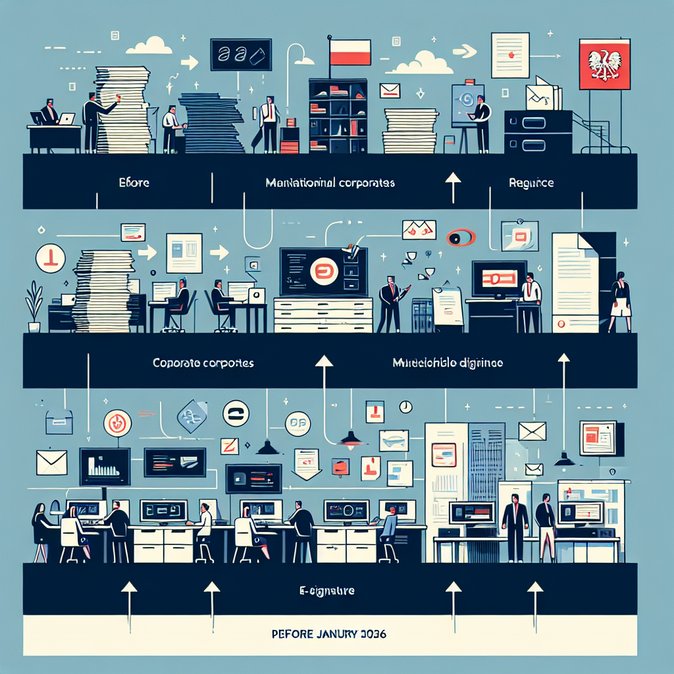
A follow-up regulation released late on 15 December confirms that Poland’s immigration authorities will switch off paper filing channels at midnight on 31 December. From 1 January 2026 the MOS e-portal – accessed with Trusted-Profile or EU eID credentials – becomes the sole gateway for all temporary-stay permits. Officials gain explicit power to request supplementary evidence at any stage, and failure to upload complete scans will trigger automatic rejections.
Fee increases are equally sweeping: PLN 400 for locally-hired employees (up from PLN 100), PLN 800 for posted workers, and national-visa fees rising to €200. Work-permit exemptions are narrowed, and foreign students are capped at 20 hours of paid work per week unless they hold a separate permit.
![Employers face two-week countdown as Poland confirms digital-only residence-permit filing]()
Organizations seeking practical support during this transition can turn to VisaHQ, whose Warsaw-based specialists already work daily with the MOS interface. The team can secure qualified electronic signatures, pre-screen document packets, and submit permit or visa applications on behalf of both corporations and individual assignees. For details on these services and broader immigration assistance, visit https://www.visahq.com/poland/
For global mobility teams the compressed timeline is daunting. Companies must obtain qualified electronic signatures, audit document templates for new compliance attestations and update internal portals to handle higher charges. HR departments without Polish-language capability are advised to book interpreter support for MOS training sessions.
While the government touts faster processing and anti-fraud benefits, immigration practitioners recall earlier digital roll-outs (such as the PESEL online register) that suffered multi-day outages. Contingency plans therefore include staggering submissions, keeping PDF back-ups of each screen, and ring-fencing budget for expedited courier work should original passports be recalled for verification.
Fee increases are equally sweeping: PLN 400 for locally-hired employees (up from PLN 100), PLN 800 for posted workers, and national-visa fees rising to €200. Work-permit exemptions are narrowed, and foreign students are capped at 20 hours of paid work per week unless they hold a separate permit.

Organizations seeking practical support during this transition can turn to VisaHQ, whose Warsaw-based specialists already work daily with the MOS interface. The team can secure qualified electronic signatures, pre-screen document packets, and submit permit or visa applications on behalf of both corporations and individual assignees. For details on these services and broader immigration assistance, visit https://www.visahq.com/poland/
For global mobility teams the compressed timeline is daunting. Companies must obtain qualified electronic signatures, audit document templates for new compliance attestations and update internal portals to handle higher charges. HR departments without Polish-language capability are advised to book interpreter support for MOS training sessions.
While the government touts faster processing and anti-fraud benefits, immigration practitioners recall earlier digital roll-outs (such as the PESEL online register) that suffered multi-day outages. Contingency plans therefore include staggering submissions, keeping PDF back-ups of each screen, and ring-fencing budget for expedited courier work should original passports be recalled for verification.