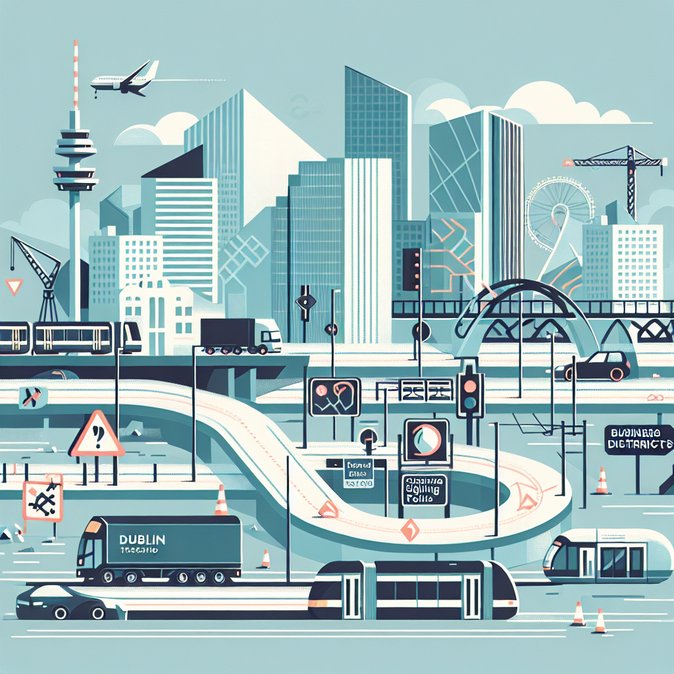
Visa and relocation specialists were forced into firefighting mode again after both the Luas Red Line and Irish Rail’s DART corridor suffered separate shutdowns on 15 December, with details published in a VisaHQ bulletin the following day. A vehicle strike on a city-centre bridge halted DART services between Pearse Station and Grand Canal Dock, while an unspecified “operational issue” suspended Luas Red Line trams west of the city core. Although both networks resumed within hours, overcrowding and cascading delays left many passengers missing inter-city trains and airport coaches.
The incident follows a Green Line system fault earlier in the week, renewing concerns over the resilience of Dublin’s light-rail infrastructure—particularly during the busy Christmas travel window. Transport for Ireland activated mutual-ticketing so Luas riders could switch to Dublin Bus, but long queues formed at key transfer stations.
Global mobility managers have reacted by recommending at least a 45-minute safety buffer for anyone connecting from city offices to Dublin Airport or Heuston Station. Several multinationals are reviewing emergency taxi agreements and flexible-working policies to mitigate productivity losses when rail links fail.
![Luas and DART outages on 15 December expose fragility of Dublin’s last-mile links for business travellers]()
In situations like these, VisaHQ’s Ireland desk (https://www.visahq.com/ireland/) can step in to reschedule visa appointments, alert travellers to route closures, and reroute courier pickups so that documents still reach embassies on time. Its real-time monitoring tools are already synced with Dublin transport feeds, giving HR teams a single dashboard for both immigration deadlines and on-the-ground mobility constraints.
The National Transport Authority’s capital plan earmarks nearly €1 billion for bridge renewals and signalling upgrades, but most projects remain years away. Until then, employers are advised to integrate live-traffic feeds into travel-approval tools and to brief newly arrived assignees on alternative routes.
While the disruption is domestic, its knock-on effect on flight connections and visa appointments underscores why local transport reliability belongs on every global-mobility risk register alongside immigration and tax compliance.
The incident follows a Green Line system fault earlier in the week, renewing concerns over the resilience of Dublin’s light-rail infrastructure—particularly during the busy Christmas travel window. Transport for Ireland activated mutual-ticketing so Luas riders could switch to Dublin Bus, but long queues formed at key transfer stations.
Global mobility managers have reacted by recommending at least a 45-minute safety buffer for anyone connecting from city offices to Dublin Airport or Heuston Station. Several multinationals are reviewing emergency taxi agreements and flexible-working policies to mitigate productivity losses when rail links fail.

In situations like these, VisaHQ’s Ireland desk (https://www.visahq.com/ireland/) can step in to reschedule visa appointments, alert travellers to route closures, and reroute courier pickups so that documents still reach embassies on time. Its real-time monitoring tools are already synced with Dublin transport feeds, giving HR teams a single dashboard for both immigration deadlines and on-the-ground mobility constraints.
The National Transport Authority’s capital plan earmarks nearly €1 billion for bridge renewals and signalling upgrades, but most projects remain years away. Until then, employers are advised to integrate live-traffic feeds into travel-approval tools and to brief newly arrived assignees on alternative routes.
While the disruption is domestic, its knock-on effect on flight connections and visa appointments underscores why local transport reliability belongs on every global-mobility risk register alongside immigration and tax compliance.