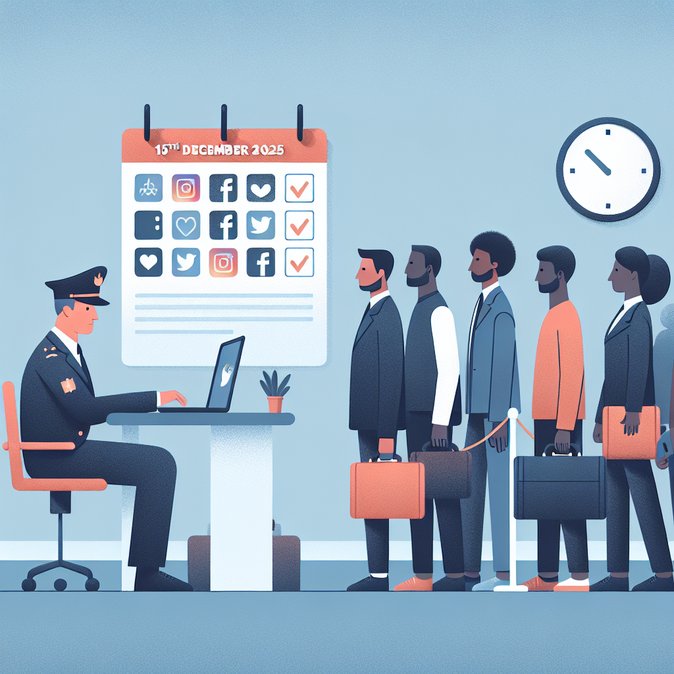
In a worldwide cable released overnight, the U.S. Department of State ordered every consular post to refuse H-1B and H-4 visa applications unless the applicant has switched every social-media account to “public” visibility before interview. The policy, effective immediately on 15 December 2025, extends an earlier directive that already applied to F-1 and J-1 categories. Consular officers will review at least five years of posts on platforms ranging from LinkedIn to TikTok and may ask for additional handles uncovered during open-source searches. Failure to comply triggers a 221(g) refusal, forcing the applicant to unlock accounts and return for re-adjudication.
For employers, the surprise expansion adds a new layer of risk to an already fraught H-1B process. Attorneys say that even innocent social-media content—such as political memes or images that appear to contradict stated job duties—could prompt security advisory opinions, prolonging issuance by weeks. Companies should therefore add a social-media audit to standard H-1B checklists and warn dependents that their online activities will also be reviewed.
![State Department now demands public social-media profiles for all H-1B visa filings]()
To navigate these new hurdles, applicants can turn to VisaHQ for practical assistance. VisaHQ’s U.S. visa specialists (https://www.visahq.com/united-states/) help coordinate document packets, schedule consular appointments, and pre-screen social-media footprints, reducing the likelihood of a 221(g) hold and keeping immigration timelines on track.
Privacy advocates argue the directive violates both the Administrative Procedure Act and constitutional free-speech protections. They note that the State Department skipped formal notice-and-comment rulemaking, and that the policy disproportionately affects foreign STEM workers, many of whom reside in the United States and use personal accounts for professional networking. Several tech coalitions are exploring litigation; in the meantime, consulates have begun cancelling previously scheduled appointments to allow applicants time to adjust settings.
Practically, HR teams should expect interview backlogs through the first quarter of 2026, especially at high-volume posts such as Chennai, Hyderabad and Vancouver. Executives traveling under Blanket L or B-1 visas may also face supplemental questioning about corporate social-media policies as officers test the limits of the new guidance.
For employers, the surprise expansion adds a new layer of risk to an already fraught H-1B process. Attorneys say that even innocent social-media content—such as political memes or images that appear to contradict stated job duties—could prompt security advisory opinions, prolonging issuance by weeks. Companies should therefore add a social-media audit to standard H-1B checklists and warn dependents that their online activities will also be reviewed.

To navigate these new hurdles, applicants can turn to VisaHQ for practical assistance. VisaHQ’s U.S. visa specialists (https://www.visahq.com/united-states/) help coordinate document packets, schedule consular appointments, and pre-screen social-media footprints, reducing the likelihood of a 221(g) hold and keeping immigration timelines on track.
Privacy advocates argue the directive violates both the Administrative Procedure Act and constitutional free-speech protections. They note that the State Department skipped formal notice-and-comment rulemaking, and that the policy disproportionately affects foreign STEM workers, many of whom reside in the United States and use personal accounts for professional networking. Several tech coalitions are exploring litigation; in the meantime, consulates have begun cancelling previously scheduled appointments to allow applicants time to adjust settings.
Practically, HR teams should expect interview backlogs through the first quarter of 2026, especially at high-volume posts such as Chennai, Hyderabad and Vancouver. Executives traveling under Blanket L or B-1 visas may also face supplemental questioning about corporate social-media policies as officers test the limits of the new guidance.