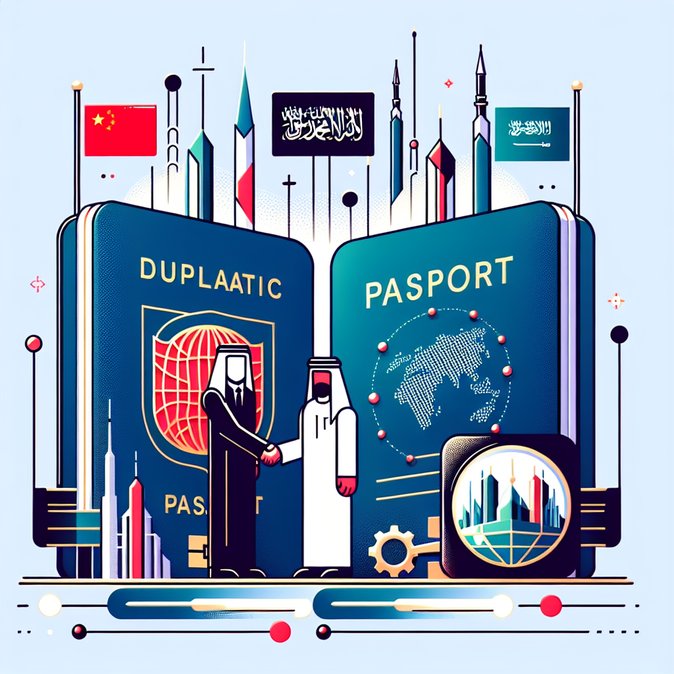
China and Saudi Arabia took another step toward deepening their rapidly expanding partnership on December 15, 2025, when foreign ministers Wang Yi and Prince Faisal bin Farhan signed a reciprocal visa-exemption agreement in Riyadh. Effective immediately, holders of diplomatic, service and special passports from both countries will be able to enter the other state without applying for a visa, removing layers of paperwork and wait time for government officials.
The waiver is narrow in scope—ordinary travelers will still need visas—but it eliminates one of the biggest friction points in scheduling high-level meetings, trade missions and cultural delegations. Officials on both sides highlighted the symbolism of finalising the deal during celebrations for the 35th anniversary of diplomatic relations. In practical terms, the change will speed up everything from oil-market consultations and defence dialogues to large-scale investment discussions under Saudi Vision 2030 and China’s Belt and Road Initiative.
Corporations that depend on government permits—energy majors, sovereign wealth funds, construction firms and tech giants—stand to benefit from faster turn-around on official paperwork and site inspections. Chinese engineering teams visiting NEOM or Saudi green-hydrogen projects, for example, can now travel on service passports without advance visas, cutting at least a week from mobilisation timelines. Conversely, Saudi delegations negotiating supply contracts or RMB bond listings in Shanghai will find it easier to arrange last-minute trips.
![Saudi Arabia and China Sign Mutual Visa Exemption for Diplomatic Passports]()
Ordinary passport holders who still need visas don’t have to wrestle with consular procedures alone. Online facilitators like VisaHQ guide travelers through up-to-date requirements, assemble documentation and book embassy appointments for China, Saudi Arabia and dozens of other destinations; readers can find China-specific information at https://www.visahq.com/china/
Analysts note that the agreement also nudges the two states closer to the practice of full visa reciprocity already enjoyed by all six Gulf Cooperation Council members for ordinary Chinese passport holders. While the current pact stops short of that, travel industry associations argue that seamless official travel often paves the way for broader liberalisation that can boost high-yield business tourism. Multinational firms with regional headquarters in Dubai or Riyadh are therefore watching closely for any spill-over into corporate traveler facilitation.
Chinese risk-managers should, however, remind travelers that the waiver applies strictly to passport class, not to purpose of travel. Diplomats on private vacations, or executives carrying ordinary passports, still require visas. Companies are advised to update their mobility policies and alert travel-management companies so that bookings routed through government channels can take advantage of the new exemption without last-minute surprises.
The waiver is narrow in scope—ordinary travelers will still need visas—but it eliminates one of the biggest friction points in scheduling high-level meetings, trade missions and cultural delegations. Officials on both sides highlighted the symbolism of finalising the deal during celebrations for the 35th anniversary of diplomatic relations. In practical terms, the change will speed up everything from oil-market consultations and defence dialogues to large-scale investment discussions under Saudi Vision 2030 and China’s Belt and Road Initiative.
Corporations that depend on government permits—energy majors, sovereign wealth funds, construction firms and tech giants—stand to benefit from faster turn-around on official paperwork and site inspections. Chinese engineering teams visiting NEOM or Saudi green-hydrogen projects, for example, can now travel on service passports without advance visas, cutting at least a week from mobilisation timelines. Conversely, Saudi delegations negotiating supply contracts or RMB bond listings in Shanghai will find it easier to arrange last-minute trips.

Ordinary passport holders who still need visas don’t have to wrestle with consular procedures alone. Online facilitators like VisaHQ guide travelers through up-to-date requirements, assemble documentation and book embassy appointments for China, Saudi Arabia and dozens of other destinations; readers can find China-specific information at https://www.visahq.com/china/
Analysts note that the agreement also nudges the two states closer to the practice of full visa reciprocity already enjoyed by all six Gulf Cooperation Council members for ordinary Chinese passport holders. While the current pact stops short of that, travel industry associations argue that seamless official travel often paves the way for broader liberalisation that can boost high-yield business tourism. Multinational firms with regional headquarters in Dubai or Riyadh are therefore watching closely for any spill-over into corporate traveler facilitation.
Chinese risk-managers should, however, remind travelers that the waiver applies strictly to passport class, not to purpose of travel. Diplomats on private vacations, or executives carrying ordinary passports, still require visas. Companies are advised to update their mobility policies and alert travel-management companies so that bookings routed through government channels can take advantage of the new exemption without last-minute surprises.