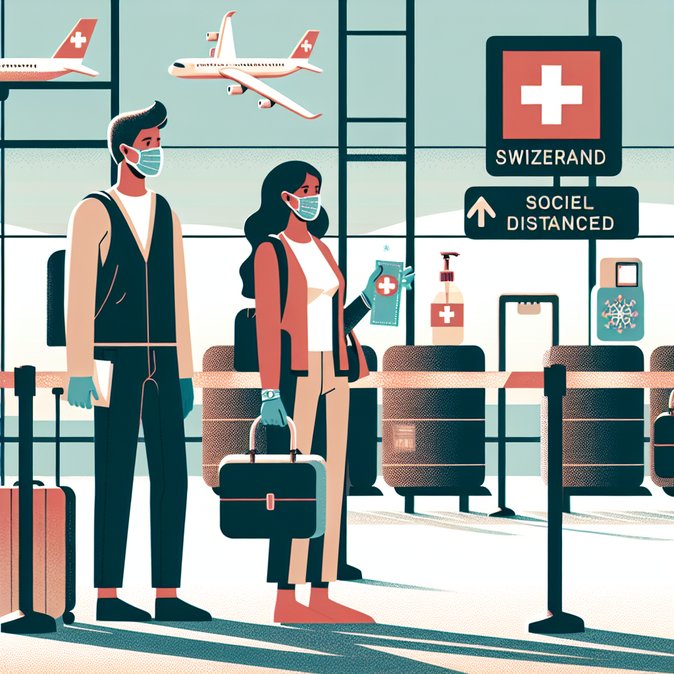
Switzerland’s Federal Office of Public Health (FOPH) has sounded the alarm over a "strong Covid-19 wave" just days before the year-end travel rush. In a 13 December bulletin the agency reported nationwide hospital occupancy of 87 percent, with Zurich, Vaud and Ticino already activating surge plans. Although Bern is not re-introducing blanket entry restrictions, officials urged vulnerable residents and visitors to avoid crowded trains and to keep masks handy as several cantons ponder mandates on regional transport.
For inbound travellers the most immediate impact is heightened uncertainty. While visas and residence permits continue to be processed as normal, a positive test still triggers canton-specific isolation (usually five days). Mobility managers should therefore brief assignees on remote-work contingencies and ensure company sick-leave policies extend to forced hotel quarantines. Travel insurers report a spike in enquiries for “cancel-for-any-reason” upgrades on flights routed through Geneva and Zurich.
Travellers looking for up-to-date entry documentation or assistance with visa extensions can streamline the process through VisaHQ, whose Switzerland portal (https://www.visahq.com/switzerland/) tracks canton-level health directives alongside standard consular rules. The platform’s alerts and courier coordination can shave days off paperwork turnaround—particularly useful if last-minute Covid measures threaten to derail a planned trip.
![Swiss Health Authority Flags Covid Surge, Issues Holiday Travel Advisory]()
The dominant Omicron-lineage sub-variants feature immune-escape mutations, driving reinfections even among those vaccinated within the last six months. The FOPH will reassess the epidemiological situation on 20 December and has not ruled out targeted capacity limits for large events. Airlines have kept flexible rebooking policies but warn they may reinstate mask requirements at short notice if cantonal rules tighten.
Practically, global travellers should confirm that their health insurance covers isolation costs and check whether their home country still requires Covid documentation for re-entry. Visa consultants advise building extra lead-time into passport collection and courier schedules in case sudden local measures slow down administrative services.
With Europe bracing for peak holiday mobility, Switzerland’s advisory serves as a reminder that pandemic-related disruptions have not entirely disappeared. Corporate mobility teams are urged to keep employee hotlines active and to refresh contingency accommodation blocks near key Swiss hubs.
For inbound travellers the most immediate impact is heightened uncertainty. While visas and residence permits continue to be processed as normal, a positive test still triggers canton-specific isolation (usually five days). Mobility managers should therefore brief assignees on remote-work contingencies and ensure company sick-leave policies extend to forced hotel quarantines. Travel insurers report a spike in enquiries for “cancel-for-any-reason” upgrades on flights routed through Geneva and Zurich.
Travellers looking for up-to-date entry documentation or assistance with visa extensions can streamline the process through VisaHQ, whose Switzerland portal (https://www.visahq.com/switzerland/) tracks canton-level health directives alongside standard consular rules. The platform’s alerts and courier coordination can shave days off paperwork turnaround—particularly useful if last-minute Covid measures threaten to derail a planned trip.

The dominant Omicron-lineage sub-variants feature immune-escape mutations, driving reinfections even among those vaccinated within the last six months. The FOPH will reassess the epidemiological situation on 20 December and has not ruled out targeted capacity limits for large events. Airlines have kept flexible rebooking policies but warn they may reinstate mask requirements at short notice if cantonal rules tighten.
Practically, global travellers should confirm that their health insurance covers isolation costs and check whether their home country still requires Covid documentation for re-entry. Visa consultants advise building extra lead-time into passport collection and courier schedules in case sudden local measures slow down administrative services.
With Europe bracing for peak holiday mobility, Switzerland’s advisory serves as a reminder that pandemic-related disruptions have not entirely disappeared. Corporate mobility teams are urged to keep employee hotlines active and to refresh contingency accommodation blocks near key Swiss hubs.