Poland’s long-planned “Eastern Shield” programme—an ambitious, multi-year project to harden defensive lines along the borders with Belarus and Russia’s Kaliningrad enclave—received a major boost on 13 December when Berlin confirmed it will contribute an initial 50 Bundeswehr engineers. According to Germany’s defence ministry, the contingent will arrive in April 2026 and remain through 2027, working side-by-side with Polish sappers to dig anti-tank ditches, erect barbed-wire obstacles and pour precast concrete bunkers.
The deployment is explicitly non-combat. No heavy weapons will accompany the soldiers, and the mission does not require a separate Bundestag mandate because personnel will stay on NATO territory. Still, the symbolism is powerful: it is the first time since reunification that German troops will help construct permanent fortifications in Poland—an acknowledgement of the heightened threat perception created by Russia’s war on Ukraine and Minsk’s ongoing “hybrid” migrant pressure on the EU’s eastern flank.
For multinational companies the move matters less for the number of German boots on Polish soil than for what it signals: sustained construction and restricted access zones all along key stretches of the 418-kilometre frontier. Logistics managers moving just-in-time shipments through the S19 and S61 corridors should expect periodic closures, convoy requirements and additional paperwork for oversized loads. Real-estate developers eyeing projects near the Suwałki Gap—vital for the Baltic States’ land link—will face stricter environmental and security permitting.
![Germany to Deploy Engineering Troops as Part of Poland’s “Eastern Shield” Fortifications]()
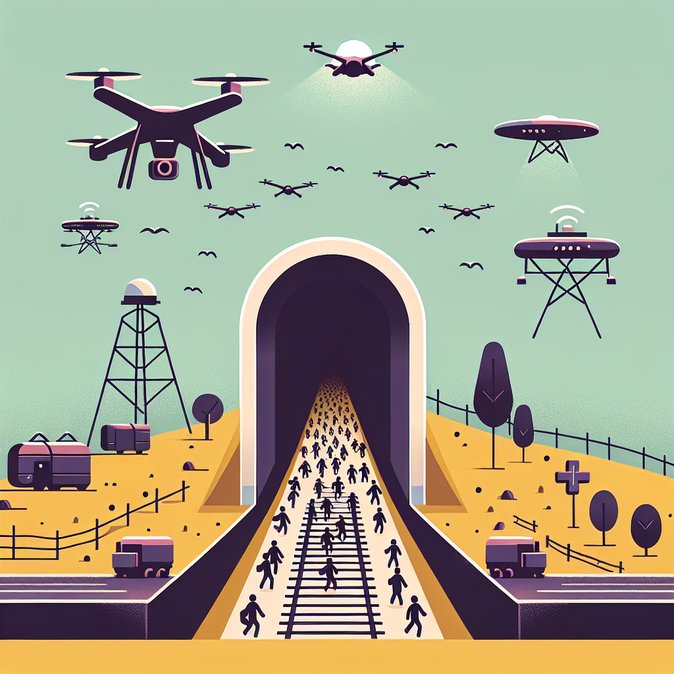
The two governments stress that civilian border crossings will remain open, but travellers should brace for heavier inspection regimes as new surveillance towers, motion sensors and drone patrols come online. Businesses moving personnel under the EU ICT Directive or Polish local contracts should factor in longer door-to-door times and possible curfews on cross-border night driving.
For businesses and individual travellers who find themselves navigating new inspection rules or tighter document checks, expert visa support can prevent costly delays. VisaHQ’s Poland portal (https://www.visahq.com/poland/) tracks real-time entry requirements, secures work permits and transit visas, and offers end-to-end application handling—helping companies and tourists stay compliant even as border procedures evolve.
In a broader geopolitical context, Germany’s help underlines the EU’s growing acceptance that border infrastructure is now part of collective deterrence—and that mobility policy, once purely economic, is now inseparable from security planning in Central Europe.
The deployment is explicitly non-combat. No heavy weapons will accompany the soldiers, and the mission does not require a separate Bundestag mandate because personnel will stay on NATO territory. Still, the symbolism is powerful: it is the first time since reunification that German troops will help construct permanent fortifications in Poland—an acknowledgement of the heightened threat perception created by Russia’s war on Ukraine and Minsk’s ongoing “hybrid” migrant pressure on the EU’s eastern flank.
For multinational companies the move matters less for the number of German boots on Polish soil than for what it signals: sustained construction and restricted access zones all along key stretches of the 418-kilometre frontier. Logistics managers moving just-in-time shipments through the S19 and S61 corridors should expect periodic closures, convoy requirements and additional paperwork for oversized loads. Real-estate developers eyeing projects near the Suwałki Gap—vital for the Baltic States’ land link—will face stricter environmental and security permitting.

The two governments stress that civilian border crossings will remain open, but travellers should brace for heavier inspection regimes as new surveillance towers, motion sensors and drone patrols come online. Businesses moving personnel under the EU ICT Directive or Polish local contracts should factor in longer door-to-door times and possible curfews on cross-border night driving.
For businesses and individual travellers who find themselves navigating new inspection rules or tighter document checks, expert visa support can prevent costly delays. VisaHQ’s Poland portal (https://www.visahq.com/poland/) tracks real-time entry requirements, secures work permits and transit visas, and offers end-to-end application handling—helping companies and tourists stay compliant even as border procedures evolve.
In a broader geopolitical context, Germany’s help underlines the EU’s growing acceptance that border infrastructure is now part of collective deterrence—and that mobility policy, once purely economic, is now inseparable from security planning in Central Europe.