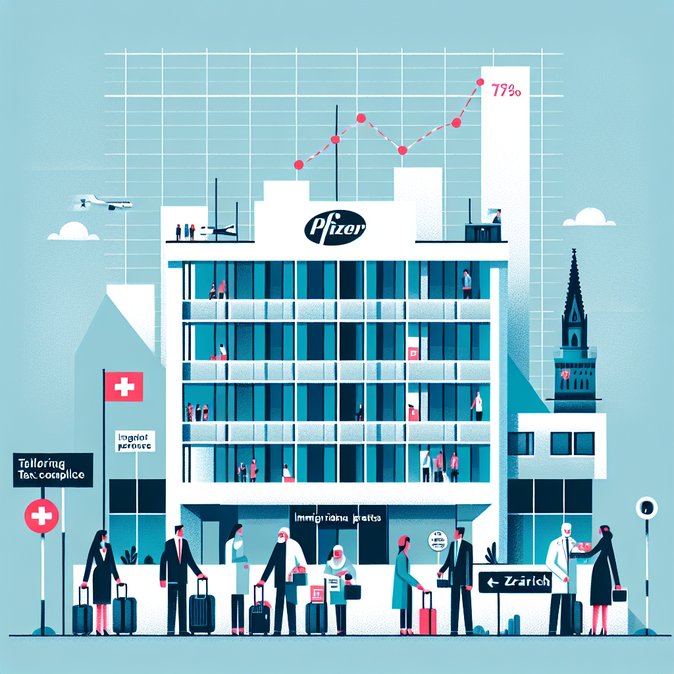
Pfizer confirmed late on 10 December that roughly 230 of its 300 Swiss positions will be eliminated by year-end as part of a US $7.7 billion global savings drive. The Zurich office, long a regional hub that rotates senior talent through EMEA markets, will shrink to a skeletal structure of around 70 employees.
From a mobility perspective the timing is brutal. HR insiders say two-thirds of the affected staff hold B- or L-work permits linked to short-term or rotational assignments. Under cantonal rules, employers must notify authorities within 30 days of an early contract termination and file an exit declaration at the border. Failure risks administrative fines and accidental over-stay violations—particularly for U.S. assignees who may linger to finish hand-overs.
For employees and mobility teams who suddenly have to unravel Swiss paperwork, VisaHQ’s Switzerland desk (https://www.visahq.com/switzerland/) can step in quickly to coordinate permit cancellations, prepare compliant exit documentation, and advise on alternative Schengen or global visa options. Leveraging an online platform and local expertise, VisaHQ helps assignees and employers stay ahead of critical deadlines while keeping records spotless for future travel.
![Pfizer Cuts Two-Thirds of Swiss Workforce, Creating Urgent Permit-Exit Headaches]()
Pfizer’s severance package reportedly offers repatriation flights, household-goods shipping and tax-equalisation through 2025, but local advisors warn that Zurich’s tight rental market makes it difficult to break leases without hefty penalties. Departing employees must also ensure continuous Swiss health-insurance cover until the precise date they leave the country, a legal requirement many assignees overlook.
The layoffs land as Switzerland freezes third-country permit quotas for 2026. Mobility teams fear that an influx of unemployed foreign specialists could saturate an already competitive local labour market just as quota allocations tighten. Some departing assignees are eyeing intra-EU transfers to retain Schengen residence, adding ETIAS and Entry/Exit System (EES) enrolment to the compliance checklist.
Practically, global employers should audit pending Swiss immigration cases, cancel unused permit slots promptly, and brief affected nationals on social-security exportability and Swiss exit-tax filings. Early planning can limit financial exposure and keep records clean for future Swiss re-entries.
From a mobility perspective the timing is brutal. HR insiders say two-thirds of the affected staff hold B- or L-work permits linked to short-term or rotational assignments. Under cantonal rules, employers must notify authorities within 30 days of an early contract termination and file an exit declaration at the border. Failure risks administrative fines and accidental over-stay violations—particularly for U.S. assignees who may linger to finish hand-overs.
For employees and mobility teams who suddenly have to unravel Swiss paperwork, VisaHQ’s Switzerland desk (https://www.visahq.com/switzerland/) can step in quickly to coordinate permit cancellations, prepare compliant exit documentation, and advise on alternative Schengen or global visa options. Leveraging an online platform and local expertise, VisaHQ helps assignees and employers stay ahead of critical deadlines while keeping records spotless for future travel.

Pfizer’s severance package reportedly offers repatriation flights, household-goods shipping and tax-equalisation through 2025, but local advisors warn that Zurich’s tight rental market makes it difficult to break leases without hefty penalties. Departing employees must also ensure continuous Swiss health-insurance cover until the precise date they leave the country, a legal requirement many assignees overlook.
The layoffs land as Switzerland freezes third-country permit quotas for 2026. Mobility teams fear that an influx of unemployed foreign specialists could saturate an already competitive local labour market just as quota allocations tighten. Some departing assignees are eyeing intra-EU transfers to retain Schengen residence, adding ETIAS and Entry/Exit System (EES) enrolment to the compliance checklist.
Practically, global employers should audit pending Swiss immigration cases, cancel unused permit slots promptly, and brief affected nationals on social-security exportability and Swiss exit-tax filings. Early planning can limit financial exposure and keep records clean for future Swiss re-entries.
More From Switzerland
View all
Swiss National Bank Endorses Tougher UBS Capital Rules, Ignites Headquarters-Relocation Scenario Planning

Federal Council Adopts Digital Switzerland Strategy 2026, Pledges e-ID Roll-Out for Citizens and Expatriates
