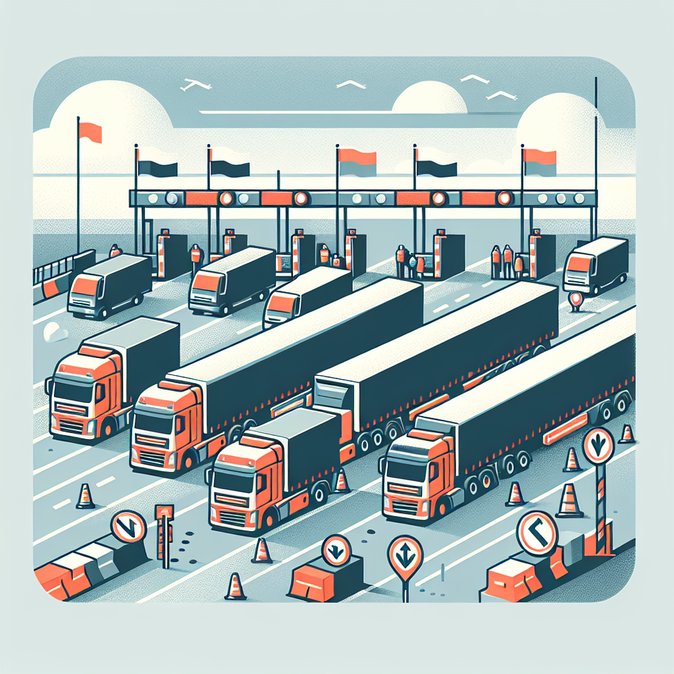
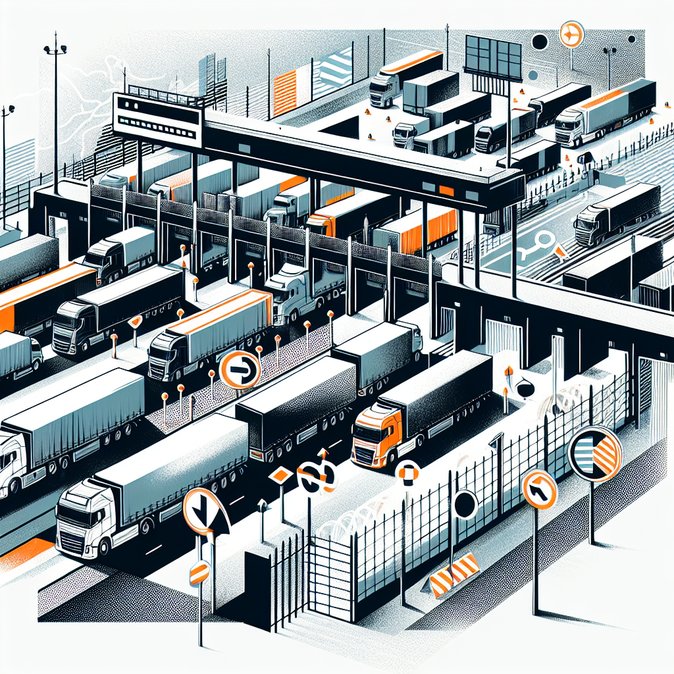
Long-haul freight flows between Poland and Ukraine remained severely disrupted on 11 December as Polish carrier protests blocked three major border posts—Shehyni, Rava-Ruska and Krakivets—leaving an estimated 2 610 trucks stranded on the Polish side. Although strikers reopened the key Yahodyn–Dorohusk crossing late on 10 December, throughput there is still well below pre-blockade levels, with roughly 700 vehicles queuing on Thursday morning.
Polish hauliers launched the blockade on 6 November to demand the reinstatement of permit quotas for Ukrainian trucking companies—arrangements that were suspended by an EU-Ukraine road-transport agreement after Russia’s invasion. Protest leaders argue that Ukrainian carriers, who currently operate without permit caps, are under-cutting Polish firms on EU routes. Farmers joined the action on 23 November, further complicating negotiations.
For supply-chain managers the impact is acute: transit times for raw materials and finished goods have stretched from 48 hours to more than a week, and manufacturers in Upper Silesia report production slow-downs because critical components are stuck at the frontier. Automotive and FMCG exporters using the short ‘land bridge’ to Black Sea ports via Ukraine have diverted some loads through Slovakia, adding up to 400 km per journey.
![2 600 Trucks Stuck as Polish Carrier Blockade Continues at Three Ukraine Crossings]()
If the disruptions force companies to rotate drivers or deploy replacement staff across borders, navigating visa and work-permit requirements can add another layer of complexity. VisaHQ’s Poland portal (https://www.visahq.com/poland/) provides expedited assistance with Schengen, Ukrainian and other regional visas, helping logistics operators secure the correct documents for crews and support personnel so they can keep cargo moving despite the ongoing protests.
Warsaw says it cannot unilaterally overturn the EU-level agreement with Kyiv but has offered to station additional customs officers and extend opening hours to clear backlogs once protests end. Talks between the infrastructure ministry and carrier associations are scheduled for 13 December, yet organisers vow to maintain pressure until ‘competitive parity’ is restored.
Mobility planners moving assignees or household goods through the corridor should consider alternative routes via Slovakia or the Baltic ports and build in significant lead-time. Companies shipping machinery or project cargo for Ukraine reconstruction projects may need to reroute via sea to Constanța or Gdańsk to avoid indefinite delays.
Polish hauliers launched the blockade on 6 November to demand the reinstatement of permit quotas for Ukrainian trucking companies—arrangements that were suspended by an EU-Ukraine road-transport agreement after Russia’s invasion. Protest leaders argue that Ukrainian carriers, who currently operate without permit caps, are under-cutting Polish firms on EU routes. Farmers joined the action on 23 November, further complicating negotiations.
For supply-chain managers the impact is acute: transit times for raw materials and finished goods have stretched from 48 hours to more than a week, and manufacturers in Upper Silesia report production slow-downs because critical components are stuck at the frontier. Automotive and FMCG exporters using the short ‘land bridge’ to Black Sea ports via Ukraine have diverted some loads through Slovakia, adding up to 400 km per journey.
If the disruptions force companies to rotate drivers or deploy replacement staff across borders, navigating visa and work-permit requirements can add another layer of complexity. VisaHQ’s Poland portal (https://www.visahq.com/poland/) provides expedited assistance with Schengen, Ukrainian and other regional visas, helping logistics operators secure the correct documents for crews and support personnel so they can keep cargo moving despite the ongoing protests.
Warsaw says it cannot unilaterally overturn the EU-level agreement with Kyiv but has offered to station additional customs officers and extend opening hours to clear backlogs once protests end. Talks between the infrastructure ministry and carrier associations are scheduled for 13 December, yet organisers vow to maintain pressure until ‘competitive parity’ is restored.
Mobility planners moving assignees or household goods through the corridor should consider alternative routes via Slovakia or the Baltic ports and build in significant lead-time. Companies shipping machinery or project cargo for Ukraine reconstruction projects may need to reroute via sea to Constanța or Gdańsk to avoid indefinite delays.