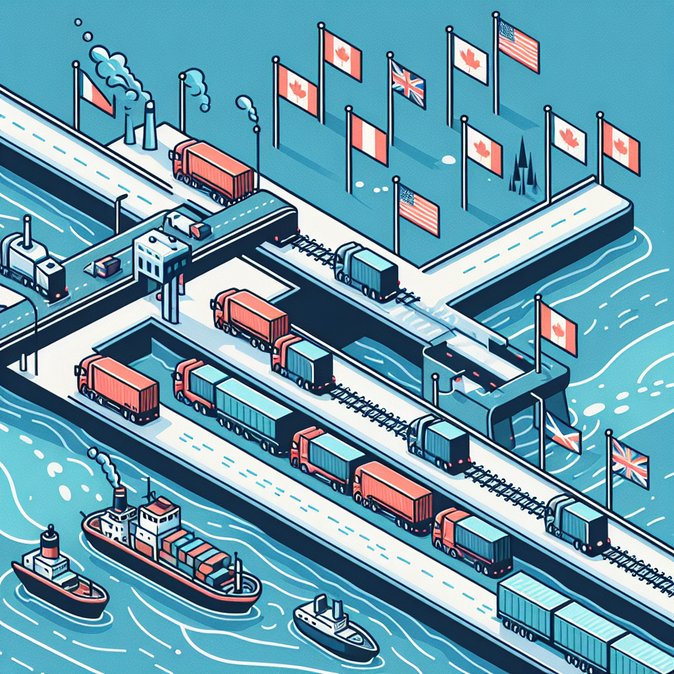
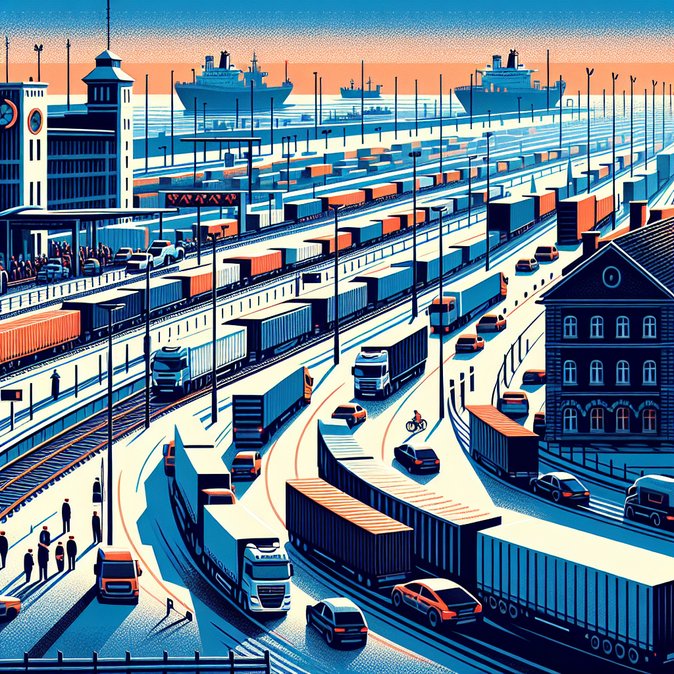
What began as a limited carrier protest in early November has morphed into a full blockade of the Dorohusk–Yahodyn crossing, one of Poland’s busiest freight arteries into Ukraine. On 9 December the Lublin Customs Administration confirmed that export trucks now face waits of more than 30 days, with an estimated 1,500 vehicles parked along National Road 12. Protest leaders—angered by cabotage liberalisation and rising fuel costs—are allowing just one truck to cross every three hours.
The Dorohusk action compounds earlier blockades at three other crossings where nearly 2,000 lorries were already stalled, stranding goods worth roughly €320 million. Automotive plants in Katowice and Wrocław report production risks as just-in-time Ukrainian components sit in queues. Agribusiness exporters warn that perishable cargoes may spoil before reaching EU markets.
![Truck Queues Reach 30-Day Wait as Polish Carrier Blockade Escalates at Dorohusk]()
For companies and commuters now scrambling for alternative corridors, VisaHQ’s Poland office can simplify the paperwork that sudden rerouting often requires. Through its online platform (https://www.visahq.com/poland/), VisaHQ provides expedited visa processing, real-time status tracking and tailored advisory support, helping drivers, technicians and project staff secure the right travel documents before diverting via Slovakia, Hungary or other EU entry points.
Mobility managers are feeling the pinch too. Foreign assignees who commute daily between Poland and western Ukraine have been forced to detour 200 kilometres to Hrebenne or reroute via Slovakia, adding six to eight hours per journey. Companies are incurring overtime costs for drivers caught in the jam and must update rest-time compliance plans.
Warsaw has offered mediation but refuses to abandon the EU-Ukraine road-transport deal that protesters blame for “unfair” competition. The Territorial Defence Force has been authorised to deliver fuel and food to stranded drivers to prevent a humanitarian emergency. Businesses are advised to monitor the Border Guard’s live portal and build at least a three-day buffer into road-freight schedules, or shift loads to rail via Medyka and maritime routes through Gdańsk until the standoff eases.
The Dorohusk action compounds earlier blockades at three other crossings where nearly 2,000 lorries were already stalled, stranding goods worth roughly €320 million. Automotive plants in Katowice and Wrocław report production risks as just-in-time Ukrainian components sit in queues. Agribusiness exporters warn that perishable cargoes may spoil before reaching EU markets.
For companies and commuters now scrambling for alternative corridors, VisaHQ’s Poland office can simplify the paperwork that sudden rerouting often requires. Through its online platform (https://www.visahq.com/poland/), VisaHQ provides expedited visa processing, real-time status tracking and tailored advisory support, helping drivers, technicians and project staff secure the right travel documents before diverting via Slovakia, Hungary or other EU entry points.
Mobility managers are feeling the pinch too. Foreign assignees who commute daily between Poland and western Ukraine have been forced to detour 200 kilometres to Hrebenne or reroute via Slovakia, adding six to eight hours per journey. Companies are incurring overtime costs for drivers caught in the jam and must update rest-time compliance plans.
Warsaw has offered mediation but refuses to abandon the EU-Ukraine road-transport deal that protesters blame for “unfair” competition. The Territorial Defence Force has been authorised to deliver fuel and food to stranded drivers to prevent a humanitarian emergency. Businesses are advised to monitor the Border Guard’s live portal and build at least a three-day buffer into road-freight schedules, or shift loads to rail via Medyka and maritime routes through Gdańsk until the standoff eases.