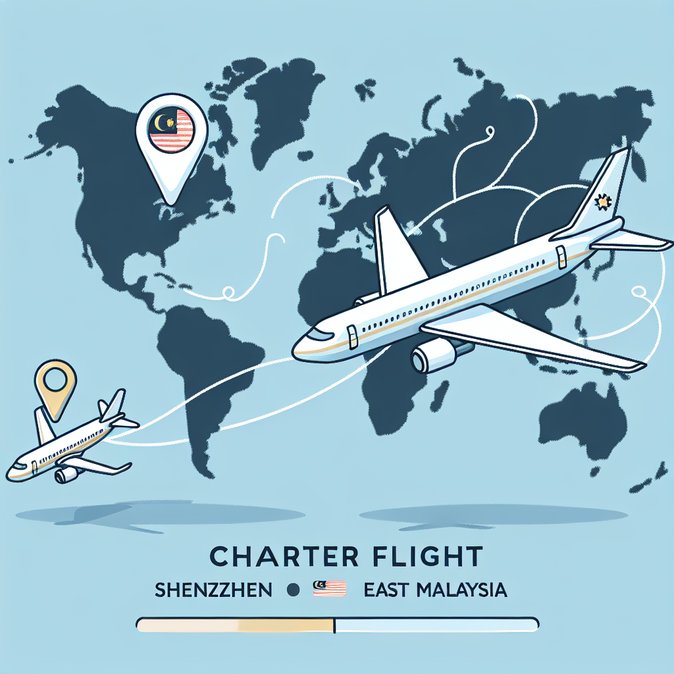
China Eastern Airlines this week cemented its reputation for ultra-long-haul ambition by launching the world’s longest scheduled passenger service between Shanghai Pudong (PVG) and Buenos Aires Ezeiza (EZE). The twice-weekly flight, routed via a short technical stop in Auckland, covers roughly 20,700 km and can take up to 29 hours on the turbulent east-bound return leg. Operated with a 316-seat Boeing 777-300ER, the service departed China for the first time on 4 December and logged its record-setting 29-hour north-bound sector on 10 December.
For corporate mobility managers, the route plugs a yawning gap in direct connectivity between East Asia and South America. Until now, travellers typically connected in Europe, the Middle East or North America, adding hours – and often a visa touch-point – to already punishing itineraries. China Eastern is framing the link as the first trunk of a new “Air Silk Road” that ties Asia, Oceania and Latin America into a single southbound corridor, potentially cutting freight and executive-travel times for Chinese firms investing in soy, lithium and renewable-energy projects across Argentina and neighbouring markets.
The carrier is pricing economy return fares from €1,320 and business class from €4,200; demand modelling suggests the 55,000-strong Chinese diaspora in Argentina and bilateral trade worth US$17 billion a year will sustain loads. Cargo capacity is also being marketed aggressively to exporters of chilled beef and southern-hemisphere fruit coming the other way. Competitive response is likely: Aerolíneas Argentinas has signalled interest in codesharing, while Air China is studying a Beijing–São Paulo restart if the China Eastern route proves viable.
![China Eastern inaugurates record-breaking 29-hour Shanghai–Buenos Aires link, opening new ‘Air Silk Road’]()
Before locking in travel dates, remember that even a “direct” itinerary touches three separate jurisdictions—China, New Zealand and Argentina—each with its own entry or transit formalities. VisaHQ’s platform (https://www.visahq.com/china/) lets travellers and mobility managers check up-to-the-minute visa requirements, submit applications online and track approvals in one place, streamlining paperwork that can otherwise derail tight project timelines.
Operationally, the marathon flight showcases advancements in fuel-efficient twin-engine jets and tail-wind routing analytics. Crew scheduling remains complex – four flight decks and augmented cabin crews are rostered – but regulatory approvals from CAAC and ANAC grant duty-time exemptions under special fatigue-risk management plans. China Eastern says it will evaluate a non-stop option using next-generation ultra-long-range aircraft after 2028.
For mobility planners the advice is clear: factor in mandatory rest periods on arrival and review medical-assistance contracts that cover fatigue-related incidents. Companies moving project teams between China, New Zealand and South America now have a faster but physically demanding option that rewrites the map of inter-continental business travel.
For corporate mobility managers, the route plugs a yawning gap in direct connectivity between East Asia and South America. Until now, travellers typically connected in Europe, the Middle East or North America, adding hours – and often a visa touch-point – to already punishing itineraries. China Eastern is framing the link as the first trunk of a new “Air Silk Road” that ties Asia, Oceania and Latin America into a single southbound corridor, potentially cutting freight and executive-travel times for Chinese firms investing in soy, lithium and renewable-energy projects across Argentina and neighbouring markets.
The carrier is pricing economy return fares from €1,320 and business class from €4,200; demand modelling suggests the 55,000-strong Chinese diaspora in Argentina and bilateral trade worth US$17 billion a year will sustain loads. Cargo capacity is also being marketed aggressively to exporters of chilled beef and southern-hemisphere fruit coming the other way. Competitive response is likely: Aerolíneas Argentinas has signalled interest in codesharing, while Air China is studying a Beijing–São Paulo restart if the China Eastern route proves viable.

Before locking in travel dates, remember that even a “direct” itinerary touches three separate jurisdictions—China, New Zealand and Argentina—each with its own entry or transit formalities. VisaHQ’s platform (https://www.visahq.com/china/) lets travellers and mobility managers check up-to-the-minute visa requirements, submit applications online and track approvals in one place, streamlining paperwork that can otherwise derail tight project timelines.
Operationally, the marathon flight showcases advancements in fuel-efficient twin-engine jets and tail-wind routing analytics. Crew scheduling remains complex – four flight decks and augmented cabin crews are rostered – but regulatory approvals from CAAC and ANAC grant duty-time exemptions under special fatigue-risk management plans. China Eastern says it will evaluate a non-stop option using next-generation ultra-long-range aircraft after 2028.
For mobility planners the advice is clear: factor in mandatory rest periods on arrival and review medical-assistance contracts that cover fatigue-related incidents. Companies moving project teams between China, New Zealand and South America now have a faster but physically demanding option that rewrites the map of inter-continental business travel.