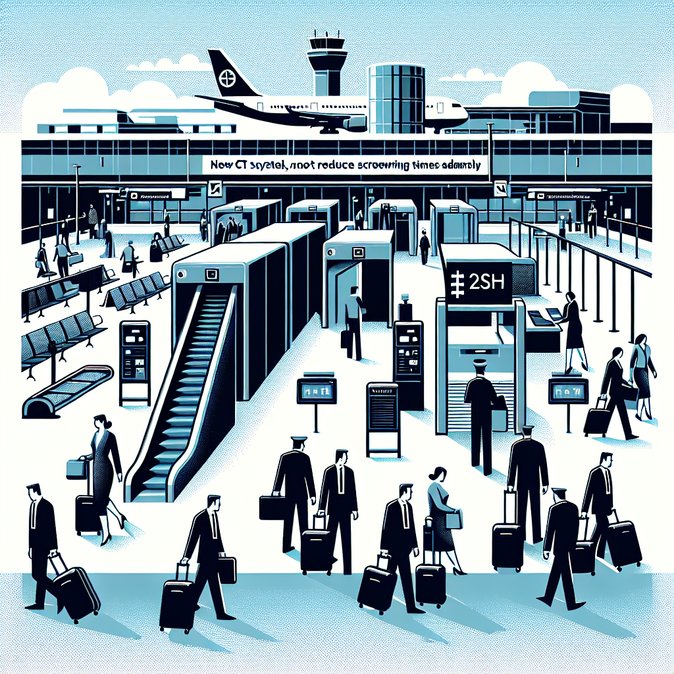
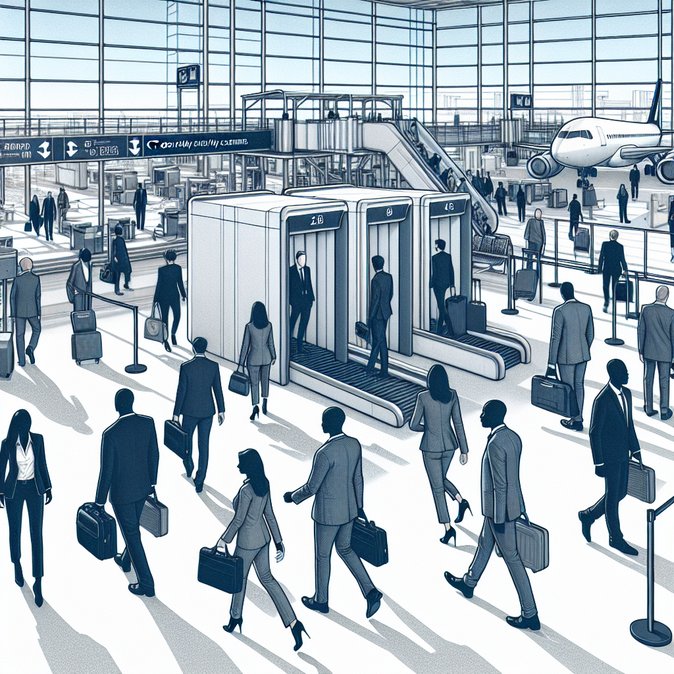
Beginning in summer 2026, passengers departing Zurich Airport will no longer have to decant toiletries into 100-millilitre containers or remove laptops at the security checkpoint. Airport operator Flughafen Zürich AG confirmed on 8 December 2025 that installation of twenty-six next-generation computed-tomography (CT) scanners is now under way on all departure levels. Three lanes came online this week, generating queue times of up to 30 minutes as staff received final training, but management insists the short-term pain will translate into a 30-40 percent throughput gain once the project is complete.
The scanners create high-resolution 3-D images that allow explosives to be detected inside cluttered bags, making the manual removal of liquids and electronics redundant. Similar systems are already in use at London City, Schiphol and several U.S. hubs; Switzerland’s adoption puts it ahead of most Schengen partners, a fact the airport hopes will bolster its position as a premium transfer gateway for multinational travellers.
![Zurich Airport to Scrap 100-ml Liquid Limit After Installing CT Scanners]()
Whether you’re passing through Zurich on business or beginning a Swiss holiday, don’t let visa paperwork become the next hurdle. VisaHQ offers a streamlined online process for securing Swiss entry documents as well as visas for onward destinations, providing real-time requirement checks, digital form completion and courier options in one place. Explore the service at https://www.visahq.com/switzerland/
For corporate travel managers the change removes one of the biggest friction points on Swiss itineraries. Executive flyers who commute weekly between Zurich and global headquarters will save an estimated five to ten minutes per screening—valuable time during peak morning banks that feed trans-Atlantic departures. Airlines have welcomed the move, arguing that faster security will help them turn aircraft more quickly and reduce EU-261 compensation exposure linked to missed connections.
Implementation is being staggered to keep capacity in line with the winter peak. Eight additional machines arrive in January, with full roll-out slated for May—ahead of the busy summer season. Geneva and Basel airports are conducting separate tenders and are expected to follow Zurich’s lead in 2027. Travellers should still expect the 100-ml rule until Zurich formally amends its airport ordinance next June; a public-information campaign will launch in the spring to avoid confusion.
The scanners create high-resolution 3-D images that allow explosives to be detected inside cluttered bags, making the manual removal of liquids and electronics redundant. Similar systems are already in use at London City, Schiphol and several U.S. hubs; Switzerland’s adoption puts it ahead of most Schengen partners, a fact the airport hopes will bolster its position as a premium transfer gateway for multinational travellers.
Whether you’re passing through Zurich on business or beginning a Swiss holiday, don’t let visa paperwork become the next hurdle. VisaHQ offers a streamlined online process for securing Swiss entry documents as well as visas for onward destinations, providing real-time requirement checks, digital form completion and courier options in one place. Explore the service at https://www.visahq.com/switzerland/
For corporate travel managers the change removes one of the biggest friction points on Swiss itineraries. Executive flyers who commute weekly between Zurich and global headquarters will save an estimated five to ten minutes per screening—valuable time during peak morning banks that feed trans-Atlantic departures. Airlines have welcomed the move, arguing that faster security will help them turn aircraft more quickly and reduce EU-261 compensation exposure linked to missed connections.
Implementation is being staggered to keep capacity in line with the winter peak. Eight additional machines arrive in January, with full roll-out slated for May—ahead of the busy summer season. Geneva and Basel airports are conducting separate tenders and are expected to follow Zurich’s lead in 2027. Travellers should still expect the 100-ml rule until Zurich formally amends its airport ordinance next June; a public-information campaign will launch in the spring to avoid confusion.