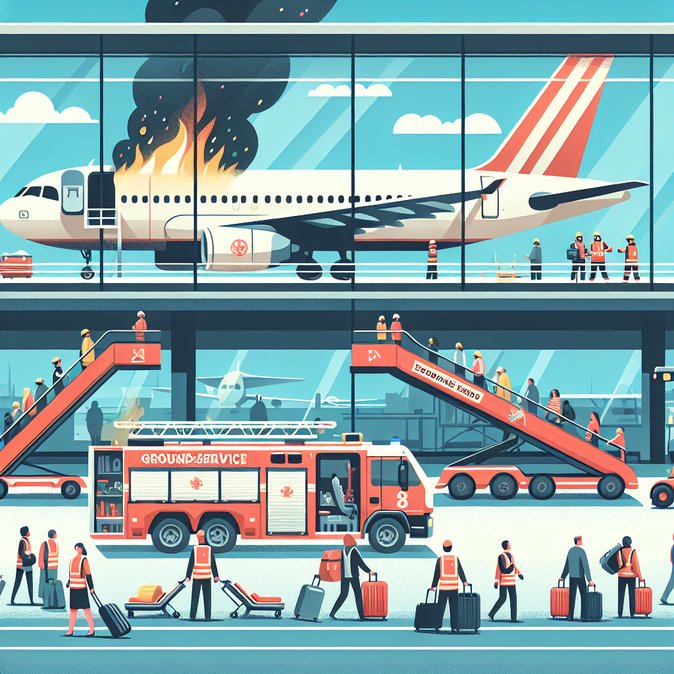
A routine push-back at São Paulo/Guarulhos on the night of 4 December turned dramatic when a ground-service vehicle burst into flames next to LATAM flight LA3418, an Airbus A321 bound for Porto Alegre. The captain aborted take-off, deployed slides and evacuated 169 passengers and crew in minutes; no injuries were reported.
Airport firefighters contained the blaze quickly, but the aircraft required inspection, forcing LATAM to cancel the rotation and re-accommodate travellers on a back-up aircraft that departed two hours later. National aviation regulator ANAC has opened an inquiry into the maintenance history of the third-party ground-handling provider; preliminary findings are due within 30 days and could influence 2026 insurance premiums.
![Ground-Service Vehicle Fire Forces Emergency Evacuation of LATAM Flight at GRU]()
For multinational employers the incident is a reminder that equipment failures peak during Brazil’s holiday travel surge, when GRU handles more than 900 aircraft movements on busy days. Mobility managers should build schedule buffers, favour early-morning departures where possible and brief travellers on evacuation procedures—leaving carry-on bags behind remains a chronic compliance problem.
In this context, corporate travel planners should double-check that all documentation is flawless before departure. VisaHQ’s Brazil desk—accessible at https://www.visahq.com/brazil/—streamlines e-visa and consular applications, offers real-time status tracking, and can expedite rush cases, helping companies keep travellers moving even when operational surprises arise.
Companies shipping high-value cargo in belly-hold compartments should verify whether thermal-damage inspections might delay freight release. Unions representing ramp staff say chronic overtime and tight turnaround targets raise equipment-failure risks; employers may need to factor potential delays into duty-of-care and business-continuity plans.
Airport firefighters contained the blaze quickly, but the aircraft required inspection, forcing LATAM to cancel the rotation and re-accommodate travellers on a back-up aircraft that departed two hours later. National aviation regulator ANAC has opened an inquiry into the maintenance history of the third-party ground-handling provider; preliminary findings are due within 30 days and could influence 2026 insurance premiums.

For multinational employers the incident is a reminder that equipment failures peak during Brazil’s holiday travel surge, when GRU handles more than 900 aircraft movements on busy days. Mobility managers should build schedule buffers, favour early-morning departures where possible and brief travellers on evacuation procedures—leaving carry-on bags behind remains a chronic compliance problem.
In this context, corporate travel planners should double-check that all documentation is flawless before departure. VisaHQ’s Brazil desk—accessible at https://www.visahq.com/brazil/—streamlines e-visa and consular applications, offers real-time status tracking, and can expedite rush cases, helping companies keep travellers moving even when operational surprises arise.
Companies shipping high-value cargo in belly-hold compartments should verify whether thermal-damage inspections might delay freight release. Unions representing ramp staff say chronic overtime and tight turnaround targets raise equipment-failure risks; employers may need to factor potential delays into duty-of-care and business-continuity plans.