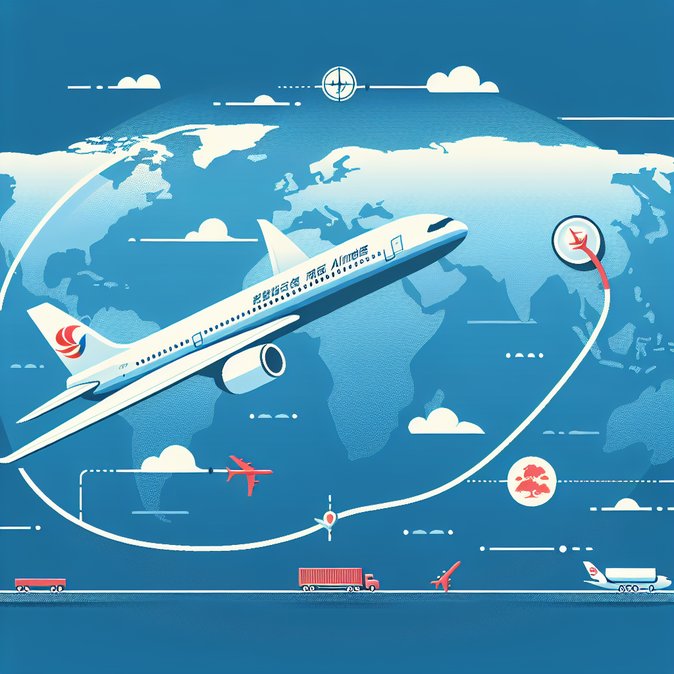
China has set another aviation milestone—this time in the realm of ultra-long-haul travel. In the early hours of 5 December 2025, China Eastern Airlines flight MU745 climbed out of Shanghai-Pudong, crossed the Pacific, stopped briefly in Auckland for refuelling, and continued on to Buenos Aires’ Ezeiza International Airport. Twenty-six hours and more than 20,000 kilometres later, the Boeing 777-300ER rolled to a halt under a traditional water-cannon salute, inaugurating what is now the longest scheduled passenger service in the world.
The new corridor is more than a feat of endurance aviation; it is a strategic play aimed at deepening Sino-Latin American ties. Until now, travellers between China and Argentina typically routed through Europe, North America, or the Middle East, adding five or more hours of transit time and multiple security checks. By offering a twice-weekly “one-stop-no-change-of-plane” itinerary (Shanghai departures on Mondays and Thursdays, Buenos Aires returns on Tuesdays and Fridays), China Eastern gives business travellers, government delegations, and high-value cargo shippers a far more efficient option. The carrier has already signed a broad codeshare with Aerolíneas Argentinas that unlocks onward connections to 50-plus South American destinations—critical for Chinese manufacturers, construction firms, and agri-tech investors expanding in the region.
![China Eastern launches world’s longest commercial flight linking Shanghai and Buenos Aires]()
From Argentina’s perspective, the route is equally transformative. Officials from the Ministry of Tourism project a 35 percent rise in Chinese arrivals in 2026, injecting much-needed foreign currency into hotels, vineyards, and Patagonia adventure operators. The inaugural northbound leg is scheduled to carry two tonnes of fresh cherries and more than ten tonnes of chilled Chilean salmon—commodities that previously had to transit the Panama Canal–Europe loop, eroding shelf-life and profit margins. With direct belly-hold capacity, exporters can now reach Chinese supermarket shelves within 48 hours of harvest, opening premium price opportunities.
The flight also signals how China’s civil-aviation regulator is accelerating route approvals that dovetail with Beijing’s Belt and Road ambitions. Shanghai officials highlighted the service during a press briefing on the city’s broader push to become a “dual-hub” for both Atlantic and Pacific traffic. Meanwhile, Pudong airport authorities confirmed infrastructure upgrades—extra-wide remote stands and a new crew-rest facility—to accommodate more ultra-long-haul operations. While passenger demand on lengthy sectors can be volatile, China Eastern says the maiden voyage achieved a 96 percent load factor, boosted by bundled tour packages, South American students returning for winter holidays, and cargo pre-sales.
For corporate mobility managers, the implications are clear: employees who previously endured 30-plus-hour itineraries with two stop-overs can now reach either terminus with a single onboard rest period. Travel-risk profiles also improve, as travellers avoid multiple immigration checkpoints and potential visa complications. Companies exporting perishables or high-value electronics gain a faster, more predictable supply chain. However, mobility teams should note the current twice-weekly frequency and factor limited re-booking options into duty-of-care plans, especially during Southern-Hemisphere winters when weather disruptions around Auckland can ripple through schedules. Overall, the Shanghai–Buenos Aires link underscores how China’s carriers are leveraging long-range fleets to redraw global mobility maps—and how multinational firms must adjust their travel and logistics strategies accordingly.
The new corridor is more than a feat of endurance aviation; it is a strategic play aimed at deepening Sino-Latin American ties. Until now, travellers between China and Argentina typically routed through Europe, North America, or the Middle East, adding five or more hours of transit time and multiple security checks. By offering a twice-weekly “one-stop-no-change-of-plane” itinerary (Shanghai departures on Mondays and Thursdays, Buenos Aires returns on Tuesdays and Fridays), China Eastern gives business travellers, government delegations, and high-value cargo shippers a far more efficient option. The carrier has already signed a broad codeshare with Aerolíneas Argentinas that unlocks onward connections to 50-plus South American destinations—critical for Chinese manufacturers, construction firms, and agri-tech investors expanding in the region.

From Argentina’s perspective, the route is equally transformative. Officials from the Ministry of Tourism project a 35 percent rise in Chinese arrivals in 2026, injecting much-needed foreign currency into hotels, vineyards, and Patagonia adventure operators. The inaugural northbound leg is scheduled to carry two tonnes of fresh cherries and more than ten tonnes of chilled Chilean salmon—commodities that previously had to transit the Panama Canal–Europe loop, eroding shelf-life and profit margins. With direct belly-hold capacity, exporters can now reach Chinese supermarket shelves within 48 hours of harvest, opening premium price opportunities.
The flight also signals how China’s civil-aviation regulator is accelerating route approvals that dovetail with Beijing’s Belt and Road ambitions. Shanghai officials highlighted the service during a press briefing on the city’s broader push to become a “dual-hub” for both Atlantic and Pacific traffic. Meanwhile, Pudong airport authorities confirmed infrastructure upgrades—extra-wide remote stands and a new crew-rest facility—to accommodate more ultra-long-haul operations. While passenger demand on lengthy sectors can be volatile, China Eastern says the maiden voyage achieved a 96 percent load factor, boosted by bundled tour packages, South American students returning for winter holidays, and cargo pre-sales.
For corporate mobility managers, the implications are clear: employees who previously endured 30-plus-hour itineraries with two stop-overs can now reach either terminus with a single onboard rest period. Travel-risk profiles also improve, as travellers avoid multiple immigration checkpoints and potential visa complications. Companies exporting perishables or high-value electronics gain a faster, more predictable supply chain. However, mobility teams should note the current twice-weekly frequency and factor limited re-booking options into duty-of-care plans, especially during Southern-Hemisphere winters when weather disruptions around Auckland can ripple through schedules. Overall, the Shanghai–Buenos Aires link underscores how China’s carriers are leveraging long-range fleets to redraw global mobility maps—and how multinational firms must adjust their travel and logistics strategies accordingly.