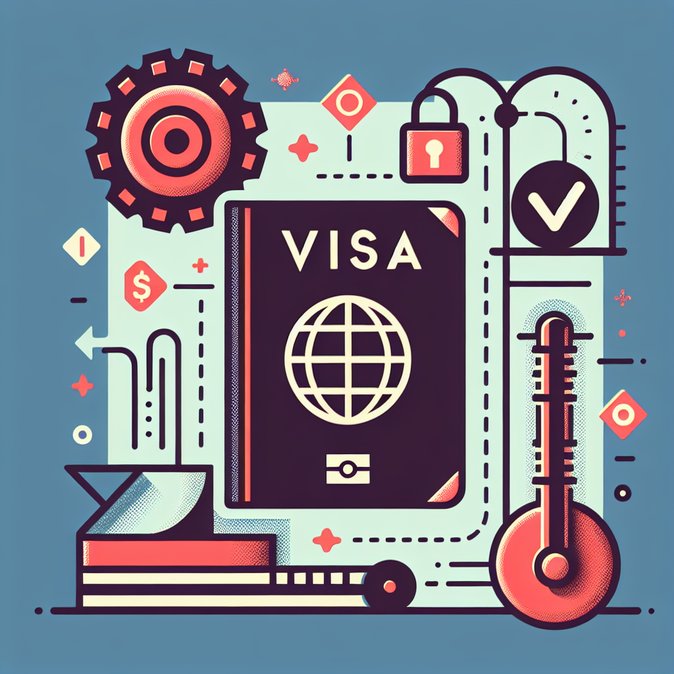
Switzerland’s Federal Council has approved the transposition of the EU’s amended Regulation (EU) 2018/1806, giving Bern the legal tools to re-impose visa requirements on nationals of visa-exempt “third countries” more quickly and for a wider range of reasons.
Under the revised rules, the threshold for triggering a suspension on migration grounds falls from a 50 % to a 30 % surge in irregular stays or entry refusals; a sharp rise in asylum applications with a recognition rate below 20 % can also now prompt action. New public-order triggers have been added, including the “instrumentalisation of migrants” by foreign governments and serious human-rights violations that damage the EU’s external relations. In urgent cases, the European Commission will be able to reinstate visas for up to 12 months using a simplified procedure that automatically applies to all Schengen members, Switzerland included.
![Switzerland adopts tougher visa-suspension mechanism in line with EU]()
For business travellers and mobility managers, the change means that Swiss border authorities could once again require short-stay C-visas from specific nationalities at short notice. Companies relying on visa-free travel for meetings, after-sales work or conferences should therefore monitor EU and Swiss communiqués and build contingency plans for clients and staff from higher-risk countries.
The decision will enter into force on 17 December 2025, after which the State Secretariat for Migration will amend Switzerland’s Ordinance on Entry and the Granting of Visas (EGVO). Although no country has been targeted yet, global-mobility teams should expect closer coordination between Swiss and EU risk assessments—especially if geopolitical tensions escalate or asylum numbers spike.
In practical terms, travellers from countries that lose their visa waiver will need to lodge applications at Swiss consulates, submit biometrics and evidence of purpose of stay, and allow 15-30 days for processing. Employers should budget for higher compliance costs and possible project delays. Conversely, the mechanism may reassure the Swiss public that visa-free regimes remain “reversible”, bolstering long-term political support for Schengen participation.
Under the revised rules, the threshold for triggering a suspension on migration grounds falls from a 50 % to a 30 % surge in irregular stays or entry refusals; a sharp rise in asylum applications with a recognition rate below 20 % can also now prompt action. New public-order triggers have been added, including the “instrumentalisation of migrants” by foreign governments and serious human-rights violations that damage the EU’s external relations. In urgent cases, the European Commission will be able to reinstate visas for up to 12 months using a simplified procedure that automatically applies to all Schengen members, Switzerland included.

For business travellers and mobility managers, the change means that Swiss border authorities could once again require short-stay C-visas from specific nationalities at short notice. Companies relying on visa-free travel for meetings, after-sales work or conferences should therefore monitor EU and Swiss communiqués and build contingency plans for clients and staff from higher-risk countries.
The decision will enter into force on 17 December 2025, after which the State Secretariat for Migration will amend Switzerland’s Ordinance on Entry and the Granting of Visas (EGVO). Although no country has been targeted yet, global-mobility teams should expect closer coordination between Swiss and EU risk assessments—especially if geopolitical tensions escalate or asylum numbers spike.
In practical terms, travellers from countries that lose their visa waiver will need to lodge applications at Swiss consulates, submit biometrics and evidence of purpose of stay, and allow 15-30 days for processing. Employers should budget for higher compliance costs and possible project delays. Conversely, the mechanism may reassure the Swiss public that visa-free regimes remain “reversible”, bolstering long-term political support for Schengen participation.