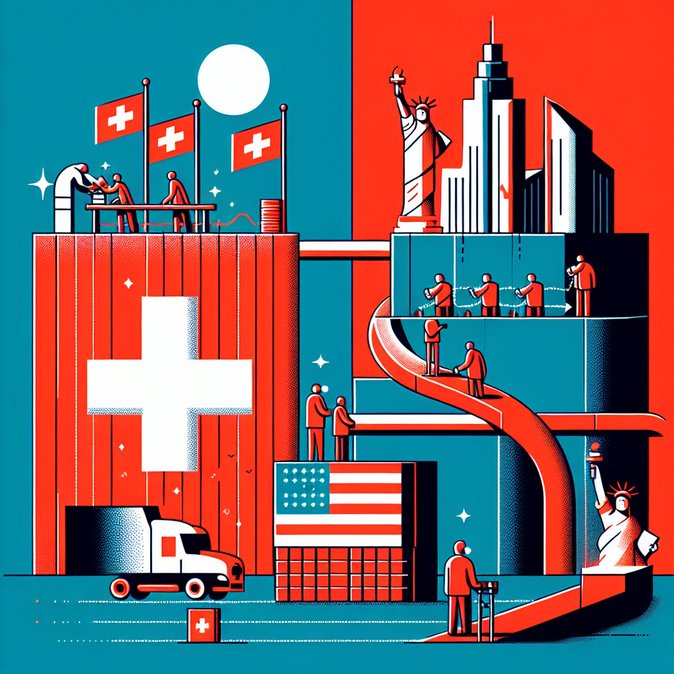
A new economiesuisse survey of 400 companies reveals that 30 % plan to increase investment abroad and shift parts of their production out of Switzerland to mitigate 15–39 % U.S. tariffs on Swiss goods. Sixteen per cent expect to relocate to third countries outside the EU and U.S., 10 % will move capacity to America itself, and 5 % will choose EU sites.
The poll comes just weeks after Bern struck a tariff-reduction deal with Washington, cutting average duties to 15 % but tying the accord to Swiss pledges of up to $200 billion in U.S. investment. Chief economist Rudolf Minsch argues that outward investment is part of Switzerland’s business model and can secure domestic jobs, yet bankers warn that if the pharma sector alone reroutes all U.S. exports, five-year GDP growth could fall from 10 % to 7.7 %.
![Survey: Swiss firms accelerate overseas moves to blunt U.S. tariff impact]()
For mobility managers, the findings signal a likely uptick in outbound assignments, green-field projects and intra-company transfers, particularly to North America and Asia. HR teams should review long-term tax equalisation policies, Totalisation Agreement coverage and the cost-of-living implications for staff in the U.S. Sunbelt and Southeast Asia, where many firms are scouting sites.
The survey also highlights alternative corporate responses—raising prices, diversifying into new markets or suspending U.S. exports—options that could reshape head-count planning. Firms remain concerned about protecting high-value R&D jobs in Switzerland, suggesting hybrid teams with innovation kept at home but manufacturing off-shored.
From a policy perspective, the data could feed into the Federal Council’s 2026 labour-market review, as officials weigh whether further tax incentives are needed to anchor advanced manufacturing and life-science talent domestically.
The poll comes just weeks after Bern struck a tariff-reduction deal with Washington, cutting average duties to 15 % but tying the accord to Swiss pledges of up to $200 billion in U.S. investment. Chief economist Rudolf Minsch argues that outward investment is part of Switzerland’s business model and can secure domestic jobs, yet bankers warn that if the pharma sector alone reroutes all U.S. exports, five-year GDP growth could fall from 10 % to 7.7 %.

For mobility managers, the findings signal a likely uptick in outbound assignments, green-field projects and intra-company transfers, particularly to North America and Asia. HR teams should review long-term tax equalisation policies, Totalisation Agreement coverage and the cost-of-living implications for staff in the U.S. Sunbelt and Southeast Asia, where many firms are scouting sites.
The survey also highlights alternative corporate responses—raising prices, diversifying into new markets or suspending U.S. exports—options that could reshape head-count planning. Firms remain concerned about protecting high-value R&D jobs in Switzerland, suggesting hybrid teams with innovation kept at home but manufacturing off-shored.
From a policy perspective, the data could feed into the Federal Council’s 2026 labour-market review, as officials weigh whether further tax incentives are needed to anchor advanced manufacturing and life-science talent domestically.