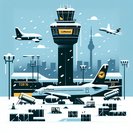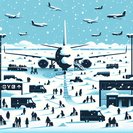
Heavy snowfall in Bavaria on the night of 19–20 February exposed a structural weak-spot in Germany’s aviation eco-system: how to care for passengers once a night-curfew collides with extreme weather.
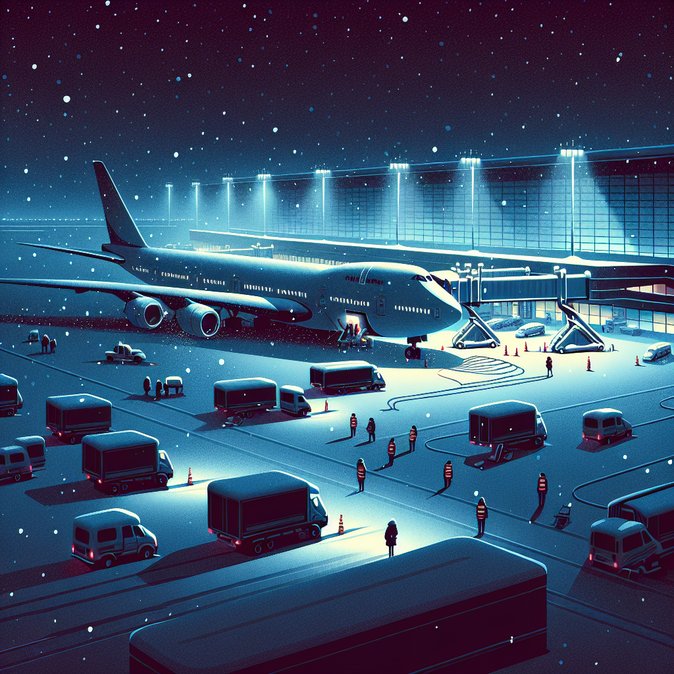
According to Munich Airport and several first-hand media reports published on 23 February, six outbound aircraft—five operated by Lufthansa Group carriers and one by Air Arabia—missed the 01:00 curfew exemption despite frantic de-icing and runway-clearing efforts. With terminal gates already occupied by earlier diversions, the jets were parked on remote stands. When ground handlers finished their shifts and bus drivers went home, nearly 600 travellers—including families with young children—were left strapped into seats without a safe way back to the terminal.
Under Germany’s night-flight regime, only the Bavarian Transport Ministry can waive the 00:00-05:00 ban, and exemptions are tightly rationed to protect local communities from noise. Munich did obtain a short extension, but crews could not depart before the new cut-off, turning a scheduling headache into a welfare emergency. Cabin crews handed out remaining snacks and beverages, but passengers told reporters they ran low on blankets and baby food as temperatures outside hovered around –5 °C.
![Snow Chaos at Munich Airport Leaves Hundreds of Passengers Trapped on Aircraft Overnight]()
The incident has reignited debate over whether Germany’s major hubs possess sufficient contingency plans for winter operations. Consumer watchdogs such as Fluggastrechte e.V. argue that EU Regulation 261 obliges airlines—not airports—to ensure “immediate care” (meals, accommodation) and alternative transport when disruptions are foreseeable. Yet airlines claim their options are limited if air-side infrastructure, stairs and buses are unavailable.
For travellers heading to Germany in any season, VisaHQ can simplify at least one part of the journey: securing the right travel documents. Its online portal (https://www.visahq.com/germany/) walks users through current visa requirements, offers real-time updates, and provides customer support—peace of mind that becomes especially valuable when sudden disruptions like curfew-related delays throw itineraries off course.
Munich Airport’s management issued a public apology on 23 February and launched a joint task-force with the Bavarian Interior Ministry, Lufthansa Group and ground-service providers. Proposed remedies include keeping a skeleton bus fleet on 24-hour standby during winter months, pre-positioning mobile stairs at remote stands and revisiting the rigid curfew waiver process for extraordinary weather. For corporate travel managers, the episode is a reminder to check airline duty-of-care clauses and ensure travellers have access to real-time assistance apps—especially when flying through curfew-restricted hubs in winter.
According to Munich Airport and several first-hand media reports published on 23 February, six outbound aircraft—five operated by Lufthansa Group carriers and one by Air Arabia—missed the 01:00 curfew exemption despite frantic de-icing and runway-clearing efforts. With terminal gates already occupied by earlier diversions, the jets were parked on remote stands. When ground handlers finished their shifts and bus drivers went home, nearly 600 travellers—including families with young children—were left strapped into seats without a safe way back to the terminal.
Under Germany’s night-flight regime, only the Bavarian Transport Ministry can waive the 00:00-05:00 ban, and exemptions are tightly rationed to protect local communities from noise. Munich did obtain a short extension, but crews could not depart before the new cut-off, turning a scheduling headache into a welfare emergency. Cabin crews handed out remaining snacks and beverages, but passengers told reporters they ran low on blankets and baby food as temperatures outside hovered around –5 °C.

The incident has reignited debate over whether Germany’s major hubs possess sufficient contingency plans for winter operations. Consumer watchdogs such as Fluggastrechte e.V. argue that EU Regulation 261 obliges airlines—not airports—to ensure “immediate care” (meals, accommodation) and alternative transport when disruptions are foreseeable. Yet airlines claim their options are limited if air-side infrastructure, stairs and buses are unavailable.
For travellers heading to Germany in any season, VisaHQ can simplify at least one part of the journey: securing the right travel documents. Its online portal (https://www.visahq.com/germany/) walks users through current visa requirements, offers real-time updates, and provides customer support—peace of mind that becomes especially valuable when sudden disruptions like curfew-related delays throw itineraries off course.
Munich Airport’s management issued a public apology on 23 February and launched a joint task-force with the Bavarian Interior Ministry, Lufthansa Group and ground-service providers. Proposed remedies include keeping a skeleton bus fleet on 24-hour standby during winter months, pre-positioning mobile stairs at remote stands and revisiting the rigid curfew waiver process for extraordinary weather. For corporate travel managers, the episode is a reminder to check airline duty-of-care clauses and ensure travellers have access to real-time assistance apps—especially when flying through curfew-restricted hubs in winter.