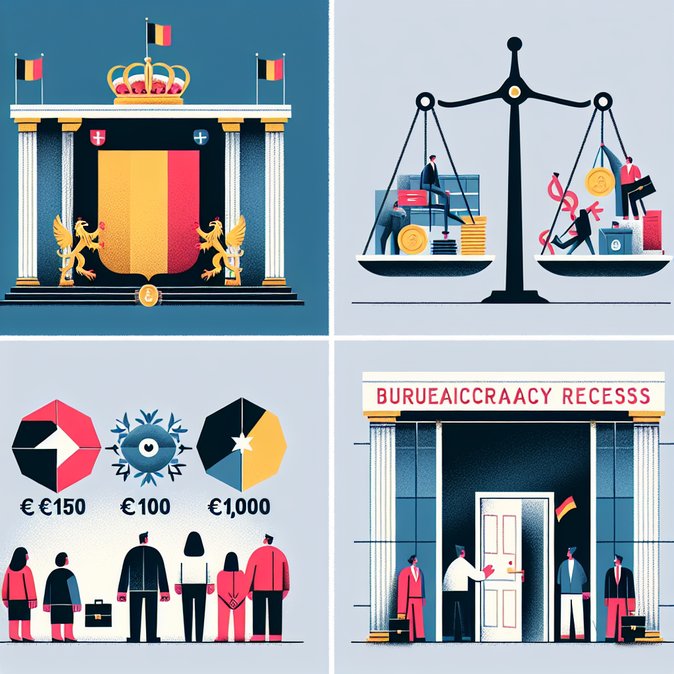
Belgium has quietly enacted the most sweeping cost increase to its naturalisation process in a generation. A programme law that took effect in mid-2025 – but which most communes only began applying in recent weeks – multiplies the fee to apply for Belgian nationality from €150 to €1,000. The first full business day of higher pricing, Monday 23 February 2026, saw long queues at Brussels’ busy Saint-Gilles and Schaerbeek town halls as would-be citizens rushed to file before the next annual indexation, which officials say will raise the levy to roughly €1,100 by July.
The fee hike is part of a broader migration-and-integration package pushed by Immigration Minister Anneleen Van Bossuyt. In parallel, Belgium now requires anyone sponsoring relatives under the family-reunification track to earn at least 110 % of the net minimum wage, plus an extra 10 % for every dependent. Refugee sponsors have just six months – down from one year – to meet that income test, and partners must be at least 21 years old (up from 18). The goal, says Van Bossuyt, is to make sure “only those who are economically self-reliant and willing to integrate fully” obtain permanent status.
Business-immigration advisers warn that the immediate impact will be felt by multinational companies relocating staff to Belgium. Executives on local Belgian contracts who hope to naturalise – often to ease future EU travel – must now budget an additional €850 per adult applicant. For global-mobility teams, the much tougher family-income threshold introduces new compliance risks: a software engineer on €4,000 net per month with a spouse and one child will narrowly clear the bar, but the same employee with two children will fall short unless the partner also earns Belgian income. HR directors are urging assignees to run early salary simulations and, where necessary, negotiate allowances to stay above the 110 % line.
![Belgium’s Citizenship Application Fee Jumps to €1,000 While Family-Reunification Rules Tighten]()
For applicants and HR departments trying to stay ahead of these changes, VisaHQ can be a valuable ally. Via its Belgium hub (https://www.visahq.com/belgium/) the service provides real-time fee updates, personalised document checklists and end-to-end filing support, ensuring naturalisation or family-reunification dossiers are complete, compliant and submitted before costs rise further.
NGOs and several opposition MPs argue that the price jump disproportionately affects lower-income migrants and could violate EU rules on proportionate fees. The government counters that Belgium is still cheaper than the Netherlands (€1,174) and Austria (€1,160) and notes that citizenship remains optional. Meanwhile Wallonia has lengthened its civic-integration timetable to three years but loosened language exemptions, while Flanders has pared back its shortage-occupation list – evidence, critics say, that the regions are tightening and liberalising in equal measure.
Practically, relocation managers should advise employees to: (1) plan for €1,000-plus per adult in any 2026 naturalisation budget; (2) obtain up-to-date pay slips, tax returns and housing contracts before launching family files; and (3) expect processing times to stretch as communes digest the new rules. Companies with large Indian and Moroccan workforces – the two biggest applicant groups last year – may see a drop in demand for Belgian passports and a pivot to other EU jurisdictions with lower fees. Careful cost modelling and early document gathering will be essential for successful filings in 2026.
The fee hike is part of a broader migration-and-integration package pushed by Immigration Minister Anneleen Van Bossuyt. In parallel, Belgium now requires anyone sponsoring relatives under the family-reunification track to earn at least 110 % of the net minimum wage, plus an extra 10 % for every dependent. Refugee sponsors have just six months – down from one year – to meet that income test, and partners must be at least 21 years old (up from 18). The goal, says Van Bossuyt, is to make sure “only those who are economically self-reliant and willing to integrate fully” obtain permanent status.
Business-immigration advisers warn that the immediate impact will be felt by multinational companies relocating staff to Belgium. Executives on local Belgian contracts who hope to naturalise – often to ease future EU travel – must now budget an additional €850 per adult applicant. For global-mobility teams, the much tougher family-income threshold introduces new compliance risks: a software engineer on €4,000 net per month with a spouse and one child will narrowly clear the bar, but the same employee with two children will fall short unless the partner also earns Belgian income. HR directors are urging assignees to run early salary simulations and, where necessary, negotiate allowances to stay above the 110 % line.

For applicants and HR departments trying to stay ahead of these changes, VisaHQ can be a valuable ally. Via its Belgium hub (https://www.visahq.com/belgium/) the service provides real-time fee updates, personalised document checklists and end-to-end filing support, ensuring naturalisation or family-reunification dossiers are complete, compliant and submitted before costs rise further.
NGOs and several opposition MPs argue that the price jump disproportionately affects lower-income migrants and could violate EU rules on proportionate fees. The government counters that Belgium is still cheaper than the Netherlands (€1,174) and Austria (€1,160) and notes that citizenship remains optional. Meanwhile Wallonia has lengthened its civic-integration timetable to three years but loosened language exemptions, while Flanders has pared back its shortage-occupation list – evidence, critics say, that the regions are tightening and liberalising in equal measure.
Practically, relocation managers should advise employees to: (1) plan for €1,000-plus per adult in any 2026 naturalisation budget; (2) obtain up-to-date pay slips, tax returns and housing contracts before launching family files; and (3) expect processing times to stretch as communes digest the new rules. Companies with large Indian and Moroccan workforces – the two biggest applicant groups last year – may see a drop in demand for Belgian passports and a pivot to other EU jurisdictions with lower fees. Careful cost modelling and early document gathering will be essential for successful filings in 2026.