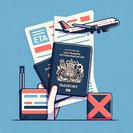
A front-page Guardian story has personalised the policy shift by profiling Annie, a British-Dutch dual national living in the Netherlands who cannot visit her terminally-ill mother in England because her UK passport expired last month. Under rules taking effect on 25 February, Annie must hold a valid British passport or an expensive Certificate of Entitlement to prove citizenship; neither can be obtained in time.
Former Brexit secretary David Davis and the Liberal Democrats have demanded an emergency grace period, arguing the policy effectively bars some citizens from their own country. They point out that guidance was ‘buried’ on GOV.UK and that passport renewals are taking up to 10 weeks overseas. The Home Office counters that the switch has been public for years and aligns with best practice in digital border management.
![Guardian case study exposes human impact of UK’s new passport-only rule for dual nationals]()
For travellers suddenly caught out by new documentation demands, services such as VisaHQ can provide guidance on fast-track passport renewals, Certificates of Entitlement and alternative proofs of status. Individuals and corporate mobility teams alike can consult their specialists—see https://www.visahq.com/united-kingdom/—to understand processing times, required paperwork and any available expedited solutions.
The case is resonating on social media and could add momentum to parliamentary questions scheduled for next week. From a corporate mobility perspective, the story highlights a critical risk: employees on assignment who let UK passports lapse could become stranded abroad or forced to reroute via Ireland, incurring extra costs and tax complexities. Employers with large EU talent pools are therefore red-flagging the issue in internal communications.
Policy experts suggest the government may introduce a temporary airline waiver similar to the U.S. ESTA grace periods of 2008, but nothing has yet been signalled. Until then, affected citizens have few options other than premium-price renewals or cancelling travel.
Former Brexit secretary David Davis and the Liberal Democrats have demanded an emergency grace period, arguing the policy effectively bars some citizens from their own country. They point out that guidance was ‘buried’ on GOV.UK and that passport renewals are taking up to 10 weeks overseas. The Home Office counters that the switch has been public for years and aligns with best practice in digital border management.

For travellers suddenly caught out by new documentation demands, services such as VisaHQ can provide guidance on fast-track passport renewals, Certificates of Entitlement and alternative proofs of status. Individuals and corporate mobility teams alike can consult their specialists—see https://www.visahq.com/united-kingdom/—to understand processing times, required paperwork and any available expedited solutions.
The case is resonating on social media and could add momentum to parliamentary questions scheduled for next week. From a corporate mobility perspective, the story highlights a critical risk: employees on assignment who let UK passports lapse could become stranded abroad or forced to reroute via Ireland, incurring extra costs and tax complexities. Employers with large EU talent pools are therefore red-flagging the issue in internal communications.
Policy experts suggest the government may introduce a temporary airline waiver similar to the U.S. ESTA grace periods of 2008, but nothing has yet been signalled. Until then, affected citizens have few options other than premium-price renewals or cancelling travel.