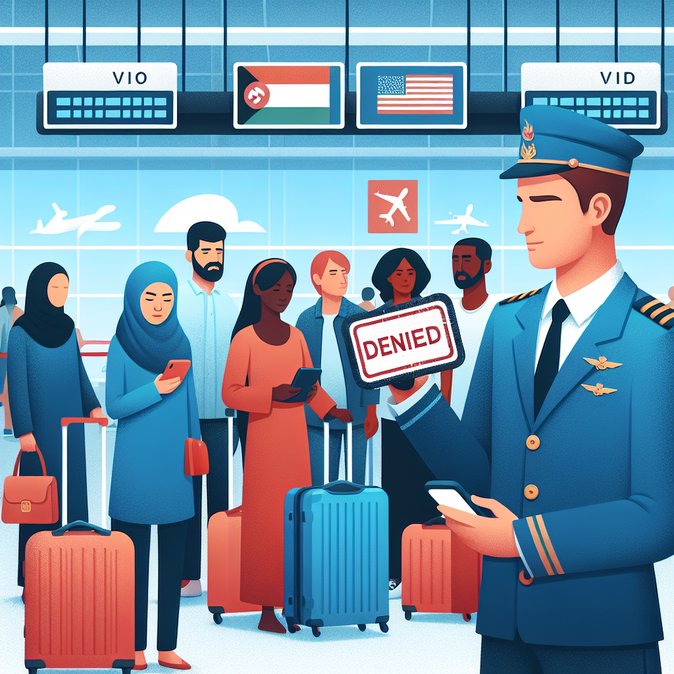
Global mobility managers received final confirmation today that the transition period for the UK’s Electronic Travel Authorisation (ETA) scheme ends at 00:01 GMT on 25 February 2026. From that moment airlines will refuse carriage to any non-visa national who has not secured an ETA, and carriers will face civil penalties if they carry ineligible passengers.
According to advisory firm Fragomen, the Home Office has instructed carriers to switch their Departure Control Systems to ‘hard stop’ mode. In practice this removes any discretion previously used to let passengers board and resolve issues at the UK border. The strict stance follows a four-month education campaign targeted at Gulf Cooperation Council nationals and select EU travellers during the phased ETA roll-out.
Dual British/Irish citizens are also caught. To avoid the ETA, they must present either a valid British passport or proof of Irish citizenship. An expired UK passport or birth certificate will no longer be sufficient once airline systems are locked down. HR teams are therefore racing to identify employees with lapsed UK passports who plan to travel next week, as expedited renewals can still take up to five working days.
![Full enforcement of UK Electronic Travel Authorisation starts 25 February—no boarding without ETA]()
VisaHQ’s dedicated UK portal (https://www.visahq.com/united-kingdom/) offers an expedited online application service for the new ETA, along with real-time status tracking and corporate account management tools. Organisations can outsource the administrative burden of securing travel authorisations, while individual travellers benefit from step-by-step guidance and 24/7 support, reducing the risk of last-minute boarding denials.
Travel management companies are updating profile validation rules to force an ETA number for all third-country national passengers booked to the UK. Corporates with large U.S. assignee populations—who were previously visa-exempt—are running webinars to explain the £16, two-year authorisation and refund policies for travellers who forget to apply.
Looking ahead, the ETA database will merge with the Home Office’s ‘Contact Digital’ intelligence platform, allowing risk-based vetting of travellers before departure. The strict enforcement therefore marks a critical milestone toward the UK’s objective of “no surprises at the primary control point”, mirroring the U.S. ESTA and forthcoming EU ETIAS regimes.
According to advisory firm Fragomen, the Home Office has instructed carriers to switch their Departure Control Systems to ‘hard stop’ mode. In practice this removes any discretion previously used to let passengers board and resolve issues at the UK border. The strict stance follows a four-month education campaign targeted at Gulf Cooperation Council nationals and select EU travellers during the phased ETA roll-out.
Dual British/Irish citizens are also caught. To avoid the ETA, they must present either a valid British passport or proof of Irish citizenship. An expired UK passport or birth certificate will no longer be sufficient once airline systems are locked down. HR teams are therefore racing to identify employees with lapsed UK passports who plan to travel next week, as expedited renewals can still take up to five working days.
VisaHQ’s dedicated UK portal (https://www.visahq.com/united-kingdom/) offers an expedited online application service for the new ETA, along with real-time status tracking and corporate account management tools. Organisations can outsource the administrative burden of securing travel authorisations, while individual travellers benefit from step-by-step guidance and 24/7 support, reducing the risk of last-minute boarding denials.
Travel management companies are updating profile validation rules to force an ETA number for all third-country national passengers booked to the UK. Corporates with large U.S. assignee populations—who were previously visa-exempt—are running webinars to explain the £16, two-year authorisation and refund policies for travellers who forget to apply.
Looking ahead, the ETA database will merge with the Home Office’s ‘Contact Digital’ intelligence platform, allowing risk-based vetting of travellers before departure. The strict enforcement therefore marks a critical milestone toward the UK’s objective of “no surprises at the primary control point”, mirroring the U.S. ESTA and forthcoming EU ETIAS regimes.