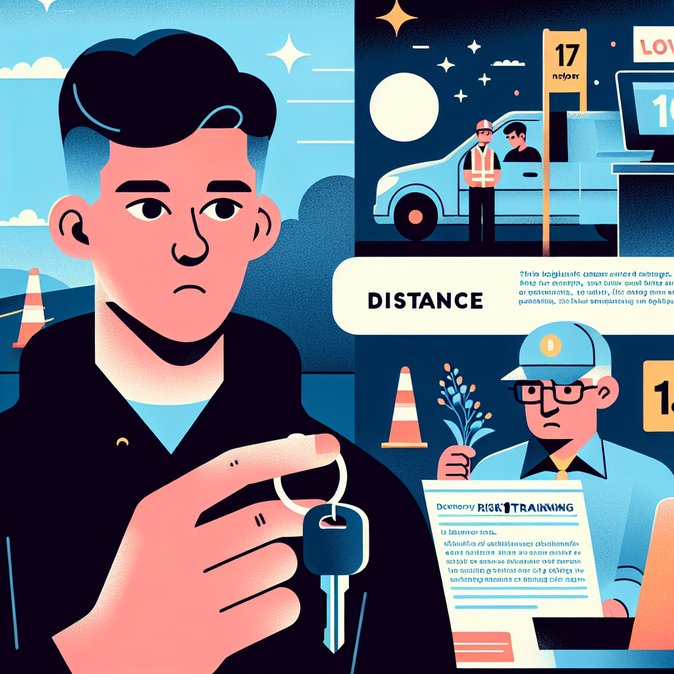
Finland’s Ministry of Transport and Communications has sent Parliament a bill that would sharply restrict the circumstances under which 17-year-olds can obtain a passenger-car licence. The proposal—officially tabled just before midnight on 19 February—responds to accident statistics showing young drivers remain over-represented in fatal and serious crashes despite earlier graduated-licensing reforms. (dailyfinland.fi)
Under current rules, a teenager can apply for an exemption if regular journeys exceed five kilometres on foot or an hour by public transport. The new criteria raise those thresholds to seven kilometres and 90 minutes respectively, and require proof that the trip is made at least four times a week. Supporting documents—such as school attendance certificates or work contracts—must be more detailed and, crucially, a prior traffic-offence suspension would become an automatic disqualifier. (dailyfinland.fi)
If you’re an expatriate family or international employee planning to relocate, VisaHQ can simplify the paperwork: the company’s Finland portal (https://www.visahq.com/finland/) offers fast visa and residence-permit processing along with practical guidance on local rules—including driver-licence requirements—so teenage travellers know what they can and can’t do behind the wheel.
![Finland Proposes Tighter Rules for 17-Year-Old Driving-Licence Exemptions]()
Night-time driving between 00:00 and 05:00 would be banned entirely for 17-year-olds, enforced by a conspicuous “underage driver” decal on the vehicle. Breaches could draw €100 spot fines and temporary licence withdrawals. Risk-recognition training is also set to expand by three classroom sessions and one on-road module, half of which may be completed in simulators—an approach already used in Sweden and Norway, where youth accident rates are lower.
For employers who rely on teenage staff—think rural hospitality venues or family-owned farms—the bill may necessitate fresh transport arrangements or amended shift patterns. Conversely, corporate fleet managers anticipate lower insurance premia if the tougher rules further cut collision rates.
Most of the amendments would take effect on 29 May 2026, with additional training obligations phased in from 1 October. Stakeholders have until committee hearings conclude this spring to lobby for tweaks, but cross-party support for stronger youth-safety measures appears solid.
Under current rules, a teenager can apply for an exemption if regular journeys exceed five kilometres on foot or an hour by public transport. The new criteria raise those thresholds to seven kilometres and 90 minutes respectively, and require proof that the trip is made at least four times a week. Supporting documents—such as school attendance certificates or work contracts—must be more detailed and, crucially, a prior traffic-offence suspension would become an automatic disqualifier. (dailyfinland.fi)
If you’re an expatriate family or international employee planning to relocate, VisaHQ can simplify the paperwork: the company’s Finland portal (https://www.visahq.com/finland/) offers fast visa and residence-permit processing along with practical guidance on local rules—including driver-licence requirements—so teenage travellers know what they can and can’t do behind the wheel.
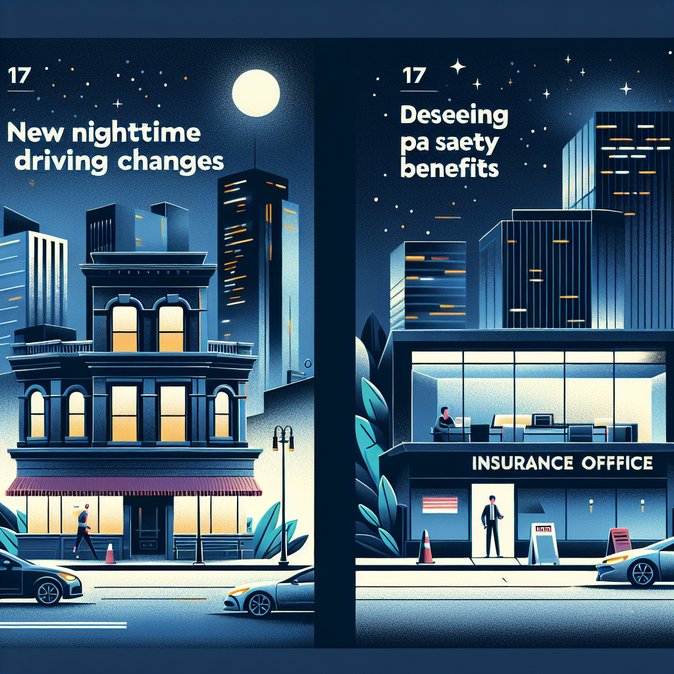
Night-time driving between 00:00 and 05:00 would be banned entirely for 17-year-olds, enforced by a conspicuous “underage driver” decal on the vehicle. Breaches could draw €100 spot fines and temporary licence withdrawals. Risk-recognition training is also set to expand by three classroom sessions and one on-road module, half of which may be completed in simulators—an approach already used in Sweden and Norway, where youth accident rates are lower.
For employers who rely on teenage staff—think rural hospitality venues or family-owned farms—the bill may necessitate fresh transport arrangements or amended shift patterns. Conversely, corporate fleet managers anticipate lower insurance premia if the tougher rules further cut collision rates.
Most of the amendments would take effect on 29 May 2026, with additional training obligations phased in from 1 October. Stakeholders have until committee hearings conclude this spring to lobby for tweaks, but cross-party support for stronger youth-safety measures appears solid.