Airports and border police across Germany are reassessing staffing models after the European Commission clarified on 18 February that member states may suspend Entry/Exit System (EES) biometric checks for up to six hours a day until early September 2026 if queues exceed acceptable limits. The option is embedded in the EES legal framework but had not been widely publicised.
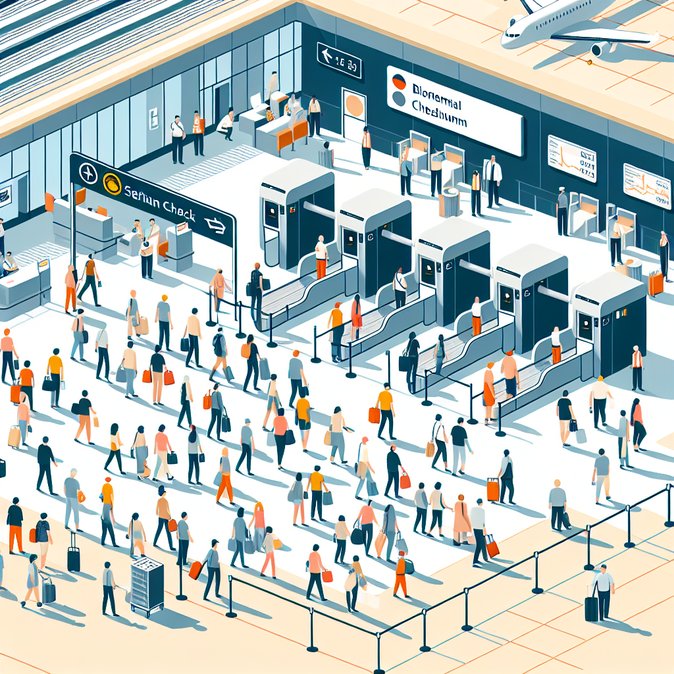
The notice follows a joint warning from Airports Council International Europe, Airlines 4 Europe and IATA that first-time EES enrolment could push wait times for non-EU passengers beyond four hours during the peak holiday season. Frankfurt (FRA) alone expects to register 40,000 travellers per day from 10 April—the system’s official go-live date.
Federal Police (Bundespolizei) at Frankfurt and Munich say they are hiring 900 temporary officers and installing 200 additional self-service kiosks, but airport operators welcome the flexibility to “switch off” the system during surges. Lufthansa Group has started scenario planning to stagger flight banks if terminal congestion becomes unmanageable.
![EU offers six-hour daily pause on biometric EES checks to avoid summer chaos; German airports weigh contingency plans]()
Travellers who want to minimise any last-minute surprises at the checkpoint can streamline their documents in advance: VisaHQ’s online platform offers step-by-step support for German and Schengen visa applications, real-time requirement updates, and secure courier options, easing the journey before they even reach the EES queue (https://www.visahq.com/germany/).
Corporate travel managers should monitor airport announcements: a partial suspension window could concentrate queues into other periods, so advising travellers to arrive at least three hours early during the first implementation weeks remains prudent. EU residents will not be subject to biometrics, but mixed-nationality families may still be pulled into the longer lines.
The Commission insisted that 10 April remains the formal deadline, yet industry insiders say another EU-wide postponement “cannot be ruled out” if member states signal they are not operationally ready.
The notice follows a joint warning from Airports Council International Europe, Airlines 4 Europe and IATA that first-time EES enrolment could push wait times for non-EU passengers beyond four hours during the peak holiday season. Frankfurt (FRA) alone expects to register 40,000 travellers per day from 10 April—the system’s official go-live date.
Federal Police (Bundespolizei) at Frankfurt and Munich say they are hiring 900 temporary officers and installing 200 additional self-service kiosks, but airport operators welcome the flexibility to “switch off” the system during surges. Lufthansa Group has started scenario planning to stagger flight banks if terminal congestion becomes unmanageable.

Travellers who want to minimise any last-minute surprises at the checkpoint can streamline their documents in advance: VisaHQ’s online platform offers step-by-step support for German and Schengen visa applications, real-time requirement updates, and secure courier options, easing the journey before they even reach the EES queue (https://www.visahq.com/germany/).
Corporate travel managers should monitor airport announcements: a partial suspension window could concentrate queues into other periods, so advising travellers to arrive at least three hours early during the first implementation weeks remains prudent. EU residents will not be subject to biometrics, but mixed-nationality families may still be pulled into the longer lines.
The Commission insisted that 10 April remains the formal deadline, yet industry insiders say another EU-wide postponement “cannot be ruled out” if member states signal they are not operationally ready.