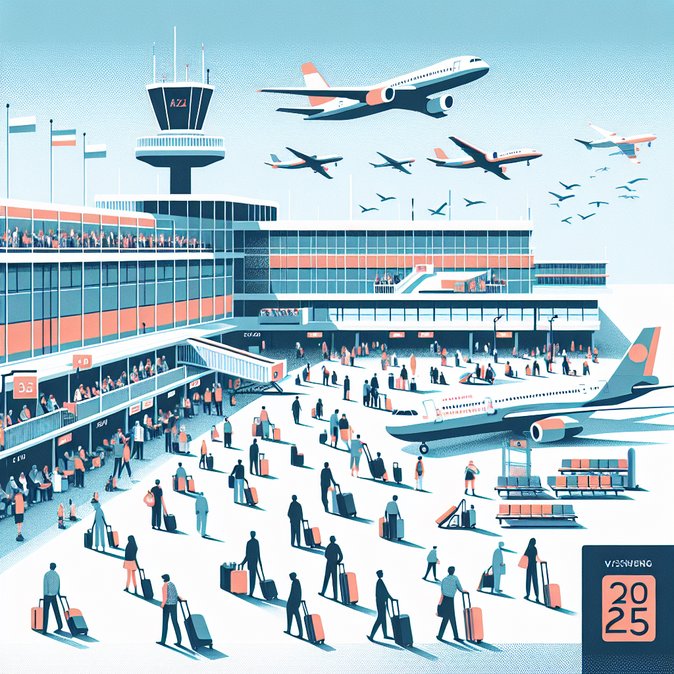
Austrian aviation roared back to – and slightly beyond – pre-pandemic levels last year. According to fresh traffic statistics released today, the country’s six commercial airports handled 36.5 million travellers in 2025, 2.8 percent more than 2024 and 0.8 percent above the previous record set in 2019.
Vienna International Airport accounted for almost 33 million of those passengers, benefiting from Europe-wide leisure demand and the partial rebound of long-haul connections. Graz and Innsbruck reported double-digit growth on ski-season routes, while Salzburg’s charter traffic to the UK recovered fully after Brexit-related slumps. Overall aircraft movements rose three percent to 279,677.
Whether you’re joining the leisure surge or coordinating a corporate travel programme, securing the correct documentation remains crucial. VisaHQ’s Austria portal (https://www.visahq.com/austria/) streamlines Schengen visa applications, passport renewals and other entry-related services for individuals, families and enterprise travel desks alike, helping passengers board those newly restored flights without last-minute surprises.
![36.5 Million Passengers: Austrian Airports Surpass Pre-Covid Record in 2025]()
The picture is more nuanced for business-travel planners. Air-cargo tonnage fell 3.7 percent to 248,211 tonnes and airmail volume slid 4.5 percent, symptoms of lingering capacity constraints and modal shift to rail. Vienna Airport’s management therefore forecasts passenger numbers to dip to about 30 million in 2026 as Lufthansa-owned Austrian Airlines trims its fleet, Ryanair redeploys aircraft, and Wizz Air exits the market. Corporate travel buyers should expect tighter seat supply and higher fares on key European trunk routes, at least through the summer‐schedule transition.
From a mobility-policy angle, the rebound has rekindled discussion about airport night-flight bans and Austria’s planned kerosene tax, both of which could influence future slot allocations. Multinationals with regional headquarters in Vienna are lobbying the Finance Ministry to stagger any new aviation taxes until 2027, warning that reduced connectivity would undermine the capital’s competitiveness against Munich and Prague.
In the short term, mobility managers should revisit travel-budget assumptions for 2026 and advise executives to book intra-Europe trips earlier, particularly on Mondays and Thursdays when load factors already exceed 90 percent. Companies that rely on just-in-time air freight may also need contingency plans as carriers prioritise passenger belly capacity over dedicated freighters.
Vienna International Airport accounted for almost 33 million of those passengers, benefiting from Europe-wide leisure demand and the partial rebound of long-haul connections. Graz and Innsbruck reported double-digit growth on ski-season routes, while Salzburg’s charter traffic to the UK recovered fully after Brexit-related slumps. Overall aircraft movements rose three percent to 279,677.
Whether you’re joining the leisure surge or coordinating a corporate travel programme, securing the correct documentation remains crucial. VisaHQ’s Austria portal (https://www.visahq.com/austria/) streamlines Schengen visa applications, passport renewals and other entry-related services for individuals, families and enterprise travel desks alike, helping passengers board those newly restored flights without last-minute surprises.

The picture is more nuanced for business-travel planners. Air-cargo tonnage fell 3.7 percent to 248,211 tonnes and airmail volume slid 4.5 percent, symptoms of lingering capacity constraints and modal shift to rail. Vienna Airport’s management therefore forecasts passenger numbers to dip to about 30 million in 2026 as Lufthansa-owned Austrian Airlines trims its fleet, Ryanair redeploys aircraft, and Wizz Air exits the market. Corporate travel buyers should expect tighter seat supply and higher fares on key European trunk routes, at least through the summer‐schedule transition.
From a mobility-policy angle, the rebound has rekindled discussion about airport night-flight bans and Austria’s planned kerosene tax, both of which could influence future slot allocations. Multinationals with regional headquarters in Vienna are lobbying the Finance Ministry to stagger any new aviation taxes until 2027, warning that reduced connectivity would undermine the capital’s competitiveness against Munich and Prague.
In the short term, mobility managers should revisit travel-budget assumptions for 2026 and advise executives to book intra-Europe trips earlier, particularly on Mondays and Thursdays when load factors already exceed 90 percent. Companies that rely on just-in-time air freight may also need contingency plans as carriers prioritise passenger belly capacity over dedicated freighters.
More From Austria
View all
Austria Grants Record 25,000 Citizenships in 2025, Driven by Descendants of Nazi-Era Refugees
Schengen States Allowed to Pause New Biometric Border System; Austrian Airports Plan Summer Contingencies