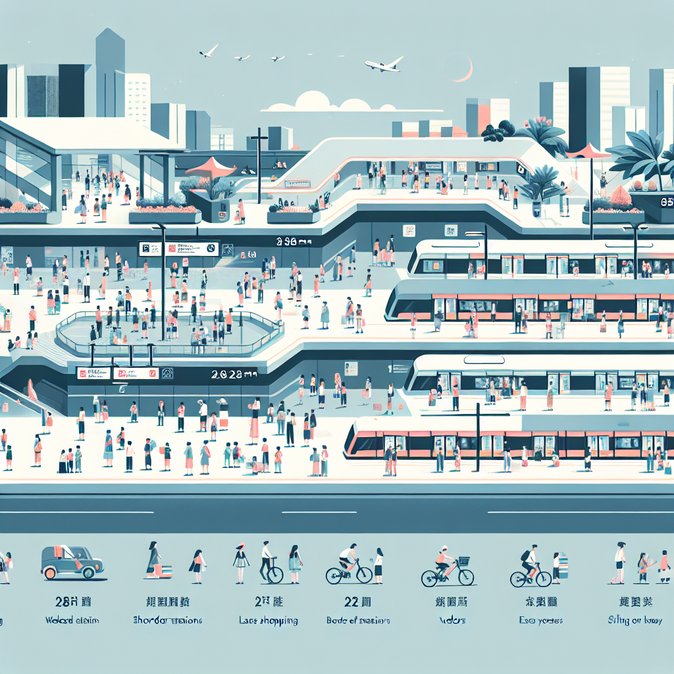
Shenzhen Metro announced on 18 February that it has expanded its ‘rail + cycling’ service to 28 stations for weekends and public holidays, priced at RMB 35 per person with pre-booking. Except for Lines 4 and 13, travellers can now transfer across the network and pick up a shared bicycle inside paid areas, cutting the distance between metro exits and popular parks, malls and waterfronts.
The upgrade arrives at the peak of the nine-day Lunar New Year ‘Golden Week’, when cross-border leisure travel from Hong Kong typically surges. Hong Kong residents often alight at Futian or Luohu and then struggle with crowded taxis; the bike option offers a predictable 10-minute glide to destinations within a three-kilometre radius. Market-research firm GBA Link projects that if even 5 % of Hong Kong day-trippers adopt the service, retail and F&B spend in Futian and Nanshan could rise by RMB 40 million over the holiday.
If you’re among those planning a quick hop across the border and still need clarity on visa or travel-document requirements, VisaHQ can streamline the process. The company’s Hong Kong portal (https://www.visahq.com/hong-kong/) offers up-to-date China visa guidance, application support and real-time tracking—handy for travellers who’d rather spend their holiday on a bicycle than in a consulate queue.
![Shenzhen Metro adds 28 rail-plus-cycling hubs, smoothing last-mile for Hong Kong weekend visitors]()
For mobility managers, the key operational detail is that the bikes must be booked via the official Shenzhen Metro app using real-name authentication – Hong Kong ID holders can register with a Home Return Permit or passport. Payment is via WeChat Pay or Alipay, both of which now accept Hong Kong-issued credit cards.
The metro operator is running ‘Warm Winter Action’ crowd-management drills, including free ginger-tea stations and additional attendants at interchange hubs. Still, capacity is capped at 1,200 bike rentals per day per station, so travellers should reserve early.
The initiative underscores the growing integration of first- and last-mile options across the Greater Bay Area. Corporations with staff commuting between Hong Kong and Shenzhen can recommend the service as a cost-effective alternative to ride-hailing, especially on traffic-heavy weekends.
The upgrade arrives at the peak of the nine-day Lunar New Year ‘Golden Week’, when cross-border leisure travel from Hong Kong typically surges. Hong Kong residents often alight at Futian or Luohu and then struggle with crowded taxis; the bike option offers a predictable 10-minute glide to destinations within a three-kilometre radius. Market-research firm GBA Link projects that if even 5 % of Hong Kong day-trippers adopt the service, retail and F&B spend in Futian and Nanshan could rise by RMB 40 million over the holiday.
If you’re among those planning a quick hop across the border and still need clarity on visa or travel-document requirements, VisaHQ can streamline the process. The company’s Hong Kong portal (https://www.visahq.com/hong-kong/) offers up-to-date China visa guidance, application support and real-time tracking—handy for travellers who’d rather spend their holiday on a bicycle than in a consulate queue.

For mobility managers, the key operational detail is that the bikes must be booked via the official Shenzhen Metro app using real-name authentication – Hong Kong ID holders can register with a Home Return Permit or passport. Payment is via WeChat Pay or Alipay, both of which now accept Hong Kong-issued credit cards.
The metro operator is running ‘Warm Winter Action’ crowd-management drills, including free ginger-tea stations and additional attendants at interchange hubs. Still, capacity is capped at 1,200 bike rentals per day per station, so travellers should reserve early.
The initiative underscores the growing integration of first- and last-mile options across the Greater Bay Area. Corporations with staff commuting between Hong Kong and Shenzhen can recommend the service as a cost-effective alternative to ride-hailing, especially on traffic-heavy weekends.