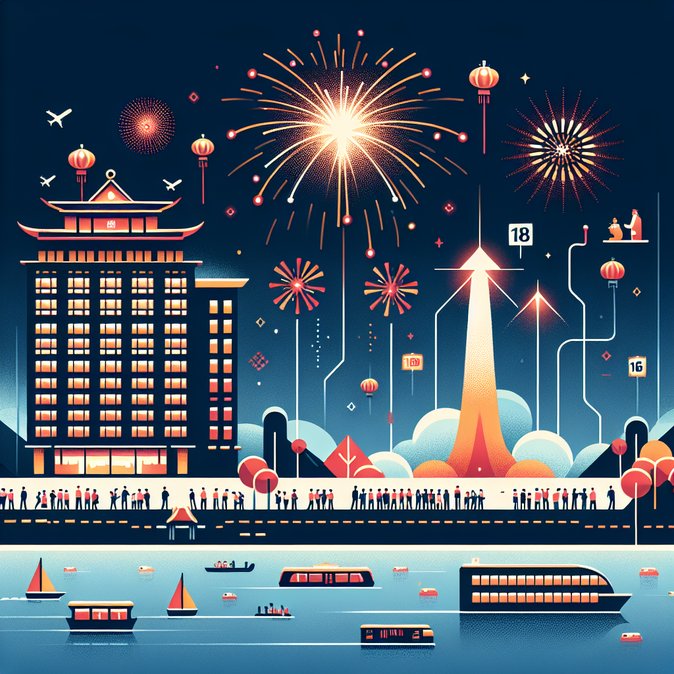
Victoria Harbour’s 23-minute Year-of-the-Horse fireworks show on 18 February drew tens of thousands of spectators and capped what officials say is the city’s best Lunar New Year tourism performance since the pandemic. According to preliminary Immigration Department tallies cited by the South China Morning Post, arrivals during the first two holiday days were at least 8 % higher than last year, with Mainland visitors making up the bulk.
Chief Executive John Lee told crowds that the spectacle – firing 31,888 shells shaped like gold ingots and horseshoes – symbolised Hong Kong’s determination to “gallop forward” and align with China’s 15th Five-Year Plan. The government hopes the visual statement and smoother border controls will translate into sustained visitor momentum through Q1.
Hotels in Tsim Sha Tsui and Wan Chai reported average occupancy above 90 %, while retailers extended opening hours. Travel-analytics firm ForwardKeys noted a 14 % week-on-week jump in flight searches to Hong Kong in the hours after live broadcasts of the fireworks.
![Lunar New Year fireworks push Hong Kong visitor numbers 8 % above 2025 levels]()
For travelers sorting out last-minute documentation, VisaHQ’s Hong Kong portal (https://www.visahq.com/hong-kong/) can streamline the visa process by providing up-to-date entry requirements, online application tools and real-time status tracking—an efficient add-on for corporate mobility teams trying to keep pace with surging demand.
For mobility professionals, the key takeaway is capacity management: MTR and bus operators ran extended services until 2 a.m., and the Immigration Department operated temporary counters at Lo Wu and Lok Ma Chau. Corporates planning incentive trips should expect tight room inventory through the end of February and advise travellers to book early ferry or train slots for Guangdong side-trips.
The visitor uptick provides another data point that Hong Kong’s ‘mega-event economy’ strategy – pairing cultural showcases with streamlined entry – is gaining traction, reinforcing the city’s role as a convenient gateway for Mainland and international audiences.
Chief Executive John Lee told crowds that the spectacle – firing 31,888 shells shaped like gold ingots and horseshoes – symbolised Hong Kong’s determination to “gallop forward” and align with China’s 15th Five-Year Plan. The government hopes the visual statement and smoother border controls will translate into sustained visitor momentum through Q1.
Hotels in Tsim Sha Tsui and Wan Chai reported average occupancy above 90 %, while retailers extended opening hours. Travel-analytics firm ForwardKeys noted a 14 % week-on-week jump in flight searches to Hong Kong in the hours after live broadcasts of the fireworks.

For travelers sorting out last-minute documentation, VisaHQ’s Hong Kong portal (https://www.visahq.com/hong-kong/) can streamline the visa process by providing up-to-date entry requirements, online application tools and real-time status tracking—an efficient add-on for corporate mobility teams trying to keep pace with surging demand.
For mobility professionals, the key takeaway is capacity management: MTR and bus operators ran extended services until 2 a.m., and the Immigration Department operated temporary counters at Lo Wu and Lok Ma Chau. Corporates planning incentive trips should expect tight room inventory through the end of February and advise travellers to book early ferry or train slots for Guangdong side-trips.
The visitor uptick provides another data point that Hong Kong’s ‘mega-event economy’ strategy – pairing cultural showcases with streamlined entry – is gaining traction, reinforcing the city’s role as a convenient gateway for Mainland and international audiences.