Hong Kong International Airport (HKIA) confirmed on 18 February that the fully rebuilt Terminal 2 will open its departure facilities on 27 May 2026 – just in time for the summer peak. Speaking at a Chinese New Year ceremony, Airport Authority Hong Kong chairman Fred Lam said the project is the first major piece of capacity delivered under the airport’s HK$141 billion Three-Runway System programme.
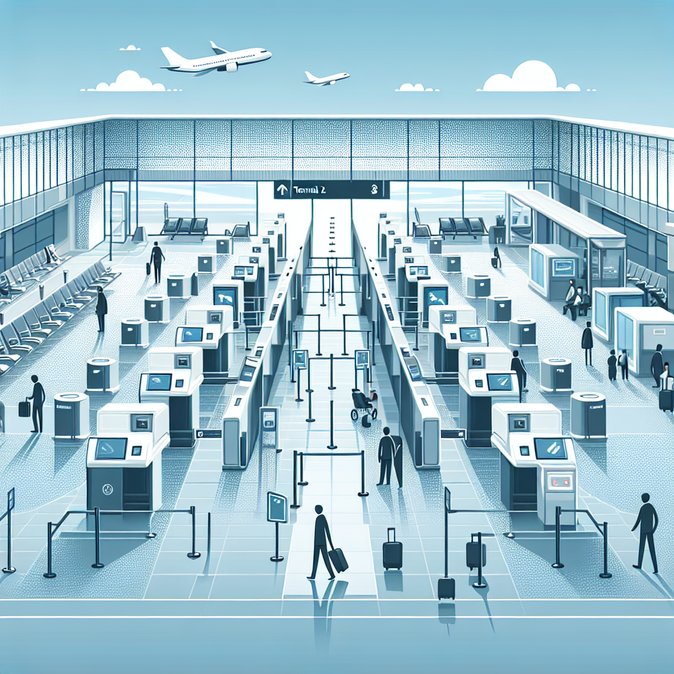
The expanded T2 is directly connected to the Airport Express and to Terminal 1 by an air-conditioned footbridge. Around 15 regional and short-haul airlines – including HK Express and selected Cathay Pacific flights – will relocate in phases. Travellers will find 48 check-in counters, 30 self-bag-drop stations and next-generation biometric e-security lanes, cutting minimum connection times by up to 15 minutes. Smart Departure gates identical to those in T1 mean eligible visitors can clear exit formalities in under 20 seconds.
For international passengers whose journeys begin or end in Hong Kong, VisaHQ can simplify the often-time-consuming visa process before they even set foot in Terminal 2. Its Hong Kong portal (https://www.visahq.com/hong-kong/) lets travellers check requirements and submit online applications for entry permits to more than 200 countries, with local customer support that helps avoid last-minute surprises at the new departure gates.
![Hong Kong International Airport sets 27 May opening date for new Terminal 2 departure hall]()
Behind the scenes, the Airport Authority has spent the past three months running familiarisation drills with Immigration, Customs, ground-handling agents and retailers. “We have trained more than 4,000 frontline staff in simulated live-passenger environments,” Lam said. The Coach Hall beneath T2, already operating since September 2025, offers 41 bays for cross-boundary buses linking over 110 Greater Bay Area cities, giving departing passengers a weather-proof kerb-to-gate journey.
HKIA handled 56 million passengers in 2025 – 82 % of pre-pandemic traffic – and forecasts 65 million this year. The new terminal space adds two million passengers of annual capacity immediately and will be expanded further when construction of the adjacent new SkyPier finishes in 2027. For multinational employers, the opening is expected to ease morning congestion at Terminal 1 and reduce minimum check-in times for regional business travellers. Companies rotating staff through Hong Kong are advised to check which airlines are moving to T2 and to update travel policies accordingly.
With inbound tourism from Mainland China and Southeast Asia accelerating during the Year of the Horse, HKIA’s extra capacity signals that Hong Kong is doubling down on its role as the Greater Bay Area’s international aviation hub. Business-travel managers should monitor further airline-relocation notices and encourage travellers to allow extra time during the first weeks of T2 operations while way-finding settles in.
The expanded T2 is directly connected to the Airport Express and to Terminal 1 by an air-conditioned footbridge. Around 15 regional and short-haul airlines – including HK Express and selected Cathay Pacific flights – will relocate in phases. Travellers will find 48 check-in counters, 30 self-bag-drop stations and next-generation biometric e-security lanes, cutting minimum connection times by up to 15 minutes. Smart Departure gates identical to those in T1 mean eligible visitors can clear exit formalities in under 20 seconds.
For international passengers whose journeys begin or end in Hong Kong, VisaHQ can simplify the often-time-consuming visa process before they even set foot in Terminal 2. Its Hong Kong portal (https://www.visahq.com/hong-kong/) lets travellers check requirements and submit online applications for entry permits to more than 200 countries, with local customer support that helps avoid last-minute surprises at the new departure gates.
Behind the scenes, the Airport Authority has spent the past three months running familiarisation drills with Immigration, Customs, ground-handling agents and retailers. “We have trained more than 4,000 frontline staff in simulated live-passenger environments,” Lam said. The Coach Hall beneath T2, already operating since September 2025, offers 41 bays for cross-boundary buses linking over 110 Greater Bay Area cities, giving departing passengers a weather-proof kerb-to-gate journey.
HKIA handled 56 million passengers in 2025 – 82 % of pre-pandemic traffic – and forecasts 65 million this year. The new terminal space adds two million passengers of annual capacity immediately and will be expanded further when construction of the adjacent new SkyPier finishes in 2027. For multinational employers, the opening is expected to ease morning congestion at Terminal 1 and reduce minimum check-in times for regional business travellers. Companies rotating staff through Hong Kong are advised to check which airlines are moving to T2 and to update travel policies accordingly.
With inbound tourism from Mainland China and Southeast Asia accelerating during the Year of the Horse, HKIA’s extra capacity signals that Hong Kong is doubling down on its role as the Greater Bay Area’s international aviation hub. Business-travel managers should monitor further airline-relocation notices and encourage travellers to allow extra time during the first weeks of T2 operations while way-finding settles in.