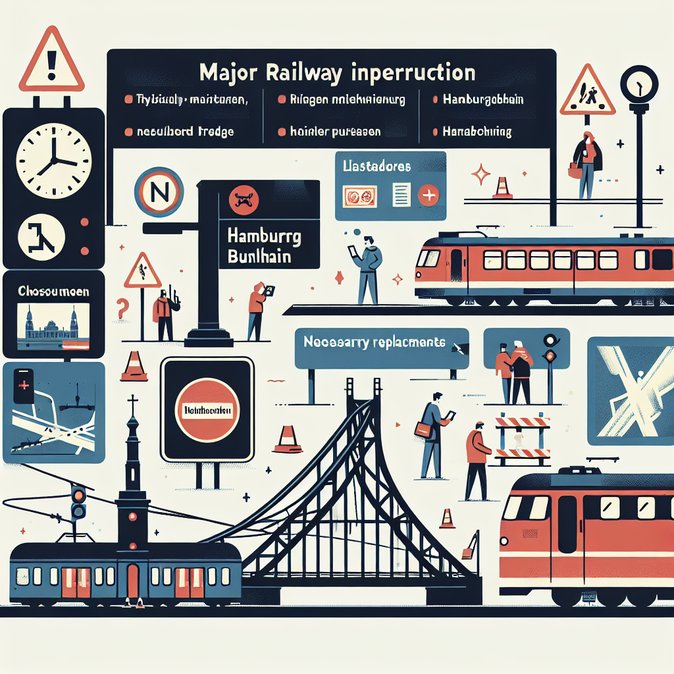
Frankfurt – Public transport in Germany’s financial capital ground to a halt on 18 February 2026 as Verdi staged a 24-hour warning strike at municipal operator VGF. From the early-morning shift until the night-time close of service, all nine U-Bahn lines and eleven tram routes remained in depots. Only a skeletal bus network and a partial rail replacement service on line U2 operated – both slowed by icy road conditions after overnight snowfall.
The union is pressing for shorter split shifts, higher allowances for weekend duty and a real-wage increase that offsets inflation. Management says the current offer – 9 percent over two years plus a €2,000 one-off payment – already matches public-sector benchmarks. Talks resume next week, but Verdi warned of further action if no progress is made, including the possibility of a 48-hour strike across the wider Rhine-Main region.
![Verdi Walk-Out Paralyzes Frankfurt’s U-Bahn and Trams for a Day]()
International travelers caught up in the disruption—and anyone planning future business trips to Frankfurt—can streamline their documentation needs through VisaHQ’s Germany portal (https://www.visahq.com/germany/). The platform offers quick visa checks, courier-assisted processing, and real-time status updates, making it easier to adjust itineraries or extend stays when sudden transport strikes throw schedules into disarray.
For commuters and visiting executives the disruption was immediate: Deutsche Bahn’s S-Bahn services continued to run, yet last-mile links to Messe Frankfurt, the banking district and the airport were heavily congested. Hotels reported last-minute cancellations of corporate meetings, while ride-hailing fares surged by up to 60 percent during peak hours.
The strike highlights the ripple effect local labour disputes can have on Germany’s wider mobility ecosystem. International assignees based in Frankfurt should activate tele-work protocols and monitor RMV alerts. Employers are also advised to review duty-of-care policies that cover taxi reimbursements when public transport is unavailable.
The union is pressing for shorter split shifts, higher allowances for weekend duty and a real-wage increase that offsets inflation. Management says the current offer – 9 percent over two years plus a €2,000 one-off payment – already matches public-sector benchmarks. Talks resume next week, but Verdi warned of further action if no progress is made, including the possibility of a 48-hour strike across the wider Rhine-Main region.

International travelers caught up in the disruption—and anyone planning future business trips to Frankfurt—can streamline their documentation needs through VisaHQ’s Germany portal (https://www.visahq.com/germany/). The platform offers quick visa checks, courier-assisted processing, and real-time status updates, making it easier to adjust itineraries or extend stays when sudden transport strikes throw schedules into disarray.
For commuters and visiting executives the disruption was immediate: Deutsche Bahn’s S-Bahn services continued to run, yet last-mile links to Messe Frankfurt, the banking district and the airport were heavily congested. Hotels reported last-minute cancellations of corporate meetings, while ride-hailing fares surged by up to 60 percent during peak hours.
The strike highlights the ripple effect local labour disputes can have on Germany’s wider mobility ecosystem. International assignees based in Frankfurt should activate tele-work protocols and monitor RMV alerts. Employers are also advised to review duty-of-care policies that cover taxi reimbursements when public transport is unavailable.