Berlin – Germany’s Federal Employment Agency (Bundesagentur für Arbeit, BA) marked the fifth anniversary of the Skilled-Worker Immigration Act (Fachkräfteeinwanderungsgesetz) with new data showing how dramatically the law has reshaped corporate hiring from abroad.
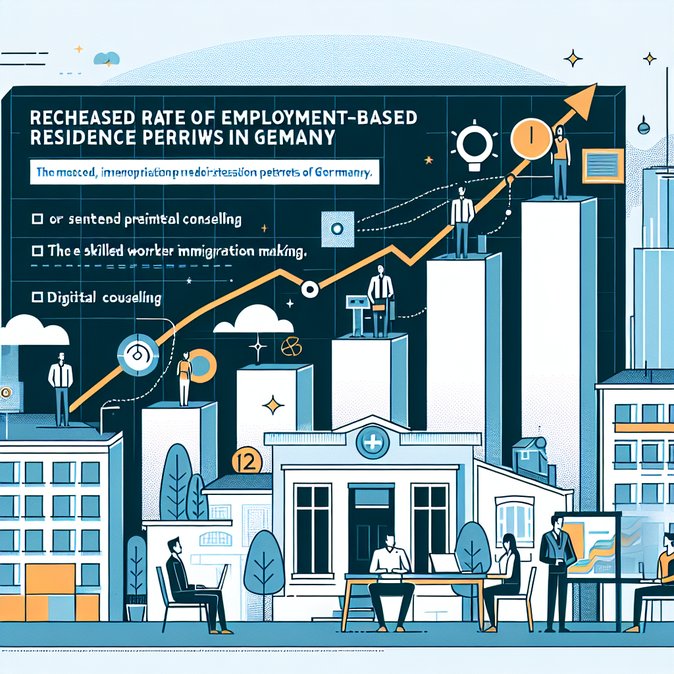
When the Act entered into force on 1 March 2020, just over 200,000 third-country nationals held residence permits tied to a German employment contract. By June 2025 the figure had climbed to 420,000 – an increase of 110 percent, the BA revealed on 18 February 2026. More than half (164,000) arrived on the EU Blue Card, whose minimum-salary threshold was cut in 2023, making it accessible to a wider pool of graduates and IT specialists.
The Agency attributes the surge to three policy levers. First, the 2023 salary-threshold reduction opened the Blue Card to mid-career professionals earning roughly €50,700 (or €45,934 for recent graduates). Second, quotas under the so-called Western Balkans Regulation were doubled to 50,000 work permits a year in mid-2024; demand is so strong that 18,000 applications had to be refused in December 2025 because the cap had been reached. Finally, the BA’s own digital advisory services have scaled rapidly, handling 360,000 enquiries from overseas candidates in 2025 alone and offering early guidance on qualification recognition – a notorious bottleneck for German employers.
![Five Years On, Germany’s Skilled-Worker Immigration Act Doubles Employment-Based Residence]()
International applicants and German HR departments looking for a streamlined way to secure visas, Blue Cards or the forthcoming Opportunity Card can tap services such as VisaHQ. The company’s online portal (https://www.visahq.com/germany/) guides users through eligibility checks, document preparation and consular appointments, helping both employers and candidates avoid costly delays during the hiring process.
For companies the numbers translate into deeper talent pools, shorter vacancy periods and a broader mix of nationalities in the workplace. Sectors feeling the greatest relief include engineering, healthcare and IT, where German firms have struggled to meet order books and innovation targets. HR managers, however, caution that embedding newcomers still hinges on timely municipal registration appointments and affordable housing – factors the federal reforms do not control.
Looking ahead, the Interior and Labour ministries are finalising a points-based ‘Opportunity Card’ (Chancenkarte) to complement the existing law by mid-2026. If enacted, it would allow qualified foreigners to enter Germany for up to 12 months to job-hunt on the ground, further easing corporate recruitment. Employers should therefore audit their onboarding pipelines now and update salary budgets to the 2026 Blue-Card thresholds published in the Federal Gazette last December.
When the Act entered into force on 1 March 2020, just over 200,000 third-country nationals held residence permits tied to a German employment contract. By June 2025 the figure had climbed to 420,000 – an increase of 110 percent, the BA revealed on 18 February 2026. More than half (164,000) arrived on the EU Blue Card, whose minimum-salary threshold was cut in 2023, making it accessible to a wider pool of graduates and IT specialists.
The Agency attributes the surge to three policy levers. First, the 2023 salary-threshold reduction opened the Blue Card to mid-career professionals earning roughly €50,700 (or €45,934 for recent graduates). Second, quotas under the so-called Western Balkans Regulation were doubled to 50,000 work permits a year in mid-2024; demand is so strong that 18,000 applications had to be refused in December 2025 because the cap had been reached. Finally, the BA’s own digital advisory services have scaled rapidly, handling 360,000 enquiries from overseas candidates in 2025 alone and offering early guidance on qualification recognition – a notorious bottleneck for German employers.

International applicants and German HR departments looking for a streamlined way to secure visas, Blue Cards or the forthcoming Opportunity Card can tap services such as VisaHQ. The company’s online portal (https://www.visahq.com/germany/) guides users through eligibility checks, document preparation and consular appointments, helping both employers and candidates avoid costly delays during the hiring process.
For companies the numbers translate into deeper talent pools, shorter vacancy periods and a broader mix of nationalities in the workplace. Sectors feeling the greatest relief include engineering, healthcare and IT, where German firms have struggled to meet order books and innovation targets. HR managers, however, caution that embedding newcomers still hinges on timely municipal registration appointments and affordable housing – factors the federal reforms do not control.
Looking ahead, the Interior and Labour ministries are finalising a points-based ‘Opportunity Card’ (Chancenkarte) to complement the existing law by mid-2026. If enacted, it would allow qualified foreigners to enter Germany for up to 12 months to job-hunt on the ground, further easing corporate recruitment. Employers should therefore audit their onboarding pipelines now and update salary budgets to the 2026 Blue-Card thresholds published in the Federal Gazette last December.