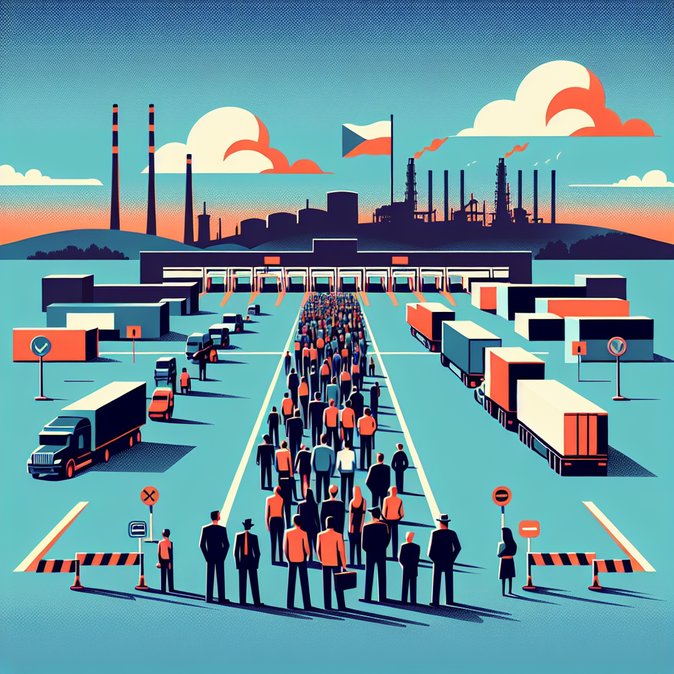
Berlin has formally notified Brussels that the "temporary" border controls first re-introduced in 2023 will be prolonged for another six months, until at least 15 September 2026. The announcement on 16 February by Interior Minister Alexander Dobrindt means federal police will keep stopping cars, coaches and trains arriving from all neighbouring states—including Czechia—despite Schengen rules that make internal checks the exception.
In Saxony’s border region the decision drew sharp criticism from Green MEP Anna Cavazzini, who accused the German government of systematically breaching EU law and burdening businesses. She threw her weight behind a lawsuit filed by a Saxon commuter who claims repeated extensions are illegal. Freight associations say spot checks on the D5 (Rozvadov–Waidhaus) and D8 (Ústí nad Labem–Dresden) corridors have already added 30-45 minutes to just-in-time deliveries, forcing companies to build bigger inventories.
Companies and commuters looking for clarity on what documents they now need can turn to VisaHQ. Through its Czech Republic page (https://www.visahq.com/czech-republic/) the service provides real-time updates on entry requirements, personalised alerts and downloadable checklists—helping to minimise surprises at improvised border checks.
![Germany’s six-month extension of border checks triggers concern for 40,000 Czech cross-border commuters]()
Roughly 40,000 Czech residents cross daily into Bavaria and Saxony to work in manufacturing, logistics and health care. Many rely on regional trains such as the Prague-Berlin EuroCity service, which operators say can lose half an hour when an entire carriage is screened. HR managers must now factor in greater schedule uncertainty and could face overtime costs when staff are delayed.
For business travellers the impact is twofold: besides longer journey times, passengers must carry passports or national IDs and be prepared to explain their travel purpose. While rejection rates remain low, mobility managers warn that employees who forget documents risk refused entry and costly re-routing. Corporates are therefore advising travellers to allow at least an extra hour for over-land trips into Germany and to keep digital copies of bookings readily available.
The European Commission must still assess Germany’s notification. If approved, Berlin will have reached the maximum cumulative period (three years) allowed under the current Schengen Code, setting up a legal confrontation later this year. Multinationals with supply chains straddling the Czech-German frontier should monitor the lawsuit and any Commission response, as either could force a sudden policy reversal—and with it, another round of operational adjustments.
In Saxony’s border region the decision drew sharp criticism from Green MEP Anna Cavazzini, who accused the German government of systematically breaching EU law and burdening businesses. She threw her weight behind a lawsuit filed by a Saxon commuter who claims repeated extensions are illegal. Freight associations say spot checks on the D5 (Rozvadov–Waidhaus) and D8 (Ústí nad Labem–Dresden) corridors have already added 30-45 minutes to just-in-time deliveries, forcing companies to build bigger inventories.
Companies and commuters looking for clarity on what documents they now need can turn to VisaHQ. Through its Czech Republic page (https://www.visahq.com/czech-republic/) the service provides real-time updates on entry requirements, personalised alerts and downloadable checklists—helping to minimise surprises at improvised border checks.

Roughly 40,000 Czech residents cross daily into Bavaria and Saxony to work in manufacturing, logistics and health care. Many rely on regional trains such as the Prague-Berlin EuroCity service, which operators say can lose half an hour when an entire carriage is screened. HR managers must now factor in greater schedule uncertainty and could face overtime costs when staff are delayed.
For business travellers the impact is twofold: besides longer journey times, passengers must carry passports or national IDs and be prepared to explain their travel purpose. While rejection rates remain low, mobility managers warn that employees who forget documents risk refused entry and costly re-routing. Corporates are therefore advising travellers to allow at least an extra hour for over-land trips into Germany and to keep digital copies of bookings readily available.
The European Commission must still assess Germany’s notification. If approved, Berlin will have reached the maximum cumulative period (three years) allowed under the current Schengen Code, setting up a legal confrontation later this year. Multinationals with supply chains straddling the Czech-German frontier should monitor the lawsuit and any Commission response, as either could force a sudden policy reversal—and with it, another round of operational adjustments.