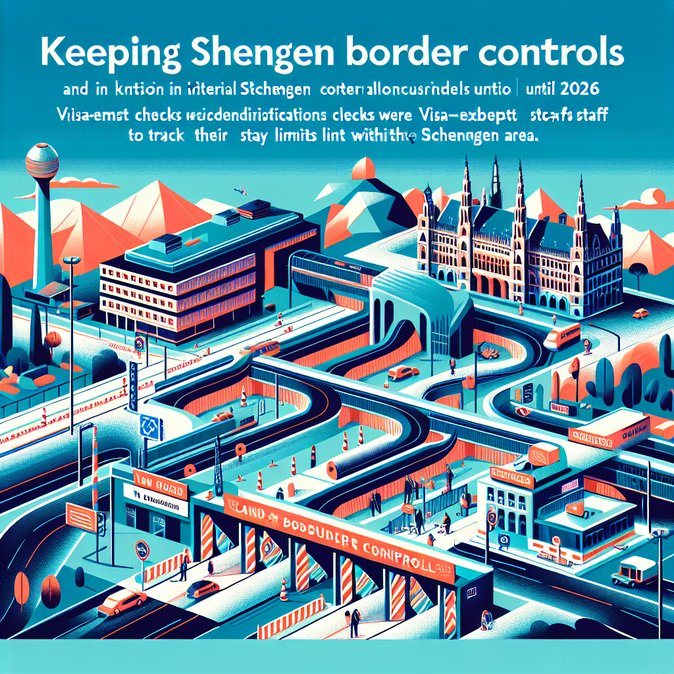
A new immigration alert from Fragomen confirms that Austria will keep temporary checks on its land borders—primarily with Slovenia and Hungary—until at least June 2026, citing ongoing migration-management and security concerns. The measure aligns Vienna with Denmark, France, Italy, the Netherlands, Norway, Poland, Slovenia and Sweden, all of which filed similar notices with Brussels this week. (fragomen.com)
Travellers, including EU citizens, should be prepared for ID inspections and occasional secondary questioning. While most crossings remain quick, peak-hour delays have grown to 20–30 minutes at the A2 Spielfeld crossing, according to haulier associations.
![Austria extends internal Schengen border checks until June 2026]()
To avoid last-minute surprises, VisaHQ can help travelers and corporate mobility coordinators stay ahead of these changes by offering real-time visa requirement checks, document services, and bespoke alerts. Their dedicated Austria page (https://www.visahq.com/austria/) consolidates the latest entry rules for EU and third-country nationals and can be a useful one-stop resource when planning cross-border movements.
The prolonged controls follow the amended Schengen Border Code adopted in 2024, which codifies extensions of up to two years “in exceptional circumstances.” Austria first reinstated checks in 2015 amid the refugee crisis; critics argue the policy now serves mainly domestic political purposes.
For multinational companies, the key impact is on shuttle commuters and technicians covering multiple CEE sites in a single day. Mobility managers should instruct staff to carry passports or EU national ID cards even on routine day-trips and to monitor Schengen-day counts for visa-waiver travellers.
Travellers, including EU citizens, should be prepared for ID inspections and occasional secondary questioning. While most crossings remain quick, peak-hour delays have grown to 20–30 minutes at the A2 Spielfeld crossing, according to haulier associations.

To avoid last-minute surprises, VisaHQ can help travelers and corporate mobility coordinators stay ahead of these changes by offering real-time visa requirement checks, document services, and bespoke alerts. Their dedicated Austria page (https://www.visahq.com/austria/) consolidates the latest entry rules for EU and third-country nationals and can be a useful one-stop resource when planning cross-border movements.
The prolonged controls follow the amended Schengen Border Code adopted in 2024, which codifies extensions of up to two years “in exceptional circumstances.” Austria first reinstated checks in 2015 amid the refugee crisis; critics argue the policy now serves mainly domestic political purposes.
For multinational companies, the key impact is on shuttle commuters and technicians covering multiple CEE sites in a single day. Mobility managers should instruct staff to carry passports or EU national ID cards even on routine day-trips and to monitor Schengen-day counts for visa-waiver travellers.