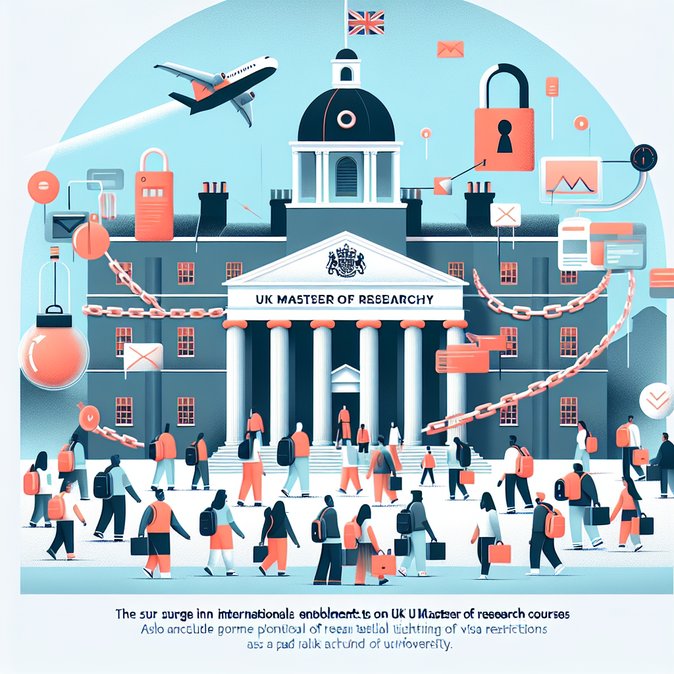
New Home Office data show a 135 per cent year-on-year jump in international enrolments on Master of Research (MRes) programmes—up from 2,485 in 2023-24 to 6,085 in the current academic year. The spike follows the 2024 ban on taught-course students bringing dependants, a restriction that did not apply to postgraduate research routes. Several universities have since created one-year ‘MRes conversion’ courses priced at £24,000-£27,000, marketed aggressively in high-growth markets such as India, Nigeria and Pakistan.
Ministers say they will tighten rules if evidence emerges that institutions are using research visas as a loophole to re-admit dependants. Officials are already auditing offer-to-enrolment ratios and compliance records at a “small cluster” of providers. Sector bodies counter that the rise reflects genuine demand for research skills and helps the UK meet its target of hosting 600,000 international students annually.
For corporate sponsors the issue matters because the Graduate-route work visa, which allows two years of unsponsored employment after study, remains available to research post-graduates even if it is later curtailed for taught-course alumni. Talent-acquisition teams recruiting from UK campuses should therefore monitor potential rule changes closely: a sudden cap on Graduate visas would shrink the pool of job-ready STEM candidates.
![Surge in research-course enrolments tests UK’s student-visa rules]()
If you’re trying to navigate these shifting visa categories—whether you’re an MRes applicant wondering about dependants or an employer evaluating sponsorship duties—VisaHQ can help. Their UK team (https://www.visahq.com/united-kingdom/) provides up-to-date guidance on student, work and research-route visas, simplifying application paperwork and ensuring compliance for both individuals and organisations.
Universities UK has proposed a compromise—raising maintenance-fund thresholds and introducing attendance audits—to reassure government without jeopardising enrolment income. Meanwhile, some mobility advisers recommend that employers fast-track hiring decisions for MRes students graduating this summer, in case visa conditions shift for the 2026 intake.
The controversy illustrates the delicate balance the UK must strike between reducing headline migration figures and sustaining its £41 billion international-education export sector.
Ministers say they will tighten rules if evidence emerges that institutions are using research visas as a loophole to re-admit dependants. Officials are already auditing offer-to-enrolment ratios and compliance records at a “small cluster” of providers. Sector bodies counter that the rise reflects genuine demand for research skills and helps the UK meet its target of hosting 600,000 international students annually.
For corporate sponsors the issue matters because the Graduate-route work visa, which allows two years of unsponsored employment after study, remains available to research post-graduates even if it is later curtailed for taught-course alumni. Talent-acquisition teams recruiting from UK campuses should therefore monitor potential rule changes closely: a sudden cap on Graduate visas would shrink the pool of job-ready STEM candidates.

If you’re trying to navigate these shifting visa categories—whether you’re an MRes applicant wondering about dependants or an employer evaluating sponsorship duties—VisaHQ can help. Their UK team (https://www.visahq.com/united-kingdom/) provides up-to-date guidance on student, work and research-route visas, simplifying application paperwork and ensuring compliance for both individuals and organisations.
Universities UK has proposed a compromise—raising maintenance-fund thresholds and introducing attendance audits—to reassure government without jeopardising enrolment income. Meanwhile, some mobility advisers recommend that employers fast-track hiring decisions for MRes students graduating this summer, in case visa conditions shift for the 2026 intake.
The controversy illustrates the delicate balance the UK must strike between reducing headline migration figures and sustaining its £41 billion international-education export sector.