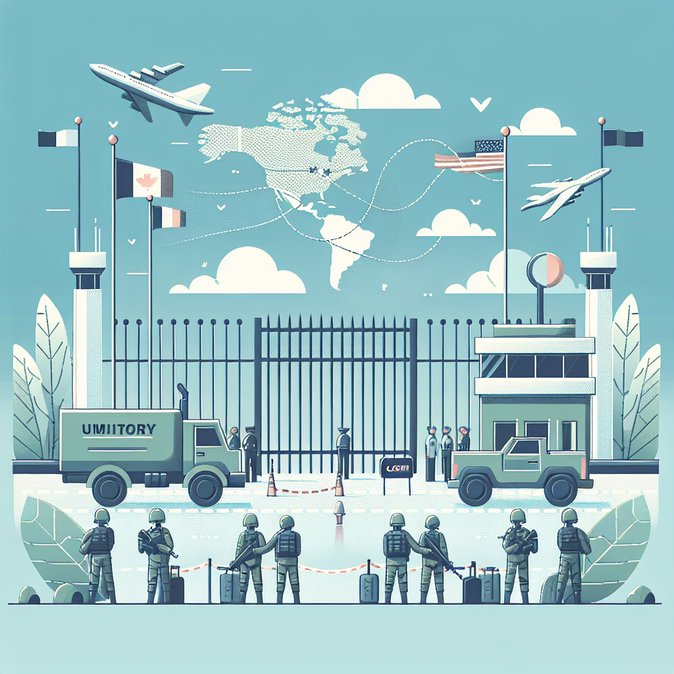
Speaking to Euronews on 16 February 2026, Finnish Defence Minister Antti Häkkänen said Russia is reinforcing nuclear and other strategic assets on the Kola Peninsula and constructing new facilities along the 1,340-kilometre land border shared with Finland. The comments come as Helsinki keeps all eight eastern border crossings closed and continues to channel asylum applications exclusively through airports and seaports.
Häkkänen described the situation as reminiscent of Cold-War patterns and stressed that Arctic security is now “critical” to European defence. He welcomed NATO’s recently launched Arctic Sentry vigilance activity and confirmed that part of the €1 billion EU defence loan Finland requested will be earmarked for land-border infrastructure, drones and unmanned sensors. While the interview focused on defence, officials privately acknowledge that sustained military tension means the civilian border is unlikely to re-open in the near term.
![Finnish minister warns of Russian military build-up, signalling prolonged border restrictions]()
For companies moving staff or goods between Finland and Russia the statement reinforces operational realities: road and rail freight routes remain suspended, and business travellers must rely on limited air or sea connections—subject to sanctions-related licensing—instead of the once-popular land crossings at Vaalimaa or Nuijamaa. Employers with Russian personnel assigned to Finnish sites should anticipate continued delays in family reunification and cross-border visits, as visa issuance for Russian nationals is heavily restricted.
Amid these shifting entry requirements, VisaHQ can streamline the process of securing Finnish travel documents and keep organisations up to date on the latest restrictions. Their dedicated Finland portal (https://www.visahq.com/finland/) offers real-time guidance, electronic application tools, and expert support for alternative routing through Schengen airports—valuable resources while the land border remains closed.
The warning also matters for mobility planners elsewhere in the Schengen Area. Finland has been at the forefront of so-called “instrumentalised migration” cases, and its extended closure sets a precedent that other external-border states may follow if geopolitical pressures rise. Organisations should monitor contingency planning for Arctic supply chains and ensure that emergency-evacuation or alternative-routing clauses in mobility policies are up to date.
Häkkänen described the situation as reminiscent of Cold-War patterns and stressed that Arctic security is now “critical” to European defence. He welcomed NATO’s recently launched Arctic Sentry vigilance activity and confirmed that part of the €1 billion EU defence loan Finland requested will be earmarked for land-border infrastructure, drones and unmanned sensors. While the interview focused on defence, officials privately acknowledge that sustained military tension means the civilian border is unlikely to re-open in the near term.

For companies moving staff or goods between Finland and Russia the statement reinforces operational realities: road and rail freight routes remain suspended, and business travellers must rely on limited air or sea connections—subject to sanctions-related licensing—instead of the once-popular land crossings at Vaalimaa or Nuijamaa. Employers with Russian personnel assigned to Finnish sites should anticipate continued delays in family reunification and cross-border visits, as visa issuance for Russian nationals is heavily restricted.
Amid these shifting entry requirements, VisaHQ can streamline the process of securing Finnish travel documents and keep organisations up to date on the latest restrictions. Their dedicated Finland portal (https://www.visahq.com/finland/) offers real-time guidance, electronic application tools, and expert support for alternative routing through Schengen airports—valuable resources while the land border remains closed.
The warning also matters for mobility planners elsewhere in the Schengen Area. Finland has been at the forefront of so-called “instrumentalised migration” cases, and its extended closure sets a precedent that other external-border states may follow if geopolitical pressures rise. Organisations should monitor contingency planning for Arctic supply chains and ensure that emergency-evacuation or alternative-routing clauses in mobility policies are up to date.