The Czech Ministry of the Interior has quietly pushed the next piece of its 2026 integration strategy over the line. A decree published late on 16 February introduces a brand-new grant scheme that gives towns, cities and voluntary associations of municipalities up to 90 percent financing for projects that help foreigners settle and work in their communities. Funding is earmarked chiefly for holders of temporary protection—most of them Ukrainians—but is also open to other third-country nationals who have arrived in large numbers since Russia’s 2022 invasion.
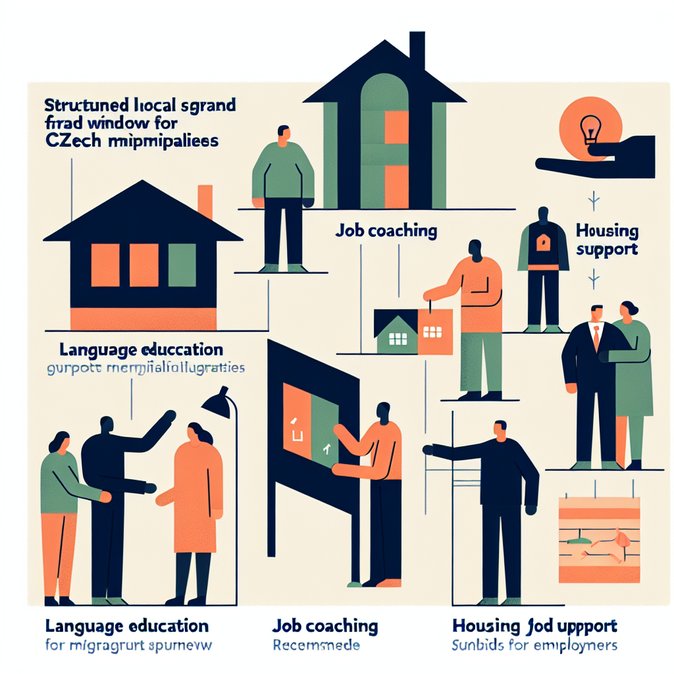
Under the scheme, local authorities can claim money for language courses, counselling, job-search assistance, child-care support and the salaries of coordinators who knit together NGOs, schools and employers. Applications are due by 17 February and all money must be spent before 31 December 2026, creating a tight, action-oriented window that the ministry believes will "keep projects concrete and measurable." A 10 percent co-financing requirement is meant to ensure local buy-in without scaring off cash-strapped municipalities.
The launch of the grant window is part of a wider policy package outlined by the Directorate-General for Migration and Home Affairs in Brussels. Besides the municipal fund, Prague has signed fresh EEA and Norway Grant memoranda worth €225 million, adopted a long-debated Housing Support Act that puts foreign nationals with permanent residence on an equal footing with Czech citizens, and confirmed that the first tranche of its 2025 Asylum Act amendment will enter into force in June. Together, these measures are designed to shift the state’s response from emergency humanitarian aid to long-term integration and labour-market participation.
![Czech Interior Ministry opens fast-track grants for municipalities integrating refugees]()
VisaHQ can also lighten the administrative load. Whether you are a municipality helping newcomers, an employer relocating staff, or a foreign professional arranging your own paperwork, the platform offers online visa and residence-permit processing, document legalization and status tracking for the Czech Republic (https://www.visahq.com/czech-republic/). Its services dovetail neatly with the new grant-funded initiatives, allowing users to focus on integration rather than bureaucracy.
For global-mobility and relocation managers the practical implications are clear. Corporations that rely on Ukrainian or other non-EU talent will find it easier to coordinate language training and housing through the local town hall, costs for diploma recognition and medical checks can now be co-funded, and HR teams should plug into municipal "Housing Contact Points" that will act as one-stop shops for incoming staff. At the same time, municipalities will expect employers to partner on co-financing and to document the economic impact of their foreign workforces.
Multinationals with offices outside Prague—especially in fast-growing industrial hubs such as Plzeň, Liberec and Ostrava—are likely to be the biggest beneficiaries. Those regions host the highest concentrations of temporary-protection holders and already struggle with labour shortages. By injecting cash directly at the local level, the Interior Ministry hopes to defuse social tension, lock skilled refugees into long-term residence plans and, ultimately, enlarge the pool of workers available to Czech industry.
Under the scheme, local authorities can claim money for language courses, counselling, job-search assistance, child-care support and the salaries of coordinators who knit together NGOs, schools and employers. Applications are due by 17 February and all money must be spent before 31 December 2026, creating a tight, action-oriented window that the ministry believes will "keep projects concrete and measurable." A 10 percent co-financing requirement is meant to ensure local buy-in without scaring off cash-strapped municipalities.
The launch of the grant window is part of a wider policy package outlined by the Directorate-General for Migration and Home Affairs in Brussels. Besides the municipal fund, Prague has signed fresh EEA and Norway Grant memoranda worth €225 million, adopted a long-debated Housing Support Act that puts foreign nationals with permanent residence on an equal footing with Czech citizens, and confirmed that the first tranche of its 2025 Asylum Act amendment will enter into force in June. Together, these measures are designed to shift the state’s response from emergency humanitarian aid to long-term integration and labour-market participation.

VisaHQ can also lighten the administrative load. Whether you are a municipality helping newcomers, an employer relocating staff, or a foreign professional arranging your own paperwork, the platform offers online visa and residence-permit processing, document legalization and status tracking for the Czech Republic (https://www.visahq.com/czech-republic/). Its services dovetail neatly with the new grant-funded initiatives, allowing users to focus on integration rather than bureaucracy.
For global-mobility and relocation managers the practical implications are clear. Corporations that rely on Ukrainian or other non-EU talent will find it easier to coordinate language training and housing through the local town hall, costs for diploma recognition and medical checks can now be co-funded, and HR teams should plug into municipal "Housing Contact Points" that will act as one-stop shops for incoming staff. At the same time, municipalities will expect employers to partner on co-financing and to document the economic impact of their foreign workforces.
Multinationals with offices outside Prague—especially in fast-growing industrial hubs such as Plzeň, Liberec and Ostrava—are likely to be the biggest beneficiaries. Those regions host the highest concentrations of temporary-protection holders and already struggle with labour shortages. By injecting cash directly at the local level, the Interior Ministry hopes to defuse social tension, lock skilled refugees into long-term residence plans and, ultimately, enlarge the pool of workers available to Czech industry.