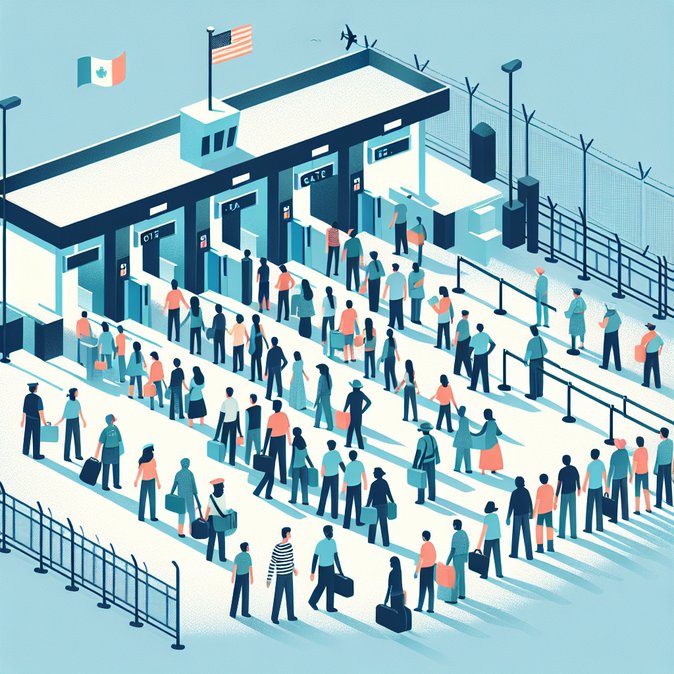
With just days to go before the Year of the Horse begins, Hong Kong’s Immigration Department processed more than 1.18 million passenger movements on 14 February—an all-time high for a non-pandemic year, according to official figures released on Saturday. Outbound traffic dominated, totalling 720,000 people, of which local residents accounted for roughly three-quarters. Lo Wu, the traditional rail crossing to Shenzhen, alone handled 115,000 departures. (news.rthk.hk)
Inbound flows told a different story: nearly 150,000 mainland visitors arrived, most of them via the West Kowloon high-speed-rail terminus or Hong Kong International Airport. The airport saw more than 24,000 non-resident arrivals, underscoring the growing importance of air-rail connectivity for regional business travellers.
![Record 1.18 million border crossings in a single day as holiday exodus peaks]()
Whether you’re coordinating a quick business trip or a family holiday, VisaHQ can take the friction out of cross-border planning. Its Hong Kong portal (https://www.visahq.com/hong-kong/) lets travellers and mobility managers instantly check entry rules, submit e-visa applications and track approvals, ensuring paperwork is sorted long before you reach the e-Channel.
For corporate mobility teams the headline number is less important than the time-of-day breakdown. Immigration data show that clearance times remained under 20 minutes at most land checkpoints until late afternoon, suggesting that recent investments in e-gates and facial-recognition tunnels are beginning to pay off. Employers planning cross-border service calls during festivals can therefore schedule daylight departures with greater confidence.
Looking ahead, the Security Bureau says e-Channel capacity will expand by a further 15 per cent before the summer holiday peak, helped by a trial of fully contact-less gates at the Hong Kong–Zhuhai–Macao Bridge. Mobility managers should monitor whether that pilot is extended to Lo Wu before the National Day “golden week,” when daily flows traditionally exceed 800,000.
Inbound flows told a different story: nearly 150,000 mainland visitors arrived, most of them via the West Kowloon high-speed-rail terminus or Hong Kong International Airport. The airport saw more than 24,000 non-resident arrivals, underscoring the growing importance of air-rail connectivity for regional business travellers.
Whether you’re coordinating a quick business trip or a family holiday, VisaHQ can take the friction out of cross-border planning. Its Hong Kong portal (https://www.visahq.com/hong-kong/) lets travellers and mobility managers instantly check entry rules, submit e-visa applications and track approvals, ensuring paperwork is sorted long before you reach the e-Channel.
For corporate mobility teams the headline number is less important than the time-of-day breakdown. Immigration data show that clearance times remained under 20 minutes at most land checkpoints until late afternoon, suggesting that recent investments in e-gates and facial-recognition tunnels are beginning to pay off. Employers planning cross-border service calls during festivals can therefore schedule daylight departures with greater confidence.
Looking ahead, the Security Bureau says e-Channel capacity will expand by a further 15 per cent before the summer holiday peak, helped by a trial of fully contact-less gates at the Hong Kong–Zhuhai–Macao Bridge. Mobility managers should monitor whether that pilot is extended to Lo Wu before the National Day “golden week,” when daily flows traditionally exceed 800,000.