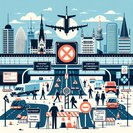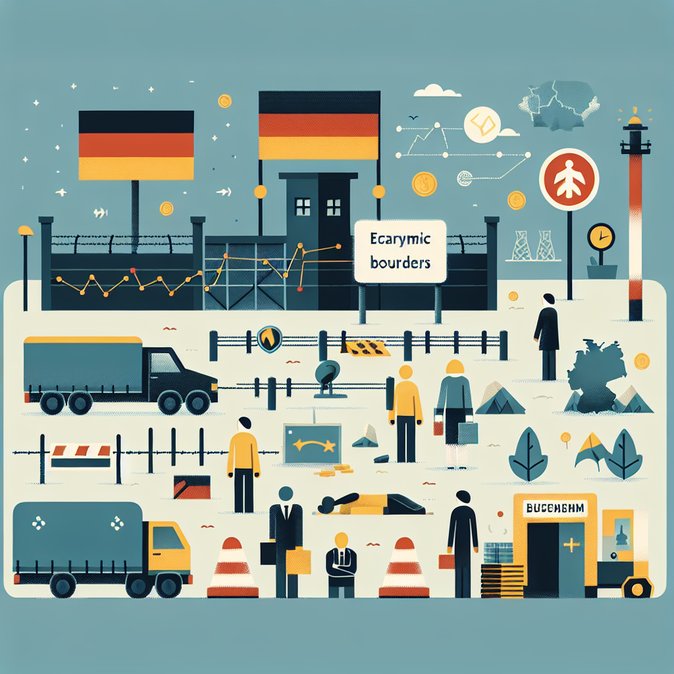
Germany’s Federal Interior Minister Alexander Dobrindt has formally notified the European Commission that the temporary internal border checks re-introduced over the last three years will be prolonged for another six months beyond 15 March, keeping them in force until at least 15 September 2026. The decision means that stationary checks by the Federal Police will continue on all nine land borders, including the long-standing controls at the Austrian frontier (in place since 2015) and the newer posts set up in 2023-24 on the borders with Poland, the Czech Republic, Switzerland, Denmark, France, Belgium, Luxembourg and the Netherlands.(welt.de)
Dobrindt justified the move on “migration- and security-policy grounds”, calling the controls an “essential pillar” of Berlin’s wider migration overhaul. Under the extension, officers will maintain the authority to turn back asylum-seekers who are deemed to have had reasonable opportunity to claim protection in another EU member state, except in humanitarian cases involving minors, pregnant women or the seriously ill. Operational details have already been filed with Brussels, fulfilling Schengen Border Code notification requirements.
Whether you’re a frequent business traveler or a logistics coordinator, the extended checks may leave you wondering what documents you’ll need and how to secure them quickly. VisaHQ can streamline the process: through its Germany portal (https://www.visahq.com/germany/) applicants can verify entry requirements, complete visa forms online, and receive expert guidance on passports, residence permits and other travel documents—helping ensure smoother crossings even during heightened border scrutiny.
![Germany Extends Internal Border Controls Until at Least September 2026]()
Business groups and logistics operators reacted with concern. The German Freight Forwarders and Logistics Association warned that a further half-year of checks will add costs and delays for cross-border supply chains, particularly in the automotive and just-in-time retail sectors that rely on overnight truck runs from neighbouring countries. Trans.info, a portal specialising in road-haulage news, estimates that a five-minute hold-up per lorry translates into €70 million in additional annual costs for the sector.(trans.info) The Bavarian Chamber of Commerce has already asked the federal government for dedicated “green lanes” for registered trusted carriers.
Politically, the extension has sparked sharp criticism from opposition parties and parts of the governing coalition. The Greens’ European-policy spokeswoman Anna Cavazzini called the measure “legally dubious and economically harmful”, arguing that the blanket checks violate the proportionality principle underpinning the Schengen rules and put undue strain on police resources. Civil-society groups in border regions likewise warn of negative effects on commuters, tourism and small retailers that depend on fluid daily traffic.
For corporate mobility managers the message is twofold. First, travellers entering Germany by road or rail should carry passports (or national ID cards for EU citizens) and allow extra time for possible spot checks. Second, companies that move goods across German borders should review contingency plans, ensure drivers have complete documentation, and consider night-time slots when queues are shortest. Although airports and seaports remain unaffected, experts note that land-border wait times can spike unpredictably when officers conduct targeted operations. Advance briefings to assignees, rotating drivers and digitally pre-clearing cargo manifests can mitigate the worst disruptions until at least mid-September 2026.
Dobrindt justified the move on “migration- and security-policy grounds”, calling the controls an “essential pillar” of Berlin’s wider migration overhaul. Under the extension, officers will maintain the authority to turn back asylum-seekers who are deemed to have had reasonable opportunity to claim protection in another EU member state, except in humanitarian cases involving minors, pregnant women or the seriously ill. Operational details have already been filed with Brussels, fulfilling Schengen Border Code notification requirements.
Whether you’re a frequent business traveler or a logistics coordinator, the extended checks may leave you wondering what documents you’ll need and how to secure them quickly. VisaHQ can streamline the process: through its Germany portal (https://www.visahq.com/germany/) applicants can verify entry requirements, complete visa forms online, and receive expert guidance on passports, residence permits and other travel documents—helping ensure smoother crossings even during heightened border scrutiny.
Business groups and logistics operators reacted with concern. The German Freight Forwarders and Logistics Association warned that a further half-year of checks will add costs and delays for cross-border supply chains, particularly in the automotive and just-in-time retail sectors that rely on overnight truck runs from neighbouring countries. Trans.info, a portal specialising in road-haulage news, estimates that a five-minute hold-up per lorry translates into €70 million in additional annual costs for the sector.(trans.info) The Bavarian Chamber of Commerce has already asked the federal government for dedicated “green lanes” for registered trusted carriers.
Politically, the extension has sparked sharp criticism from opposition parties and parts of the governing coalition. The Greens’ European-policy spokeswoman Anna Cavazzini called the measure “legally dubious and economically harmful”, arguing that the blanket checks violate the proportionality principle underpinning the Schengen rules and put undue strain on police resources. Civil-society groups in border regions likewise warn of negative effects on commuters, tourism and small retailers that depend on fluid daily traffic.
For corporate mobility managers the message is twofold. First, travellers entering Germany by road or rail should carry passports (or national ID cards for EU citizens) and allow extra time for possible spot checks. Second, companies that move goods across German borders should review contingency plans, ensure drivers have complete documentation, and consider night-time slots when queues are shortest. Although airports and seaports remain unaffected, experts note that land-border wait times can spike unpredictably when officers conduct targeted operations. Advance briefings to assignees, rotating drivers and digitally pre-clearing cargo manifests can mitigate the worst disruptions until at least mid-September 2026.