Germany’s interior minister Alexander Dobrindt confirmed on 16 February that the temporary police controls introduced along the 204-kilometre Belgian–German frontier in September 2024 will be prolonged until at least September 2026.
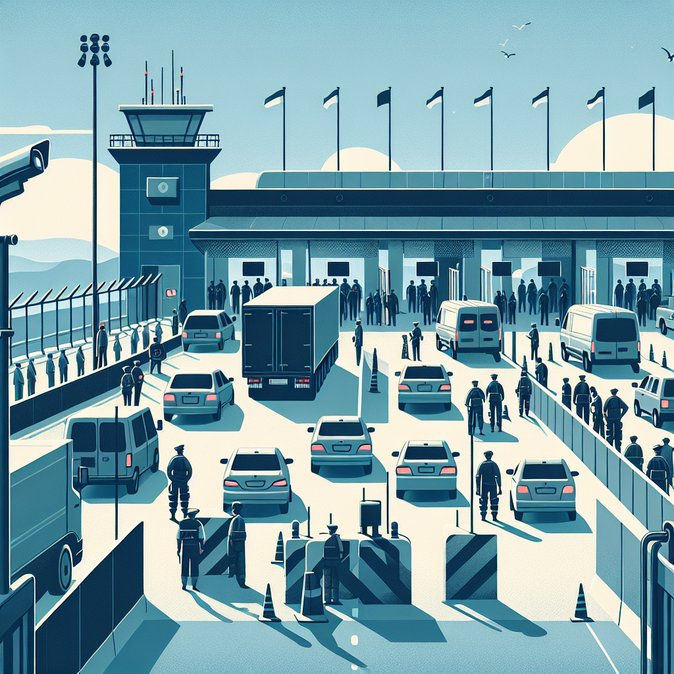
Originally justified as an emergency response to irregular migration, the controls have been rolled over every six months despite the Schengen Code’s expectation that internal borders remain free of systematic checks. German police say the measure has blocked more than 46,000 attempted entries; critics argue that spot checks conducted on the E40 motorway, secondary roads and key rail links now resemble a semi-permanent hard border.
For Belgian commuters and logistics operators the extension is an unwelcome déjà-vu. The East Cantons’ Minister-President Oliver Paasch warned that the measure disrupts just-in-time supply chains for automotive and chemical plants clustered on both sides of the frontier and lengthens daily cross-border commutes by 20-40 minutes. Smaller firms report higher overtime, fuel and insurance costs as drivers try to meet delivery windows while allowing for possible inspections.
![Germany Extends Border Checks with Belgium for Another Six Months, Raising Mobility Concerns]()
If you or your employees need clarity on which travel documents are now essential for routine trips across this newly fortified frontier, VisaHQ can help. Their online portal (https://www.visahq.com/belgium/) provides real-time guidance on passport validity, ID card acceptance and any supplementary paperwork demanded by German or Belgian authorities, and can expedite renewals or replacements so travel plans stay on track.
Legal experts note that, while Article 25 of the Schengen Borders Code allows temporary controls in cases of serious threat, any continuation beyond two years is deemed “a last-resort exceptional measure”. Germany will reach that two-year limit in September 2026, putting pressure on Berlin to articulate an exit plan or face infringement proceedings from the European Commission.
Practical take-away for mobility managers: alert employees who cross the border—especially those using company vehicles—that they must carry passports or national ID cards and, if non-EU nationals, proof of Belgian residence. Transport managers moving goods between Liège, Aachen and Cologne should review routing buffers and inform customers of potential delays through September.
Originally justified as an emergency response to irregular migration, the controls have been rolled over every six months despite the Schengen Code’s expectation that internal borders remain free of systematic checks. German police say the measure has blocked more than 46,000 attempted entries; critics argue that spot checks conducted on the E40 motorway, secondary roads and key rail links now resemble a semi-permanent hard border.
For Belgian commuters and logistics operators the extension is an unwelcome déjà-vu. The East Cantons’ Minister-President Oliver Paasch warned that the measure disrupts just-in-time supply chains for automotive and chemical plants clustered on both sides of the frontier and lengthens daily cross-border commutes by 20-40 minutes. Smaller firms report higher overtime, fuel and insurance costs as drivers try to meet delivery windows while allowing for possible inspections.

If you or your employees need clarity on which travel documents are now essential for routine trips across this newly fortified frontier, VisaHQ can help. Their online portal (https://www.visahq.com/belgium/) provides real-time guidance on passport validity, ID card acceptance and any supplementary paperwork demanded by German or Belgian authorities, and can expedite renewals or replacements so travel plans stay on track.
Legal experts note that, while Article 25 of the Schengen Borders Code allows temporary controls in cases of serious threat, any continuation beyond two years is deemed “a last-resort exceptional measure”. Germany will reach that two-year limit in September 2026, putting pressure on Berlin to articulate an exit plan or face infringement proceedings from the European Commission.
Practical take-away for mobility managers: alert employees who cross the border—especially those using company vehicles—that they must carry passports or national ID cards and, if non-EU nationals, proof of Belgian residence. Transport managers moving goods between Liège, Aachen and Cologne should review routing buffers and inform customers of potential delays through September.