Germany’s Federal Interior Minister Alexander Dobrindt has formally notified the European Commission that the temporary controls at all German land borders will be prolonged for another six-month period, running at least until mid-September 2026. The measure, first introduced on the frontier with Austria in 2015 at the height of the refugee crisis, has since been widened to nine other neighbouring states. According to the ministry, continued “migration- and security-policy concerns” justify the extension.(welt.de)
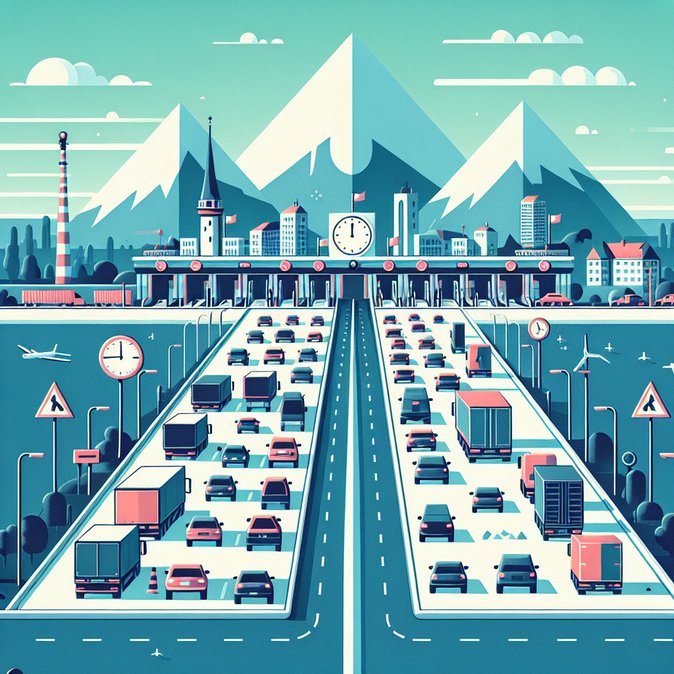
For Austria, the decision hits hardest along the busy Salzburg–Bavaria corridor, where some 30 000 cross-border commuters, logistics firms and tourism operators rely on seamless Schengen travel every day. Regional media estimate that motorists already lose up to 45 minutes during the morning peak whenever the German Federal Police step up spot checks. Business chambers on both sides of the border warn that the extra queues could erode Austria’s attractiveness as a location for headquarters staff who live in Germany for tax or family reasons.(salzburg24.at)
Whether you are a daily commuter, a logistics manager or an HR specialist moving talent across the border, VisaHQ can help you stay compliant amid the renewed checks. Through its Austrian portal (https://www.visahq.com/austria/) the service offers quick guidance on residence permits, business visas, A1 certificates and other travel documents, allowing companies and individuals to upload paperwork online and track approvals in real time—an easy way to avoid last-minute surprises at the German controls.
![Germany extends Salzburg–Bavaria border checks until September 2026, putting fresh strain on Austrian commuters]()
The Austrian government has so far avoided an open clash with Berlin, but Interior Minister Gerhard Karner reiterated that “proportionate” controls must not become a substitute for a functioning EU external-border regime. He nevertheless instructed the Salzburg police command to coordinate closely with their German counterparts in order to keep freight and school-bus traffic moving. Employers with posted workers are being advised to issue flexible start times and to store additional buffer stock on the German side to absorb unexpected holdups.
At policy level, the prolonged checks rekindle the debate over the integrity of the Schengen area just two months before the new Entry/Exit System (EES) goes fully live on 10 April 2026. Austrian MEPs across party lines argue that Germany’s unilateral actions undermine public confidence in the EU’s common travel rules. Legal experts say a renewed court challenge is likely, but acknowledge that existing case law gives member states wide discretion in the name of “public order”.
For multinationals running split-site teams between Munich and Salzburg or Kufstein and Rosenheim, contingency plans now need to stretch into the autumn. HR managers are urged to update assignment contracts, relocation allowances and payroll tax residence assumptions, while mobility teams should brief travellers on potential ID checks and ensure that A1 social-security certificates or work-permit originals are at hand when crossing the frontier.
For Austria, the decision hits hardest along the busy Salzburg–Bavaria corridor, where some 30 000 cross-border commuters, logistics firms and tourism operators rely on seamless Schengen travel every day. Regional media estimate that motorists already lose up to 45 minutes during the morning peak whenever the German Federal Police step up spot checks. Business chambers on both sides of the border warn that the extra queues could erode Austria’s attractiveness as a location for headquarters staff who live in Germany for tax or family reasons.(salzburg24.at)
Whether you are a daily commuter, a logistics manager or an HR specialist moving talent across the border, VisaHQ can help you stay compliant amid the renewed checks. Through its Austrian portal (https://www.visahq.com/austria/) the service offers quick guidance on residence permits, business visas, A1 certificates and other travel documents, allowing companies and individuals to upload paperwork online and track approvals in real time—an easy way to avoid last-minute surprises at the German controls.

The Austrian government has so far avoided an open clash with Berlin, but Interior Minister Gerhard Karner reiterated that “proportionate” controls must not become a substitute for a functioning EU external-border regime. He nevertheless instructed the Salzburg police command to coordinate closely with their German counterparts in order to keep freight and school-bus traffic moving. Employers with posted workers are being advised to issue flexible start times and to store additional buffer stock on the German side to absorb unexpected holdups.
At policy level, the prolonged checks rekindle the debate over the integrity of the Schengen area just two months before the new Entry/Exit System (EES) goes fully live on 10 April 2026. Austrian MEPs across party lines argue that Germany’s unilateral actions undermine public confidence in the EU’s common travel rules. Legal experts say a renewed court challenge is likely, but acknowledge that existing case law gives member states wide discretion in the name of “public order”.
For multinationals running split-site teams between Munich and Salzburg or Kufstein and Rosenheim, contingency plans now need to stretch into the autumn. HR managers are urged to update assignment contracts, relocation allowances and payroll tax residence assumptions, while mobility teams should brief travellers on potential ID checks and ensure that A1 social-security certificates or work-permit originals are at hand when crossing the frontier.