A fresh wave of sabotage hit Italy’s high-speed rail (AV) network in the early hours of 14 February, forcing the temporary shutdown of the country’s two main north-south corridors (Rome–Florence and Rome–Naples) at the height of the Milan-Cortina Winter Olympics.
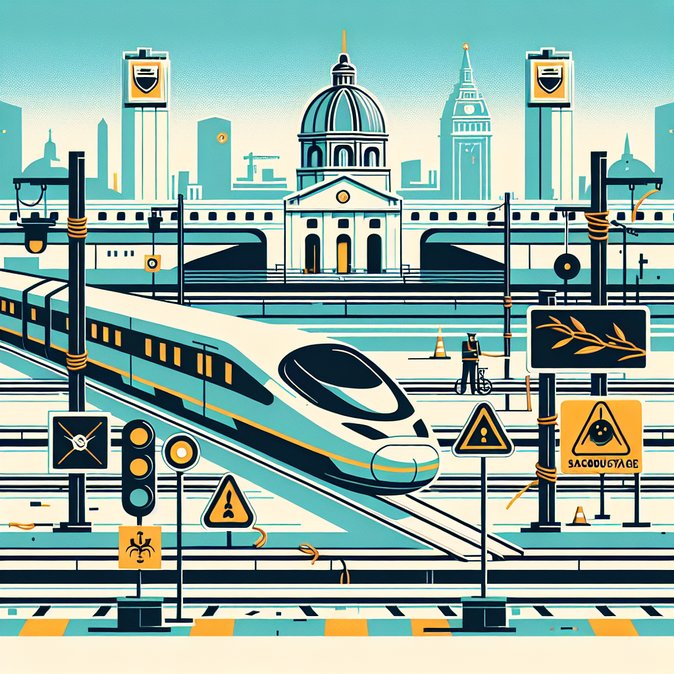
According to railway operator RFI, unknown perpetrators prised open underground cable ducts in two separate areas on the outskirts of Rome and set fire to signalling cables that control points and track-side equipment. A third incident, initially deemed a technical fault in Capena, is also being investigated. Police from the railway (Polfer) and anti-terror DIGOS units have opened a criminal inquiry and are examining possible links to similar anarchist actions claimed last week in Bologna and Pesaro, timed to coincide with the Olympic opening ceremony.
The attacks knocked out the automated safety system and forced drivers to run on sight at reduced speed until full inspections were completed. By mid-morning, Trenitalia and Italo had cancelled or re-routed numerous AV services; residual delays peaked at 140–150 minutes in Milan, Florence and Bologna before normal operations were restored around lunchtime. Business travellers reported missed connections – one passenger quoted by ANSA said he had to buy a last-minute ticket to Lausanne to salvage a client meeting.
![Sabotage on Italy’s High-Speed Rail Lines Causes Two-Hour Delays and Cancellations]()
If sudden rerouting leaves travellers scrambling for updated documentation—say, a Schengen visa extension or permits for onward journeys—VisaHQ can help expedite the paperwork. Their dedicated Italy page (https://www.visahq.com/italy/) offers quick online processing and expert support, ensuring mobility teams can adapt itineraries without additional bureaucracy.
Transport Minister Matteo Salvini condemned the acts as “criminal boycotts against workers and against Italy” and ordered heightened patrols along strategic track sections. Consumer association Codacons announced that it will seek class-action damages on behalf of affected passengers once culprits are identified.
For global-mobility managers the incident is a reminder of the fragility of critical infrastructure during major events. Companies with staff shuttling between northern industrial hubs and Rome or Naples this month should build extra buffers into itineraries, monitor RFI’s live-train portal and consider alternative airports for time-sensitive travel. Rail operators have reiterated that full refunds or free re-booking apply when delays exceed 120 minutes.
According to railway operator RFI, unknown perpetrators prised open underground cable ducts in two separate areas on the outskirts of Rome and set fire to signalling cables that control points and track-side equipment. A third incident, initially deemed a technical fault in Capena, is also being investigated. Police from the railway (Polfer) and anti-terror DIGOS units have opened a criminal inquiry and are examining possible links to similar anarchist actions claimed last week in Bologna and Pesaro, timed to coincide with the Olympic opening ceremony.
The attacks knocked out the automated safety system and forced drivers to run on sight at reduced speed until full inspections were completed. By mid-morning, Trenitalia and Italo had cancelled or re-routed numerous AV services; residual delays peaked at 140–150 minutes in Milan, Florence and Bologna before normal operations were restored around lunchtime. Business travellers reported missed connections – one passenger quoted by ANSA said he had to buy a last-minute ticket to Lausanne to salvage a client meeting.
If sudden rerouting leaves travellers scrambling for updated documentation—say, a Schengen visa extension or permits for onward journeys—VisaHQ can help expedite the paperwork. Their dedicated Italy page (https://www.visahq.com/italy/) offers quick online processing and expert support, ensuring mobility teams can adapt itineraries without additional bureaucracy.
Transport Minister Matteo Salvini condemned the acts as “criminal boycotts against workers and against Italy” and ordered heightened patrols along strategic track sections. Consumer association Codacons announced that it will seek class-action damages on behalf of affected passengers once culprits are identified.
For global-mobility managers the incident is a reminder of the fragility of critical infrastructure during major events. Companies with staff shuttling between northern industrial hubs and Rome or Naples this month should build extra buffers into itineraries, monitor RFI’s live-train portal and consider alternative airports for time-sensitive travel. Rail operators have reiterated that full refunds or free re-booking apply when delays exceed 120 minutes.