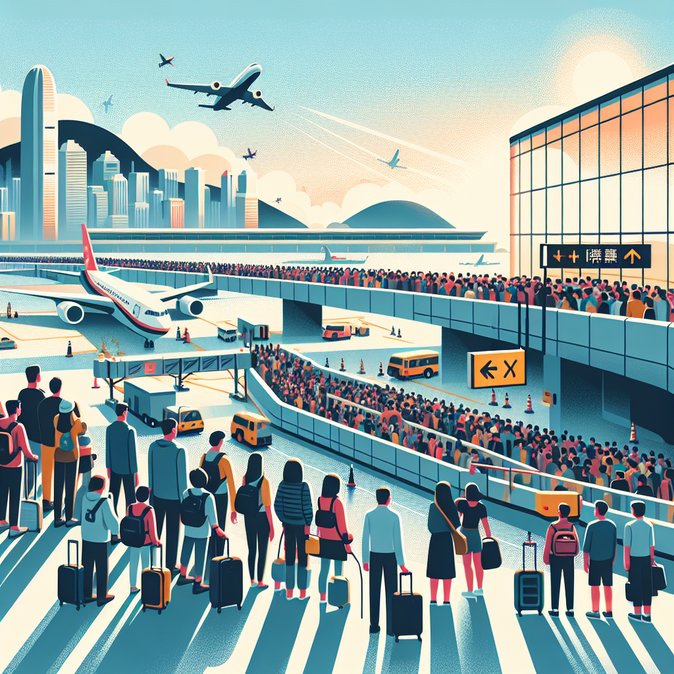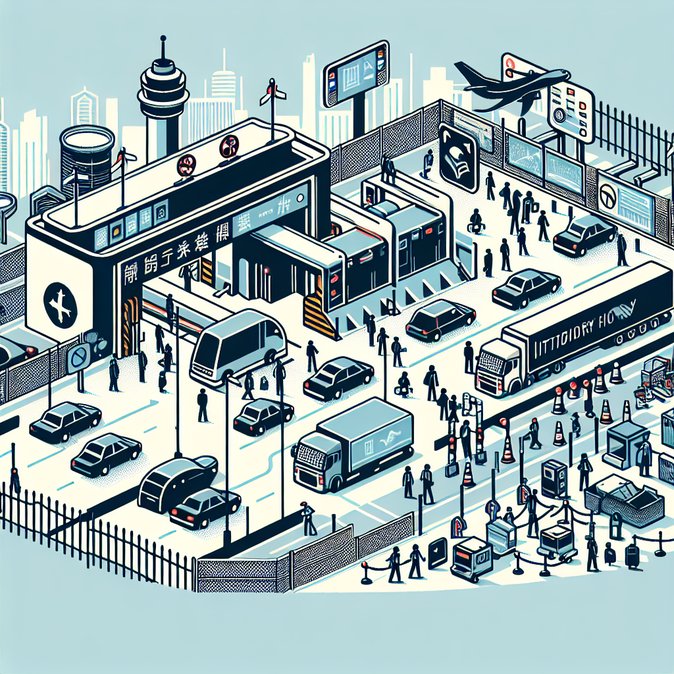
Official statistics released on 14 February 2026 show that Hong Kong’s 14 land, sea and air boundary control points processed approximately 330 million passenger movements in 2025—an increase of 12 per cent over the previous year. Private-car crossings surged 24 per cent to 11.9 million trips, while goods-vehicle trips rose 6 per cent to 4.8 million.(chinadailyhk.com)
The rise reflects a full calendar year without pandemic-related travel restrictions and the first full year of operation for the Heung Yuen Wai/Liantang control point, which has absorbed some freight pressure from the busy Lok Ma Chau and Man Kam To crossings. Authorities credited the growth to the gradual resumption of large-scale events—such as Art Basel, the Hong Kong Sevens and multiple trade fairs—that draw international visitors and stimulate outbound corporate travel.
For international visitors and cross-border commuters planning trips in this revitalized environment, VisaHQ’s Hong Kong portal (https://www.visahq.com/hong-kong/) provides an easy way to verify entry requirements, complete visa applications online and arrange secure document pickup—streamlining preparations before you reach any of the city’s busy checkpoints.
![Hong Kong recorded 330 million cross-boundary passenger trips in 2025, 12 per cent higher than 2024]()
Yet the increase in volume came with operational challenges. Customs detected 38,869 contraband cases in 2025, up 24 per cent year on year, three-quarters of which involved illicit cigarettes. The government said it will install more AI-enabled X-ray scanners and facial-recognition e-Gates at major land checkpoints in 2026 to speed clearance while tightening enforcement.
For companies managing cross-border commuters in the Greater Bay Area, the data underscore the importance of contingency planning. Peak-hour clearance times at the Shenzhen Bay Bridge now regularly exceed 45 minutes for private cars; businesses are increasingly shifting staff to the under-used Heung Yuen Wai link or encouraging rail options via West Kowloon Station.
Policy analysts believe the 12 per cent jump strengthens arguments for accelerated development of the “East Rail through-train” concept, which would integrate the border town of Sha Tau Kok into the rail network by 2028 and relieve pressure on existing crossings.
The rise reflects a full calendar year without pandemic-related travel restrictions and the first full year of operation for the Heung Yuen Wai/Liantang control point, which has absorbed some freight pressure from the busy Lok Ma Chau and Man Kam To crossings. Authorities credited the growth to the gradual resumption of large-scale events—such as Art Basel, the Hong Kong Sevens and multiple trade fairs—that draw international visitors and stimulate outbound corporate travel.
For international visitors and cross-border commuters planning trips in this revitalized environment, VisaHQ’s Hong Kong portal (https://www.visahq.com/hong-kong/) provides an easy way to verify entry requirements, complete visa applications online and arrange secure document pickup—streamlining preparations before you reach any of the city’s busy checkpoints.

Yet the increase in volume came with operational challenges. Customs detected 38,869 contraband cases in 2025, up 24 per cent year on year, three-quarters of which involved illicit cigarettes. The government said it will install more AI-enabled X-ray scanners and facial-recognition e-Gates at major land checkpoints in 2026 to speed clearance while tightening enforcement.
For companies managing cross-border commuters in the Greater Bay Area, the data underscore the importance of contingency planning. Peak-hour clearance times at the Shenzhen Bay Bridge now regularly exceed 45 minutes for private cars; businesses are increasingly shifting staff to the under-used Heung Yuen Wai link or encouraging rail options via West Kowloon Station.
Policy analysts believe the 12 per cent jump strengthens arguments for accelerated development of the “East Rail through-train” concept, which would integrate the border town of Sha Tau Kok into the rail network by 2028 and relieve pressure on existing crossings.
More From Hong Kong
View all
Mainland tourists pour into Hong Kong as nine-day Lunar New Year ‘Golden Week’ begins
Hong Kong International Airport posts 5.5 million passengers in January, braces for 210,000-passenger peak days over holiday