Investigative reports published in the early hours of 14 February reveal that **undocumented migrants are exploiting the Common Travel Area (CTA) by taking inter-city buses from Dublin to Belfast and then crossing into Great Britain without passport checks**. The Daily Mail investigation, summarised by News Minimalist, found a surge in passengers boarding the overnight Expressway 100X service, some of whom are failed UK asylum-seekers returning after the collapse of the Rwanda removal scheme.
Because there are no routine immigration controls on the land border between the Republic of Ireland and Northern Ireland, individuals can disembark in Belfast and take domestic ferries or flights to the British mainland, where identity checks are minimal. Irish authorities attribute the spike partly to their own harsher asylum rules introduced last autumn, which have pushed some migrants to try their luck again in the UK.
![Migrants Use Dublin–Belfast Bus Route to Re-Enter UK Undetected]()
For travellers and employers who need clarity on documentation for intra-CTA trips—or any other British entry route—VisaHQ maintains real-time guidance and can facilitate visa, passport and travel-document applications. Its UK portal (https://www.visahq.com/united-kingdom/) provides quick self-service tools and expert support, helping ensure compliance amid evolving border policies.
For the UK Government, the revelations rekindle debate over post-Brexit border security and the political sensitivities of introducing checkpoints on the island of Ireland. Home Office sources say mobile immigration-enforcement teams will increase spot-checks at Cairnryan port and Liverpool’s John Lennon Airport, while the Department for Transport is consulting bus operators on passenger-data sharing.
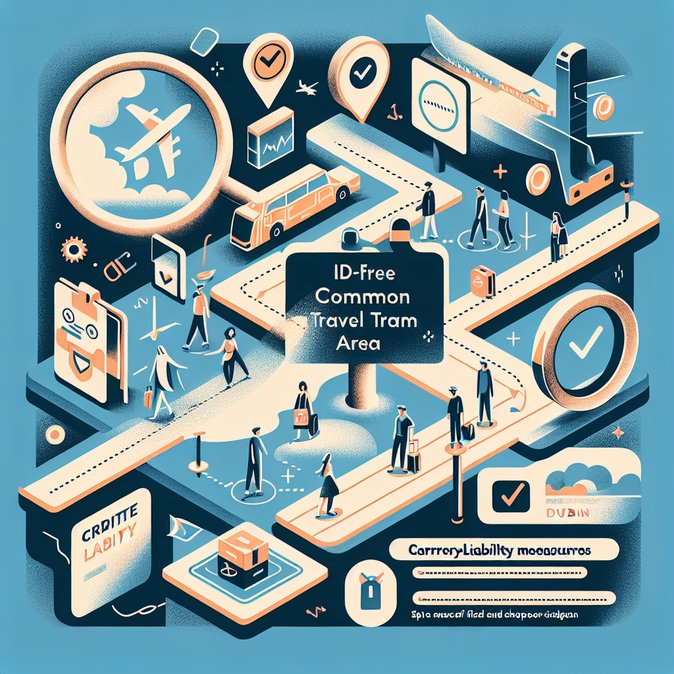
Businesses moving staff or equipment across the Irish Sea should anticipate tighter carrier-liability rules and potential ID checks on routes long treated as domestic. Mobility managers should monitor developments to ensure travelling employees carry acceptable identification even on intra-CTA journeys.
Because there are no routine immigration controls on the land border between the Republic of Ireland and Northern Ireland, individuals can disembark in Belfast and take domestic ferries or flights to the British mainland, where identity checks are minimal. Irish authorities attribute the spike partly to their own harsher asylum rules introduced last autumn, which have pushed some migrants to try their luck again in the UK.
For travellers and employers who need clarity on documentation for intra-CTA trips—or any other British entry route—VisaHQ maintains real-time guidance and can facilitate visa, passport and travel-document applications. Its UK portal (https://www.visahq.com/united-kingdom/) provides quick self-service tools and expert support, helping ensure compliance amid evolving border policies.
For the UK Government, the revelations rekindle debate over post-Brexit border security and the political sensitivities of introducing checkpoints on the island of Ireland. Home Office sources say mobile immigration-enforcement teams will increase spot-checks at Cairnryan port and Liverpool’s John Lennon Airport, while the Department for Transport is consulting bus operators on passenger-data sharing.
Businesses moving staff or equipment across the Irish Sea should anticipate tighter carrier-liability rules and potential ID checks on routes long treated as domestic. Mobility managers should monitor developments to ensure travelling employees carry acceptable identification even on intra-CTA journeys.