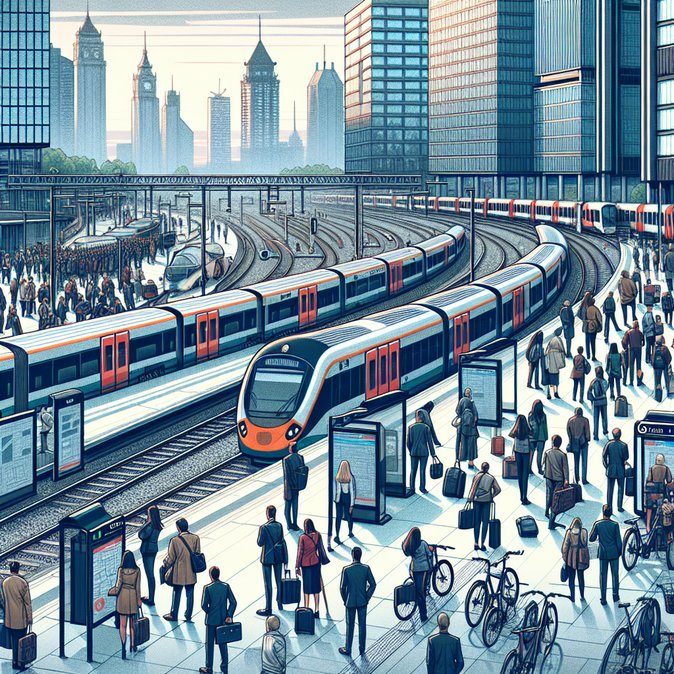
Germany’s fourth and longest train-driver strike in the current wage dispute entered its sixth—and final—day on 15 February, but massive disruption continues. The walk-out, organised by the train-driver union GDL, has forced Deutsche Bahn (DB) to cancel roughly 80 % of long-distance ICE and IC trains and hundreds of regional services across all federal states. The union is demanding a €555 monthly pay rise plus a reduction of the standard working week from 38 to 35 hours with full wage compensation. DB’s last offer—up to 13 % more pay and a cut to 37 hours from January 2026—was rejected.
For global-mobility managers the impact is immediate: business travellers must switch to air or long-distance coach services at short notice, while freight customers face backlogs at ports and in cross-border corridors to Austria, Poland and the Netherlands. DB says it has prioritised automotive and chemicals cargo but admits that some shipments are now two to three days late. Lufthansa has added extra domestic flights between Frankfurt, Munich and Berlin, but seats sold out within hours. European intercity bus operator FlixBus has reported load factors above 95 % on routes such as Hamburg–Cologne and Düsseldorf–Stuttgart.
![Nation-wide Train-Driver Strike Paralyzes 80 % of Long-Distance Rail Services]()
Amid such upheaval, many international employees and assignees may find that their existing visas or entry permits need amendment—especially if diverted flights mean unexpected layovers or longer stays. VisaHQ’s dedicated Germany portal (https://www.visahq.com/germany/) can expedite visa extensions, transit documents or new Schengen applications, giving mobility teams one less headache while rail services recover.
Even after the strike ends at 02:00 on 16 February, DB warns it will take “at least 48 hours” to return rolling stock and crews to the right places. Companies with posted workers or rotating shift staff are advised to extend hotel stays and allow remote working where possible. International assignees arriving this week should be re-routed via airports rather than rail hubs if onward domestic connections are essential.
The government is now openly discussing compulsory arbitration and has floated the idea of a ‘minimum service’ law, similar to rules in France and Spain that mandate a skeleton timetable during strikes. Mobility planners should therefore monitor not only the next round of wage talks (expected in March) but also potential regulatory changes that could affect future industrial action.
For global-mobility managers the impact is immediate: business travellers must switch to air or long-distance coach services at short notice, while freight customers face backlogs at ports and in cross-border corridors to Austria, Poland and the Netherlands. DB says it has prioritised automotive and chemicals cargo but admits that some shipments are now two to three days late. Lufthansa has added extra domestic flights between Frankfurt, Munich and Berlin, but seats sold out within hours. European intercity bus operator FlixBus has reported load factors above 95 % on routes such as Hamburg–Cologne and Düsseldorf–Stuttgart.
Amid such upheaval, many international employees and assignees may find that their existing visas or entry permits need amendment—especially if diverted flights mean unexpected layovers or longer stays. VisaHQ’s dedicated Germany portal (https://www.visahq.com/germany/) can expedite visa extensions, transit documents or new Schengen applications, giving mobility teams one less headache while rail services recover.
Even after the strike ends at 02:00 on 16 February, DB warns it will take “at least 48 hours” to return rolling stock and crews to the right places. Companies with posted workers or rotating shift staff are advised to extend hotel stays and allow remote working where possible. International assignees arriving this week should be re-routed via airports rather than rail hubs if onward domestic connections are essential.
The government is now openly discussing compulsory arbitration and has floated the idea of a ‘minimum service’ law, similar to rules in France and Spain that mandate a skeleton timetable during strikes. Mobility planners should therefore monitor not only the next round of wage talks (expected in March) but also potential regulatory changes that could affect future industrial action.