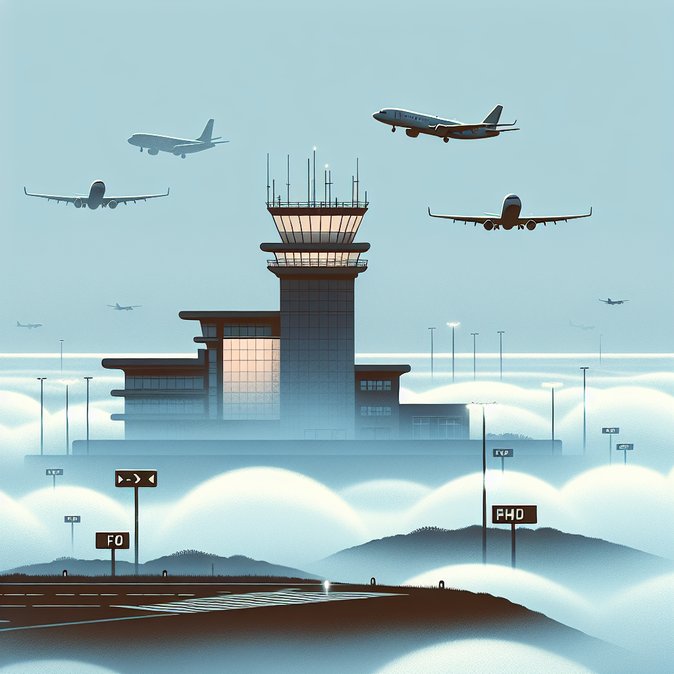
Passengers arriving in Cyprus on the morning of 15 February awoke to unexpected detours after a blanket of thick coastal fog forced air-traffic controllers at Larnaca International Airport to divert several inbound services to Paphos, 130 km to the west.
Airport operator Hermes Airports confirmed that visibility around the runway dropped below the minima required for a safe approach shortly after 06:00. Three flights already in Cypriot airspace—including an Aegean Airlines service from Athens—were instructed to continue to Paphos, which was unaffected by the fog. Ground handlers at Paphos activated their irregular-operations plan, parking the aircraft on remote stands and assisting passengers through the non-Schengen to Schengen transfer process while crews awaited further instructions.
For travellers caught up in such sudden disruptions—and for anyone planning future trips to the island—VisaHQ can help smooth the journey. Its dedicated Cyprus page (https://www.visahq.com/cyprus/) lets passengers check the latest entry requirements and obtain visas or travel authorisations online, often with expedited turnaround, so they can focus on revised flight logistics rather than paperwork.
![Dense fog diverts early-morning flights from Larnaca to Paphos]()
By 08:00 conditions over Larnaca’s shoreline had improved sufficiently for the diverted jets to reposition. After refuelling, the aircraft made the short hop back to their original destination, allowing passengers to reclaim baggage and meet connecting ground transport with a delay of roughly two hours.
Although Cyprus is well-known for occasional sea fog between late winter and early spring, today’s episode serves as a reminder to corporate travel managers that the island’s two airports function as a single operational system. Companies running tight same-day itineraries—particularly oil-and-gas and shipping executives who commute between Limassol, Larnaca and the eastern Mediterranean region—should build a modest buffer into schedules or consider flying into Paphos when forecasts predict reduced visibility on the east coast.
Hermes Airports said the incident had no knock-on effect on outbound movements but reiterated that weather-related diversions automatically trigger its hotel-accommodation contingency for long-haul or evening arrivals should passengers face extended delays.
Airport operator Hermes Airports confirmed that visibility around the runway dropped below the minima required for a safe approach shortly after 06:00. Three flights already in Cypriot airspace—including an Aegean Airlines service from Athens—were instructed to continue to Paphos, which was unaffected by the fog. Ground handlers at Paphos activated their irregular-operations plan, parking the aircraft on remote stands and assisting passengers through the non-Schengen to Schengen transfer process while crews awaited further instructions.
For travellers caught up in such sudden disruptions—and for anyone planning future trips to the island—VisaHQ can help smooth the journey. Its dedicated Cyprus page (https://www.visahq.com/cyprus/) lets passengers check the latest entry requirements and obtain visas or travel authorisations online, often with expedited turnaround, so they can focus on revised flight logistics rather than paperwork.
By 08:00 conditions over Larnaca’s shoreline had improved sufficiently for the diverted jets to reposition. After refuelling, the aircraft made the short hop back to their original destination, allowing passengers to reclaim baggage and meet connecting ground transport with a delay of roughly two hours.
Although Cyprus is well-known for occasional sea fog between late winter and early spring, today’s episode serves as a reminder to corporate travel managers that the island’s two airports function as a single operational system. Companies running tight same-day itineraries—particularly oil-and-gas and shipping executives who commute between Limassol, Larnaca and the eastern Mediterranean region—should build a modest buffer into schedules or consider flying into Paphos when forecasts predict reduced visibility on the east coast.
Hermes Airports said the incident had no knock-on effect on outbound movements but reiterated that weather-related diversions automatically trigger its hotel-accommodation contingency for long-haul or evening arrivals should passengers face extended delays.