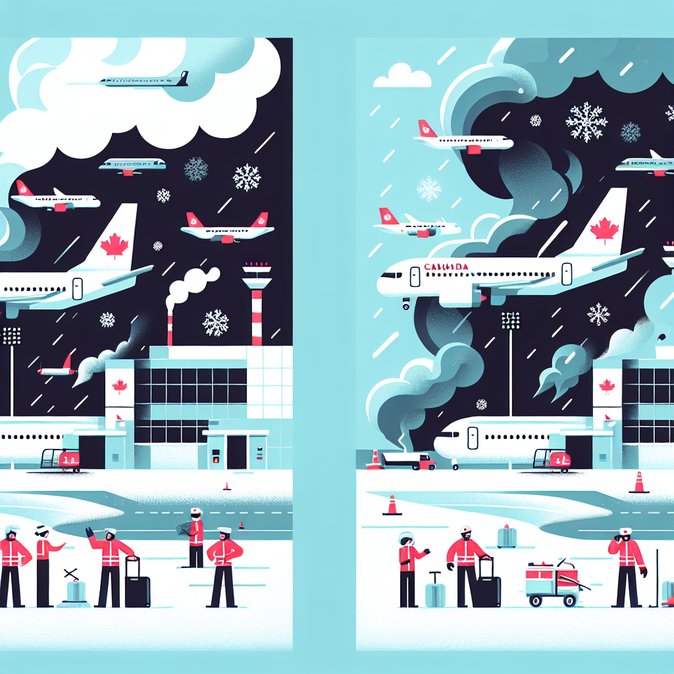
Harsh Arctic air colliding with a moisture-laden low-pressure system wreaked havoc on Canadian aviation schedules on February 14, grounding or delaying hundreds of services operated by WestJet, Air Canada, Jazz, PAL Airlines, Inuit Air and several regional carriers. Travel and Tour World reported 65 outright cancellations and 301 delays spread across Calgary, Winnipeg, Toronto-Pearson, Montréal-Trudeau, Québec City and multiple northern airports. (travelandtourworld.com)
Ground operations were hampered by −30 °C wind-chill readings and protracted de-icing queues that at times exceeded 90 minutes per aircraft. Toronto and Calgary each activated full ‘snow-event’ protocols, redirecting arriving wide-bodies to remote stands so ploughs could clear primary taxiways. Airport authorities warned passengers that queue times for re-bookings and baggage retrieval could stretch into the early hours of February 15.
![Winter storm triggers 65 flight cancellations and 301 delays across Canadian hubs]()
The disruption hit business travellers hardest: mid-afternoon analytics from Global Reservation Services estimate 11,400 missed connections on transcontinental itineraries and CAD 8 million in additional hotel and re-routing costs for corporate travel managers. Logistics chains were also affected as belly-cargo transfers missed outbound freighters to Europe and Asia.
Amid these sudden itinerary changes, many international passengers discover they need updated visas, transit permits, or electronic travel authorisations for unexpected reroutes. VisaHQ’s Canada portal (https://www.visahq.com/canada/) streamlines the process with quick online applications, expert document checks and real-time status tracking, ensuring paperwork doesn’t become yet another obstacle when flights are already in flux.
Travellers holding fully flexible tickets were able to switch to virtual meetings or defer trips, underlining the growing need for contingency planning during Canada’s increasingly volatile winter season. Aviation analysts expect the knock-on effects to ripple through schedules for at least 48 hours, and they urge companies to monitor FlightAware feeds, activate travel-risk alerts and budget extra buffer days for critical site visits until conditions stabilise.
Ground operations were hampered by −30 °C wind-chill readings and protracted de-icing queues that at times exceeded 90 minutes per aircraft. Toronto and Calgary each activated full ‘snow-event’ protocols, redirecting arriving wide-bodies to remote stands so ploughs could clear primary taxiways. Airport authorities warned passengers that queue times for re-bookings and baggage retrieval could stretch into the early hours of February 15.

The disruption hit business travellers hardest: mid-afternoon analytics from Global Reservation Services estimate 11,400 missed connections on transcontinental itineraries and CAD 8 million in additional hotel and re-routing costs for corporate travel managers. Logistics chains were also affected as belly-cargo transfers missed outbound freighters to Europe and Asia.
Amid these sudden itinerary changes, many international passengers discover they need updated visas, transit permits, or electronic travel authorisations for unexpected reroutes. VisaHQ’s Canada portal (https://www.visahq.com/canada/) streamlines the process with quick online applications, expert document checks and real-time status tracking, ensuring paperwork doesn’t become yet another obstacle when flights are already in flux.
Travellers holding fully flexible tickets were able to switch to virtual meetings or defer trips, underlining the growing need for contingency planning during Canada’s increasingly volatile winter season. Aviation analysts expect the knock-on effects to ripple through schedules for at least 48 hours, and they urge companies to monitor FlightAware feeds, activate travel-risk alerts and budget extra buffer days for critical site visits until conditions stabilise.